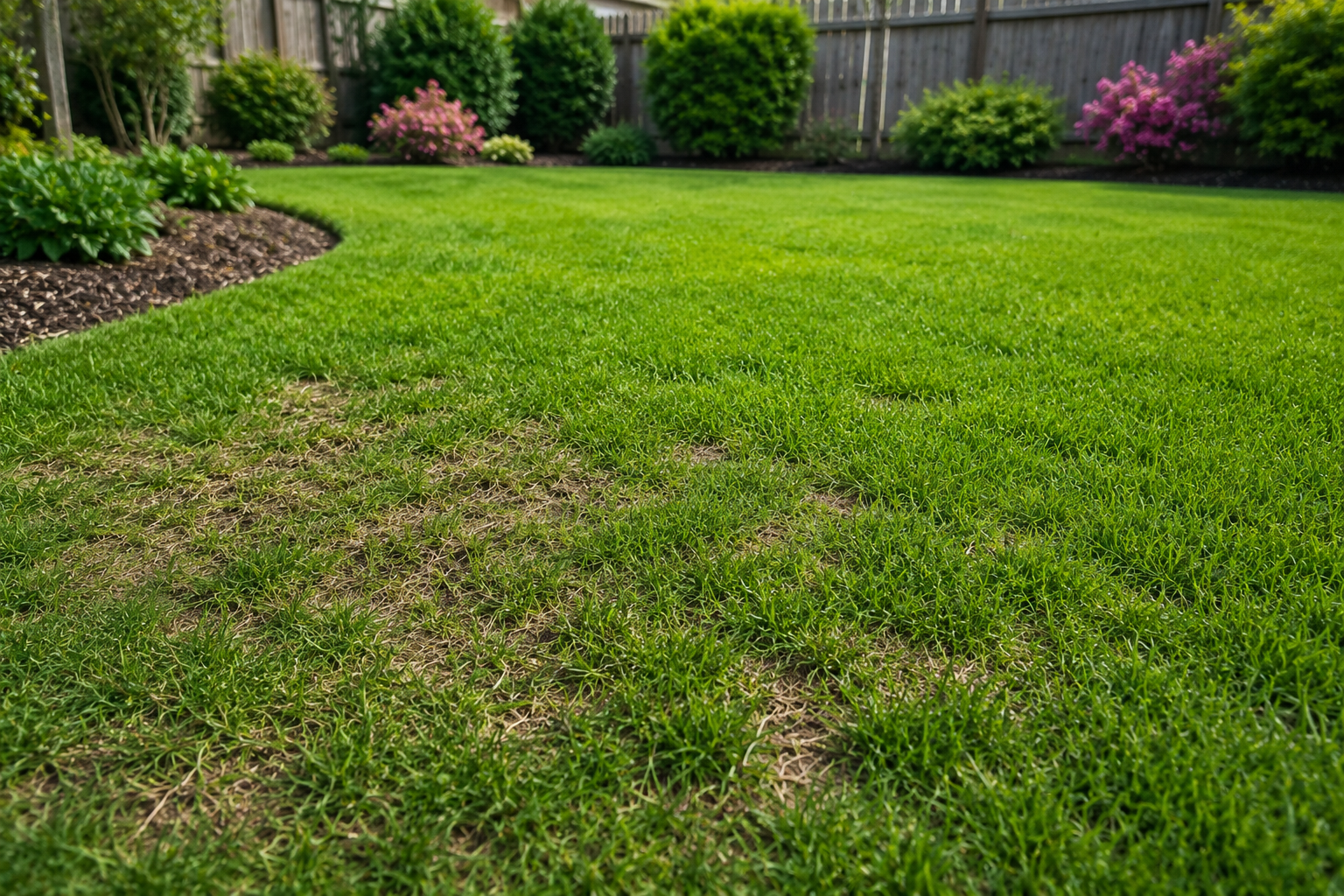







Winter doesn’t just put your lawn to sleep, it quietly puts it under stress. Under months of snow, ice, and freeze-thaw cycles, grass blades flatten, roots struggle for oxygen, and soil becomes compacted. In Alberta, it’s common for lawns to lose density, show patchy discoloration, or emerge unevenly in spring. What many homeowners don’t realize is this: the way you repair winter damage in spring determines how resilient your lawn will be for the rest of the year.
Spring lawn repair isn’t about quick cosmetic fixes. It’s about restoring balance below the surface so grass can regrow evenly, resist weeds, and handle summer heat without thinning out again. When done properly, and at the right time, spring lawn repair becomes the foundation of long-term lawn care success.

Limited spots available!
Transform your lawn today

Limited spots available!
Transform your lawn today
Why Winter Hits Alberta Lawns Especially Hard
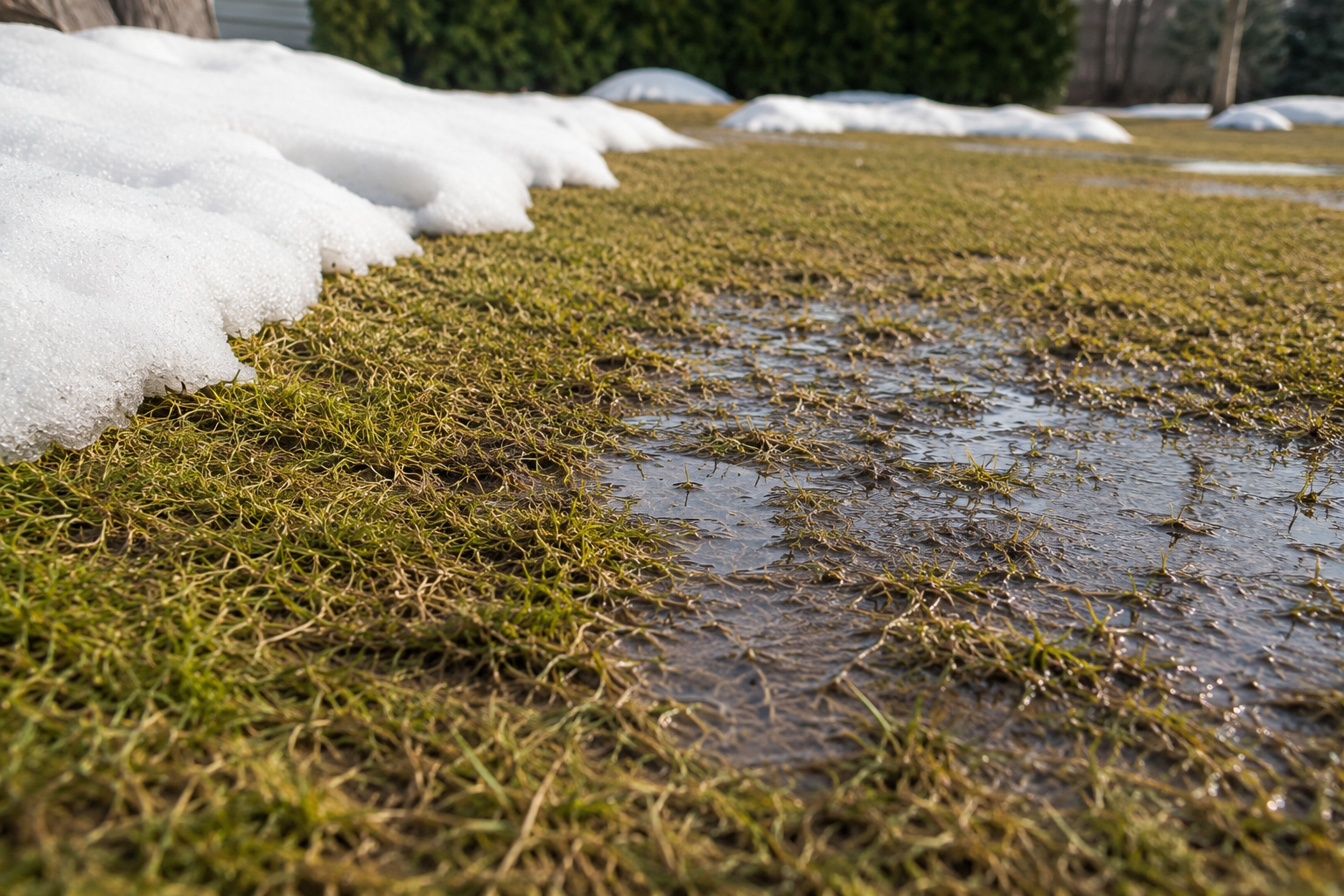
Alberta winters are long, unpredictable, and tough on turf. Extended snow cover limits airflow to grass blades, while fluctuating temperatures compact soil and weaken root systems. By the time the snow melts, many lawns are alive, but barely.
Grass coming out of winter often struggles with:
- Reduced root strength
- Compacted soil that blocks water and nutrients
- Increased vulnerability to weeds and pests
This is why spring lawn repair needs to focus on recovery before growth. Forcing growth too early without fixing underlying issues often leads to shallow roots, patchy turf, and recurring problems later in the season.
The Right Time to Begin Spring Lawn Repair
Timing is everything. Spring lawn repair should begin once the snow is completely gone and the soil has thawed enough to absorb water and nutrients. If the ground is still frozen or overly wet, treatments won’t be effective, and foot traffic can do more harm than good.
A lawn is ready for spring repair when:
- Soil no longer feels spongy underfoot
- Water drains instead of pooling
- Grass begins to show signs of active growth
Starting at this stage allows repairs to support regrowth instead of stressing grass that isn’t ready yet.
Step One: Restore Soil Health Before Expecting Results
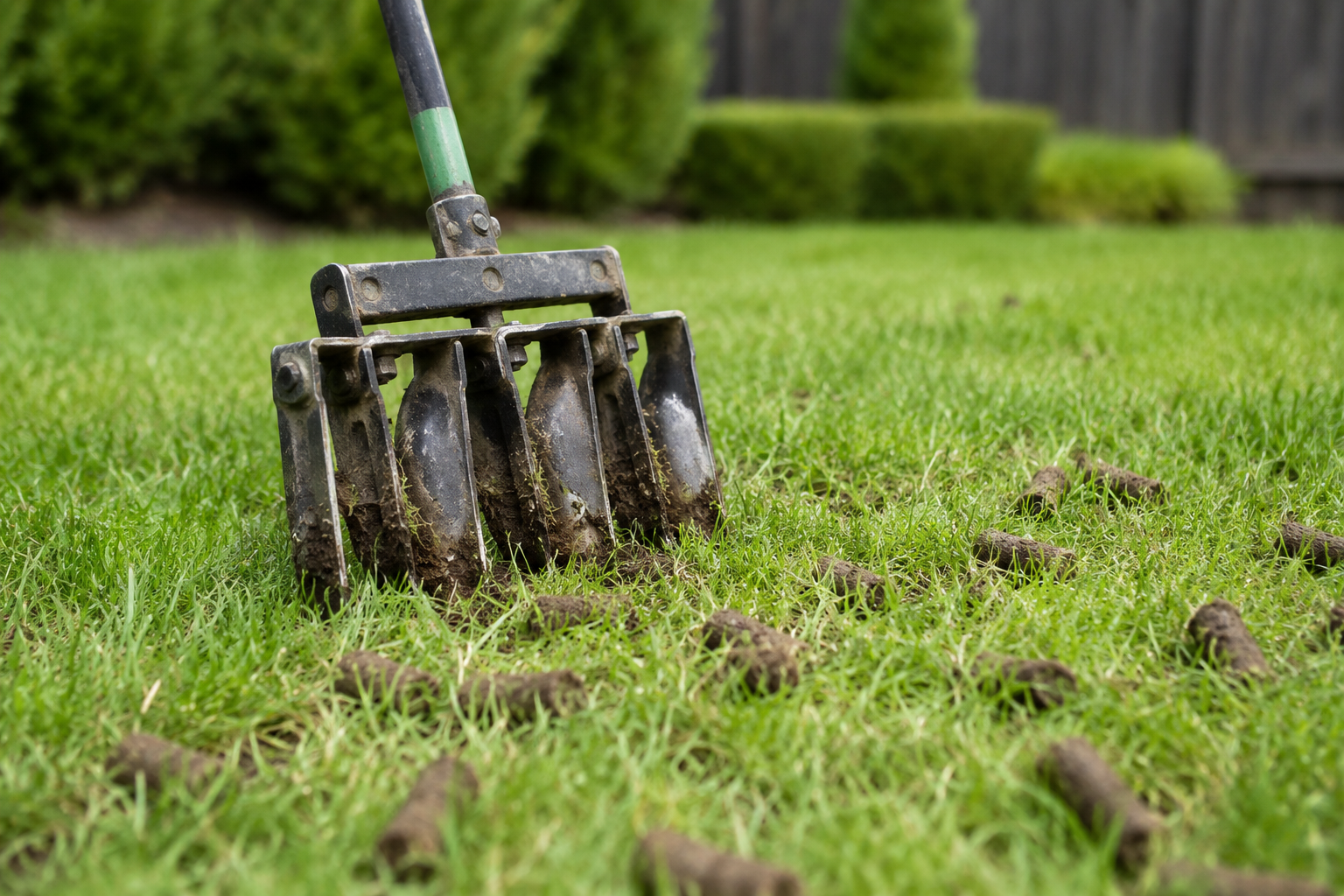
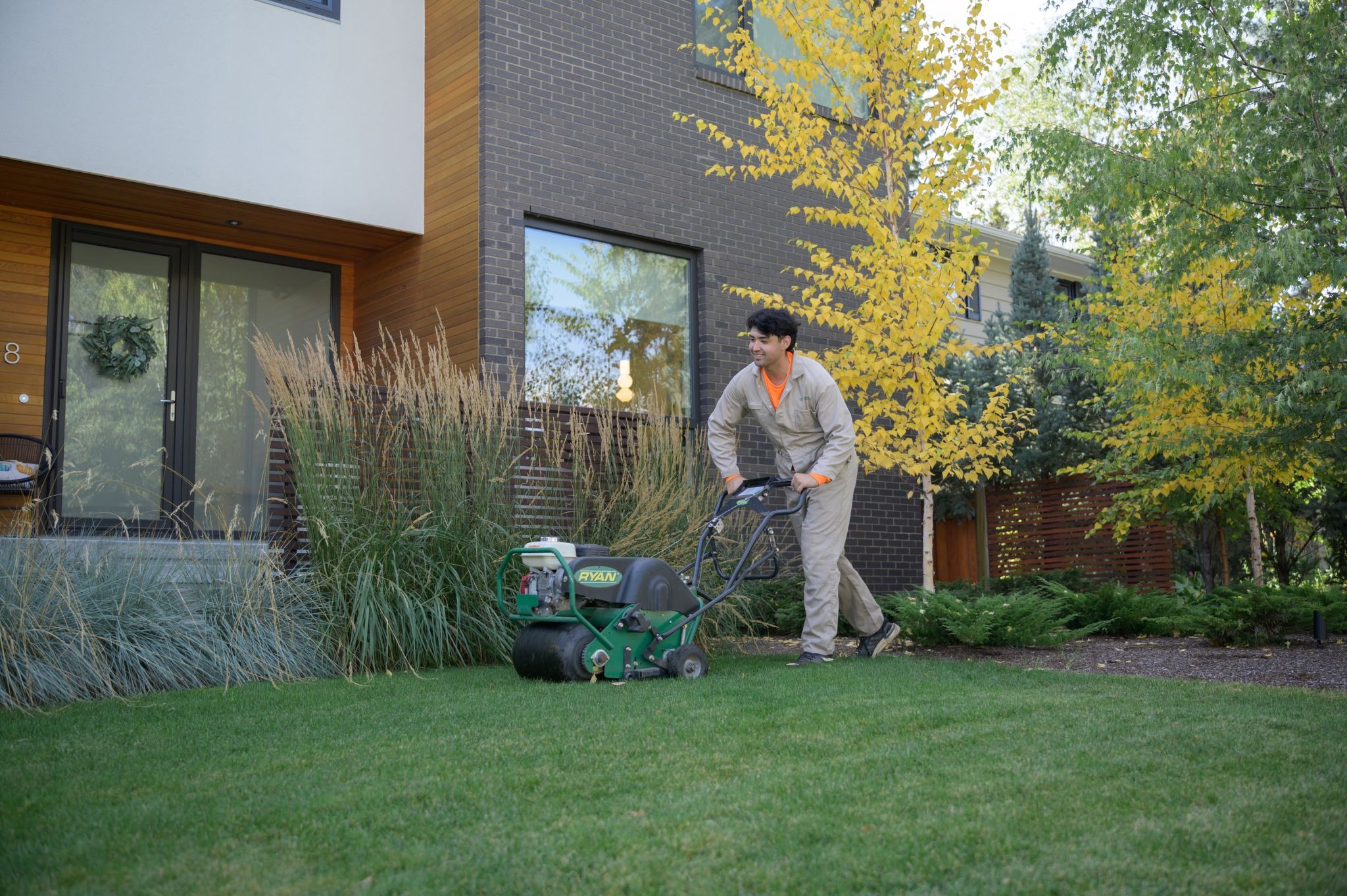
Healthy grass starts with healthy soil. After winter, many lawns suffer from compaction that limits oxygen, water, and nutrient movement. This is where aeration becomes a cornerstone of spring lawn repair.
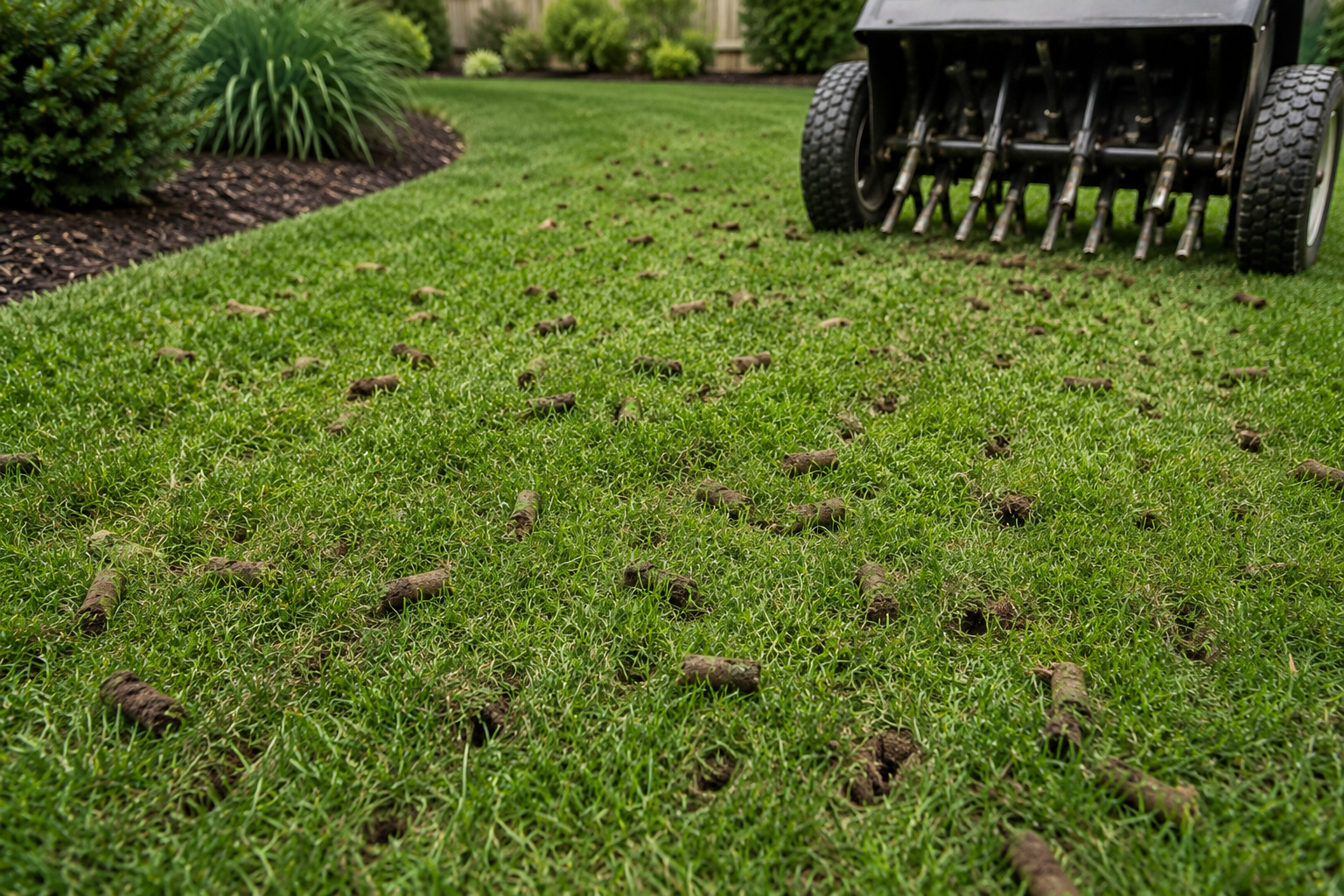
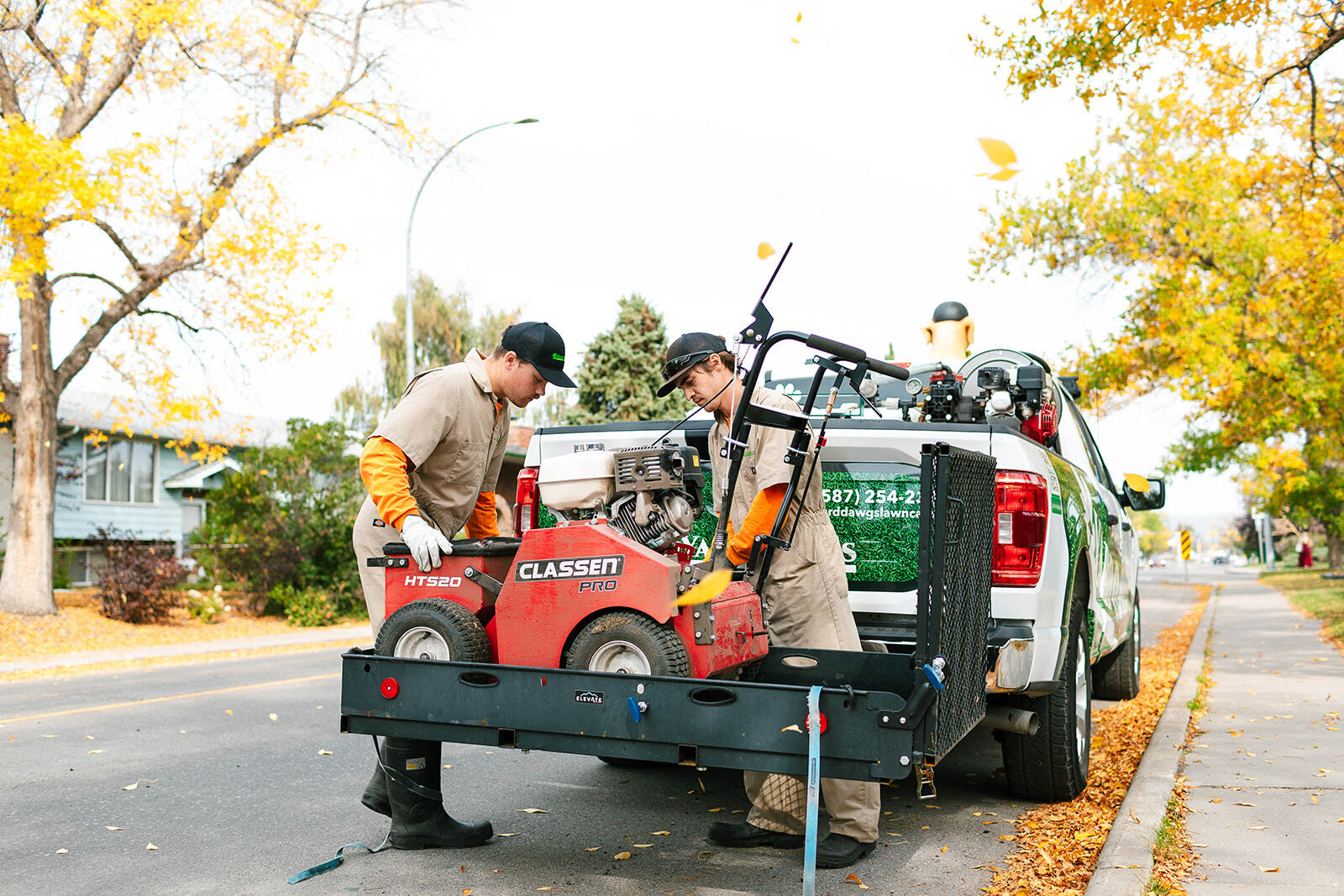
Mechanical aeration physically removes small plugs of soil, creating channels for air and moisture. In areas where disruption needs to be minimal, liquid aeration loosens soil at a molecular level, improving absorption without pulling plugs. Both approaches help roots expand deeper and recover faster.
To further support soil recovery, treatments like sea kelp and Super Juice are often applied. These help stimulate root development, improve stress tolerance, and encourage more efficient nutrient uptake, especially important after the strain of winter conditions.
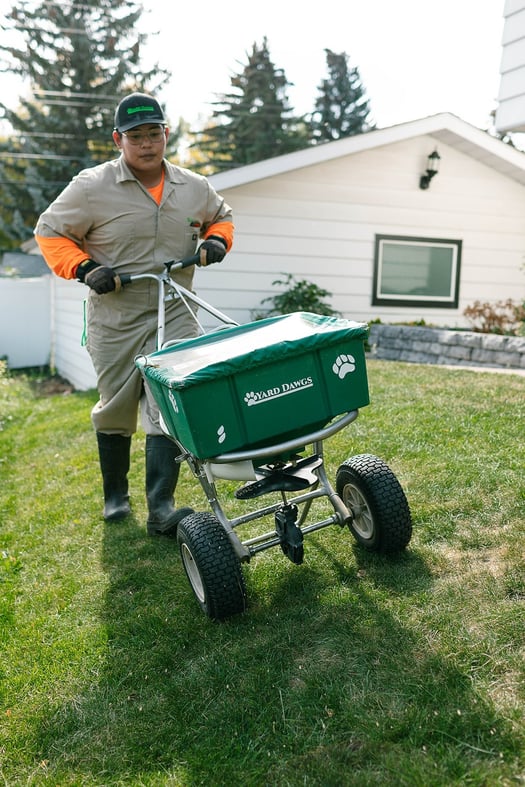
Step Two: Correct Nutrient Deficiencies Early
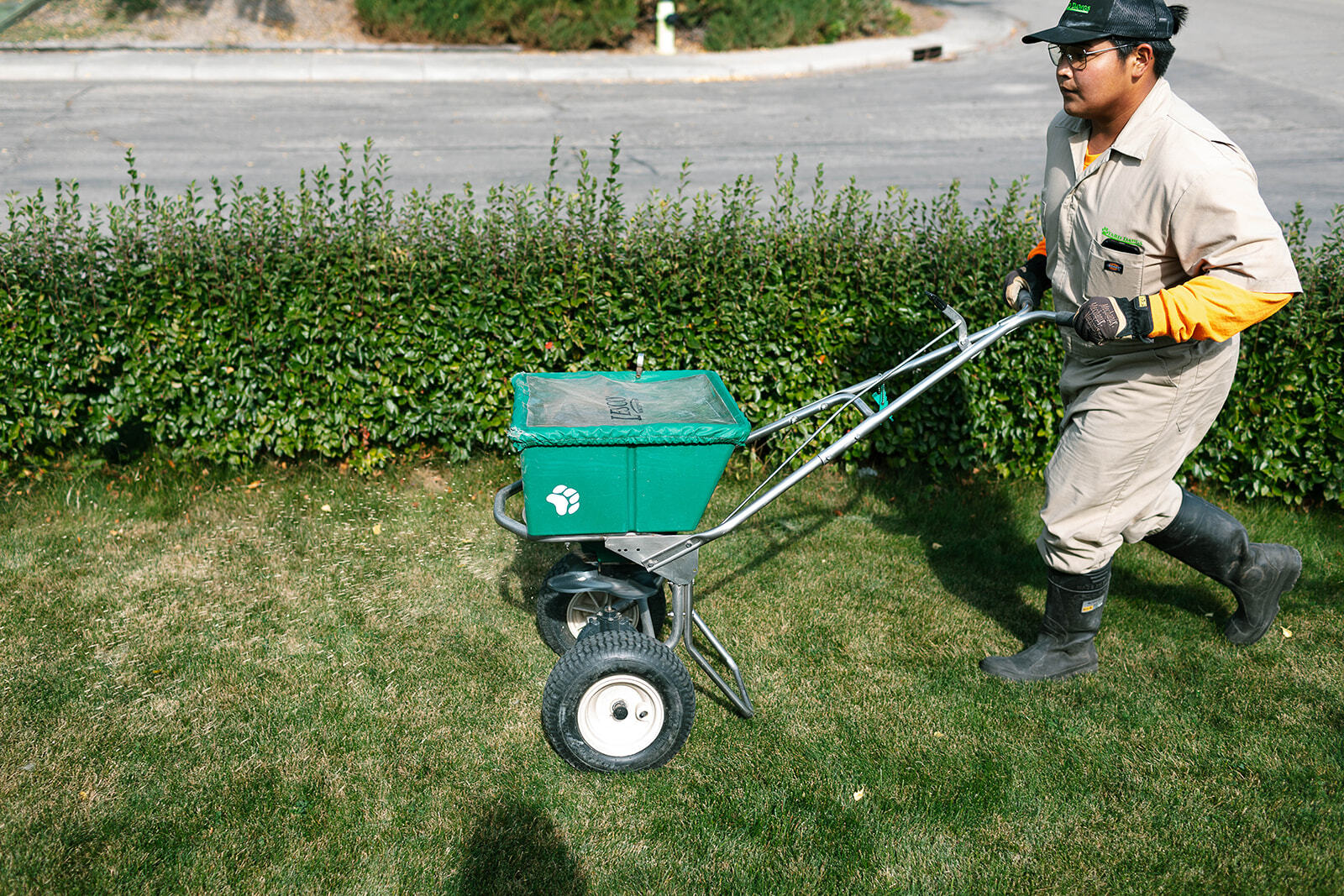
Winter depletes essential nutrients. Even if your lawn looks green on the surface, it may be running on empty below. Spring fertilizer applications are designed to replenish what was lost and fuel steady, controlled growth.
The goal of spring fertilization during lawn repair is balanced recovery. Proper nutrition strengthens roots first, allowing blades to thicken naturally over time. When fertilizer is timed correctly during spring lawn repair, lawns recover more evenly and maintain density as temperatures rise.
This early feeding also helps grass compete more effectively against weeds before they become established.
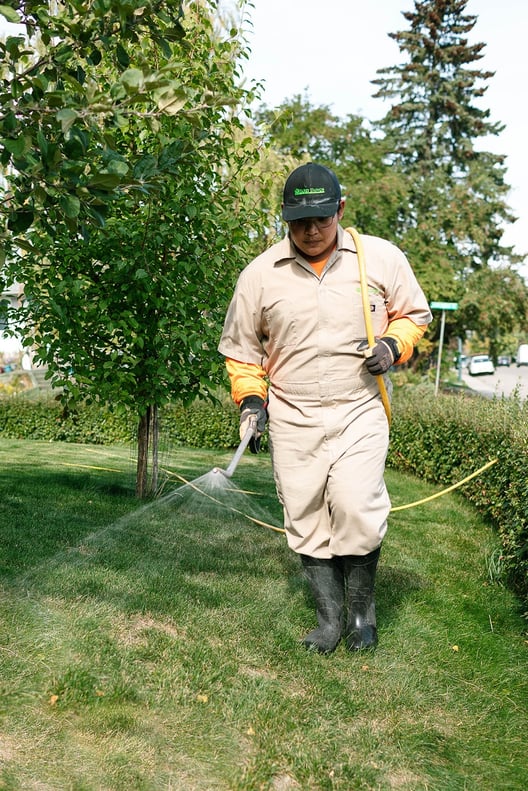
Step Three: Address Weeds Before They Take Advantage
Weeds thrive on weakness. Thin, damaged turf left over from winter gives them exactly what they want: space, sunlight, and access to nutrients. This is why weed control is a critical part of spring lawn repair, not an afterthought.
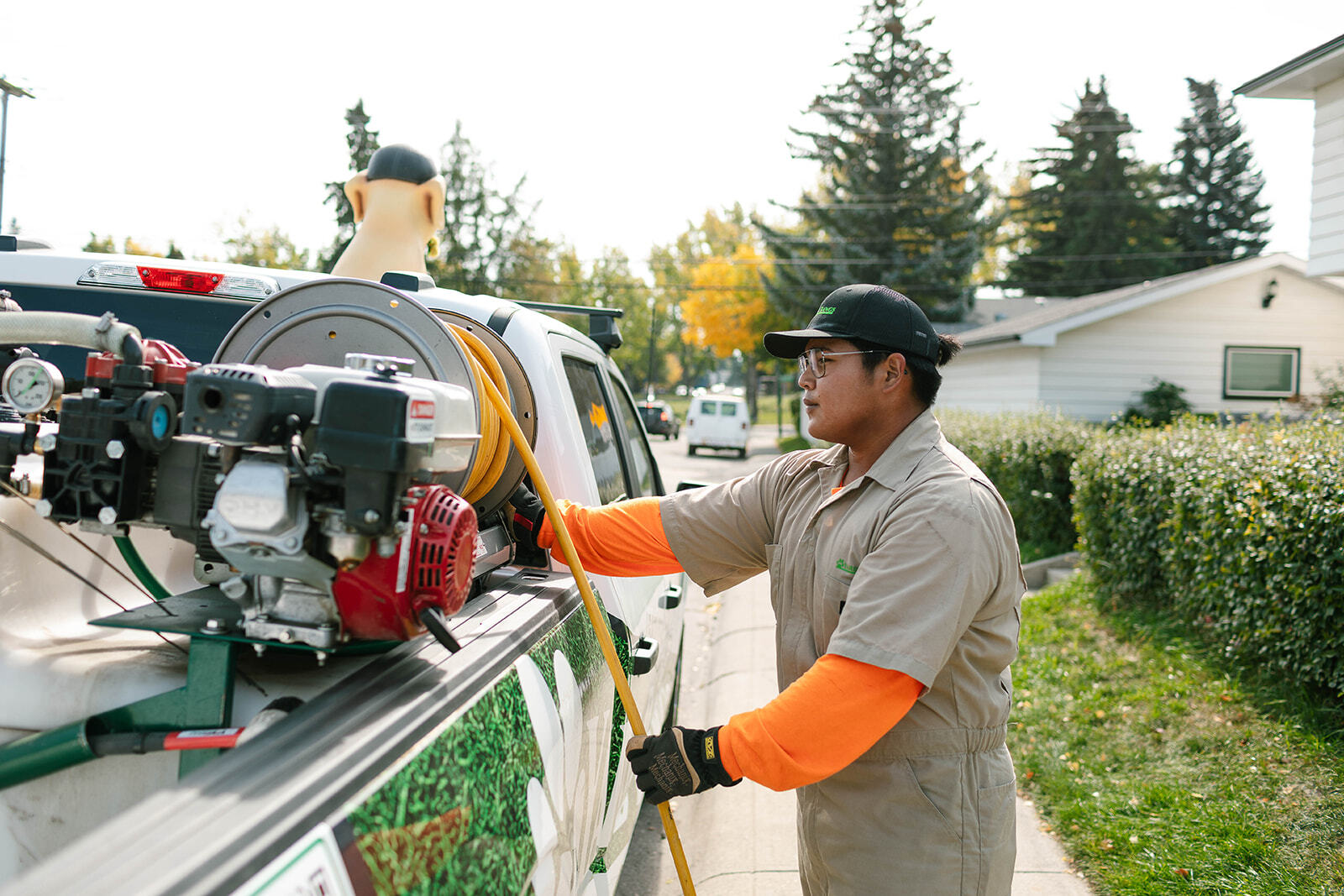
Targeted weed control treatments focus on eliminating early growth before weeds mature and spread. When combined with proper fertilization and aeration, weed control works as a protective layer, allowing recovering grass to fill in and crowd out future weed growth naturally.
Hard surfaces deserve attention too. Hardscape weed control prevents weeds from migrating from driveways, sidewalks, and patios back into repaired lawn areas, protecting your progress throughout the season.

Step Four: Rebuild Thin or Damaged Areas
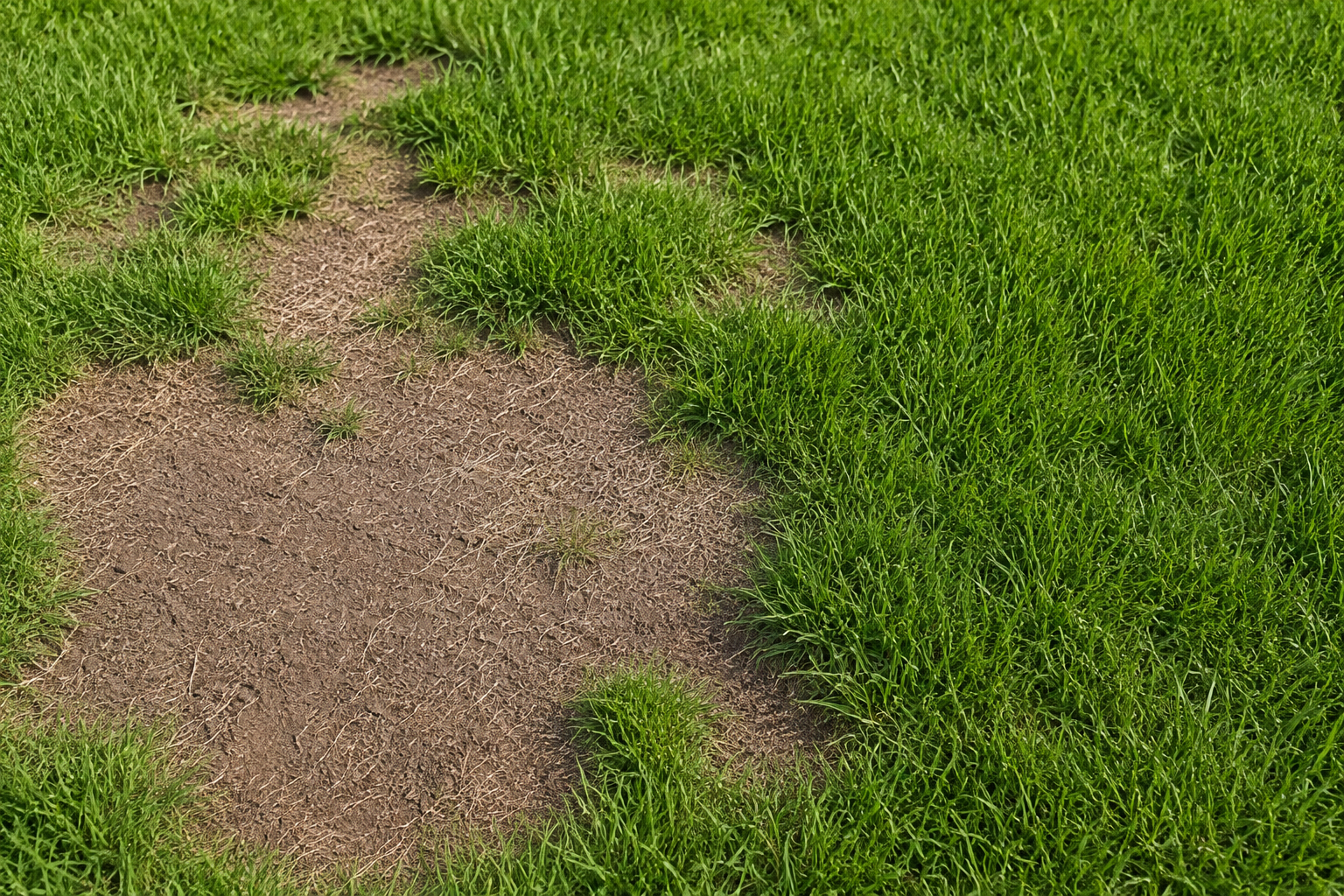
Not all winter damage heals on its own. Lawns with thinning patches or bare sections often need more direct intervention to restore density.
Aeration plus is an effective solution for spring lawn repair because it places seed directly into the soil where it has the best chance to establish. This approach improves seed-to-soil contact and helps new grass integrate seamlessly with existing turf.
Spring is an ideal time for this kind of repair because soil moisture is naturally higher, temperatures are moderate, and competition from aggressive weeds is still manageable when paired with professional weed control.
Watching for Hidden Threats During Lawn Recovery
As grass begins to recover, it’s important to monitor for issues that aren’t always immediately visible. One example is chinch bugs, which can quietly damage grass by feeding on it as temperatures warm. Early detection and treatment during spring lawn repair prevent widespread thinning later in the season.
These pests tend to exploit stressed lawns, making post-winter repair the most important time to stay proactive rather than reactive.
What a Successful Spring Lawn Repair Plan Includes
While every lawn is different, effective spring lawn repair usually combines multiple services in a coordinated way. A strong repair plan focuses on restoring structure, nutrition, and protection together, not in isolation.
A professional spring repair approach typically includes:
- Aeration to relieve compaction and improve soil function
- Fertilizer to rebuild nutrient levels and support recovery
- Weed control to reduce competition during regrowth
- Aeration plus where density has been lost
When these elements are applied at the right time and adjusted to local conditions, the lawn recovers faster and stays healthier throughout the growing season.
Why Consistency Matters After Winter Damage
One of the biggest mistakes homeowners make is treating spring lawn repair as a one-time event. In reality, winter damage takes time to reverse. Soil biology, root systems, and turf density rebuild gradually.
That’s why ongoing care matters. Annual lawn care plans provide continuous adjustments as the lawn responds to treatments. If something needs to be fine-tuned, whether it’s nutrient levels or timing, you’re supported by a team that already knows your lawn’s history.
Having the same skilled team assigned to your property ensures consistency, accuracy, and better long-term results. Questions about treatments or changes in lawn performance are handled by people who understand your specific conditions, not by guesswork.
How Spring Lawn Repair Impacts the Entire Season
Spring lawn repair sets the tone for everything that follows. A lawn that enters summer with strong roots and balanced nutrition is more resistant to heat stress, weeds, and pest pressure. One that doesn’t often struggles to keep up, no matter how much effort is applied later.
This is why spring lawn repair and ongoing lawn care are closely connected. Repair restores what winter took away. Care maintains and improves those gains throughout the season.
Repair Now, Relax Later
Winter damage doesn’t have to define your lawn for the rest of the year. With the right approach, spring becomes a reset, not a recovery scramble. Addressing soil health, nutrition, weeds, and thinning areas early gives grass the tools it needs to grow evenly and stay resilient.
Spring lawn repair is about more than fixing what went wrong. It’s about building a lawn that can handle what’s coming next, and look its best while doing it.