






Most lawns need the right kind of attention at the right time. Yet every spring, homeowners across Alberta and Saskatchewan make the same mistake: either overseeding a lawn that's too far gone to save, or going through the expense and disruption of a full reseed when a targeted refresh would have done the job.
Studies in turfgrass management consistently show that a dense, well-maintained lawn with no more than 10–15% bare soil coverage can recover from most seasonal stress through overseeding alone. The question is knowing which side of that line your lawn falls on.
Understanding overseeding vs. reseeding isn't just academic, it directly affects how much time, money, and disruption you're signing up for this season.

Limited spots available!
Transform your lawn today

Limited spots available!
Transform your lawn today
The Core Difference: Refresh or Rebuild?
When comparing overseeding vs. reseeding a lawn, the distinction is straightforward.
Overseeding means introducing new grass seed into an existing, living lawn to thicken coverage, fill in thin areas, and improve turf density, without disturbing what's already there.
Reseeding is a full renovation. Existing vegetation is removed or killed off, the soil is prepared from scratch, and the property essentially starts over as bare ground.
One method works with your lawn. The other starts without it. The right choice depends entirely on what's currently growing, or not growing, in your yard.
What Overseeding Does (and When It's the Right Call)
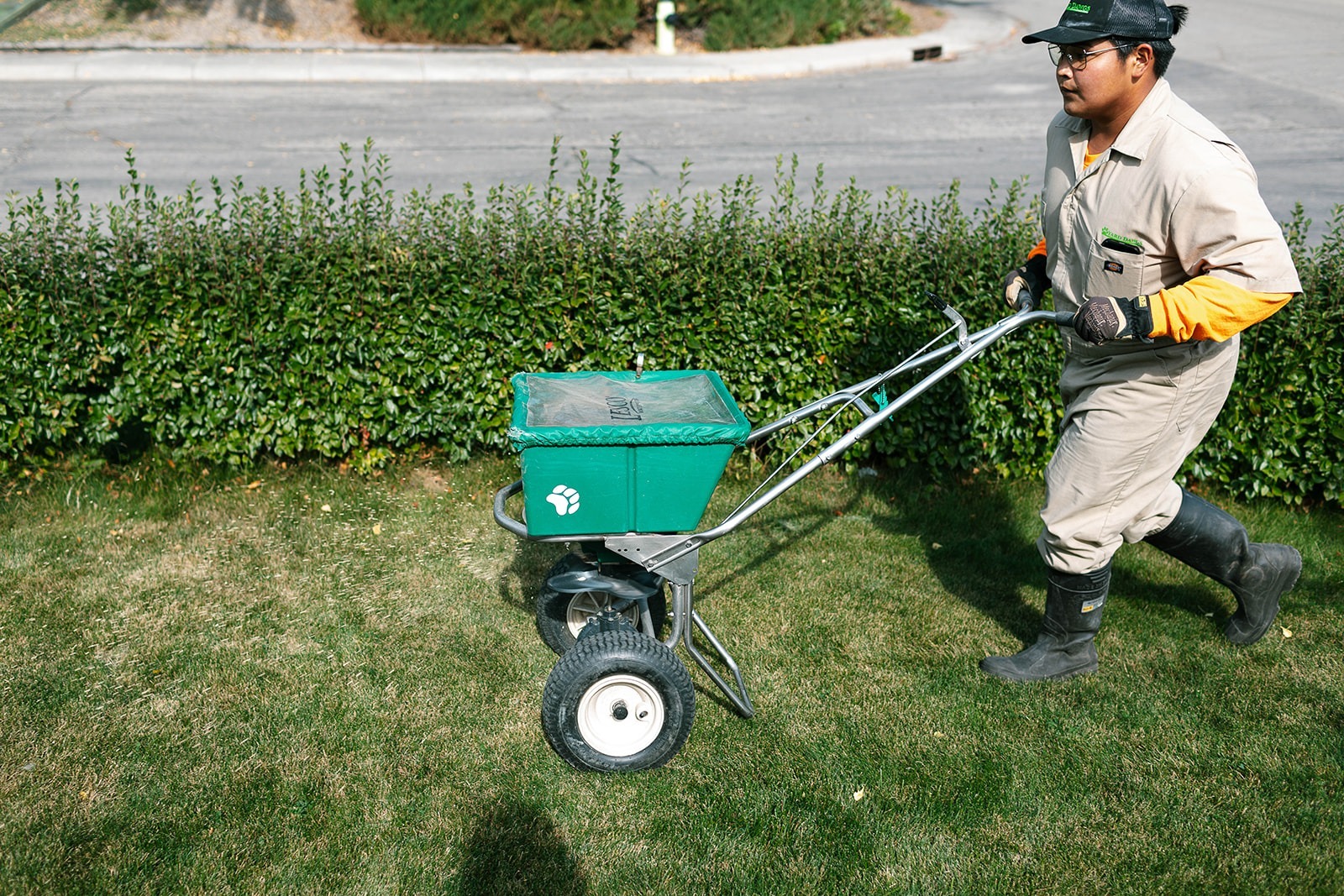
Overseeding works by introducing seed directly into existing turf. When done correctly with good seed-to-soil contact, the new grass germinates and fills the gaps left by thinning or damaged areas. The surrounding turf acts as a natural support system, holding moisture and providing some protection for emerging seedlings.
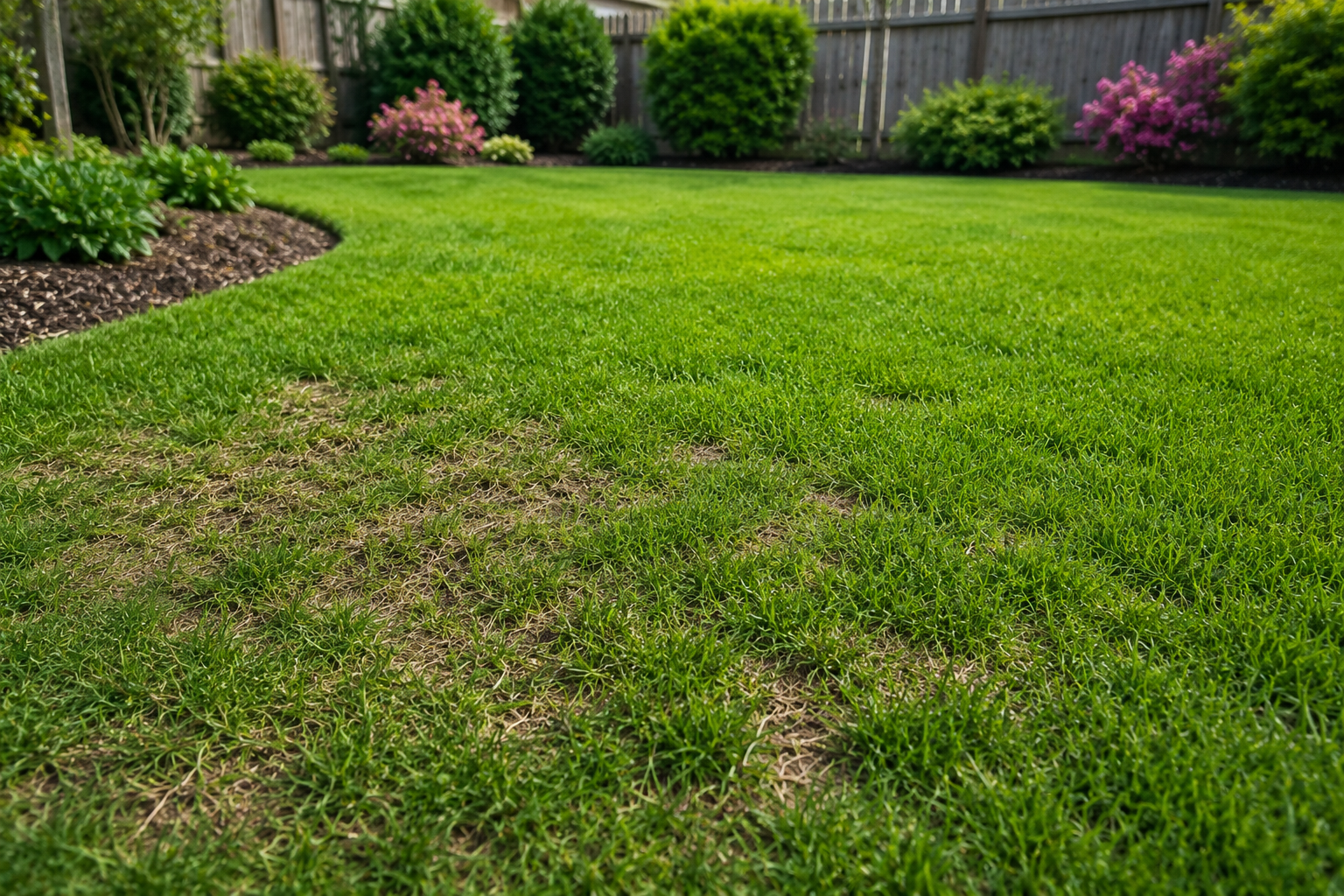
This is the method that suits most residential lawns. If your property has a majority of living, healthy grass with some thin patches or areas that have thinned out over winter, overseeding is almost always the more practical path, less expensive, less disruptive, and visible within a few weeks.
Overseeding tends to be the right choice when:
- Living grass covers more than half of your lawn's total area
- Thin or bare patches are isolated rather than widespread
- Your lawn looks tired and patchy but isn't dominated by weeds
- You want to improve density and turf health without a full renovation
- You're maintaining the same grass type and want to reinforce it season over season
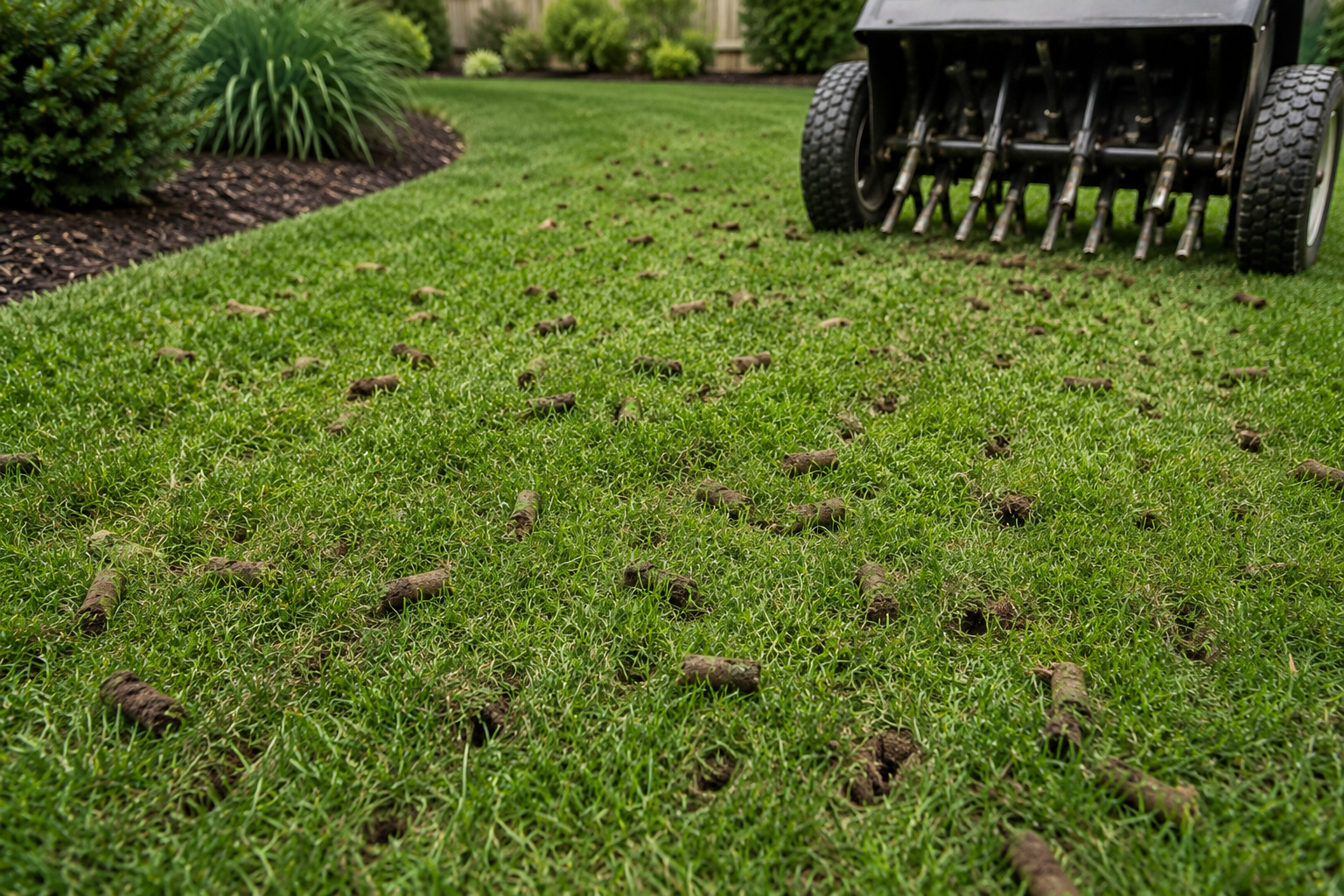
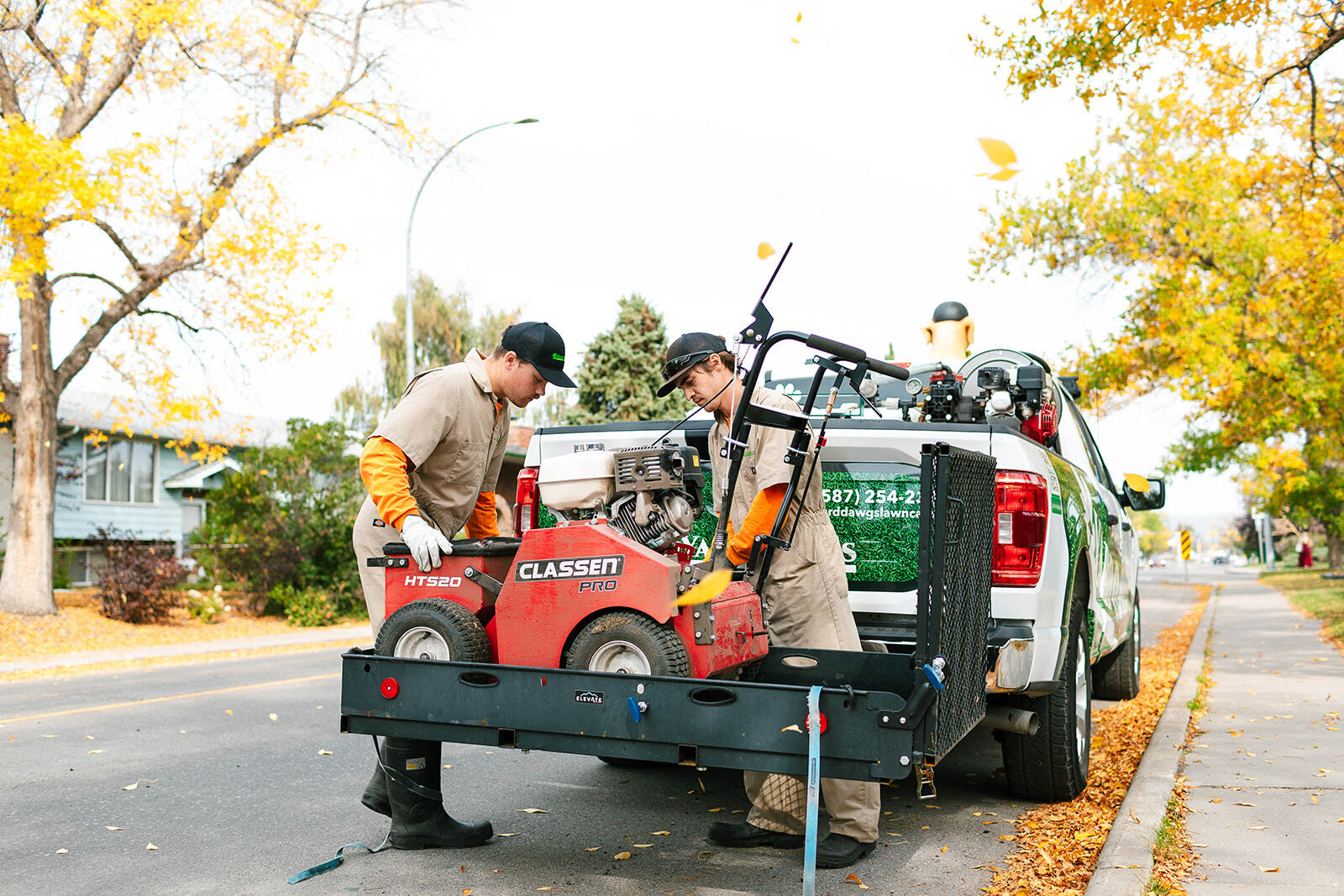
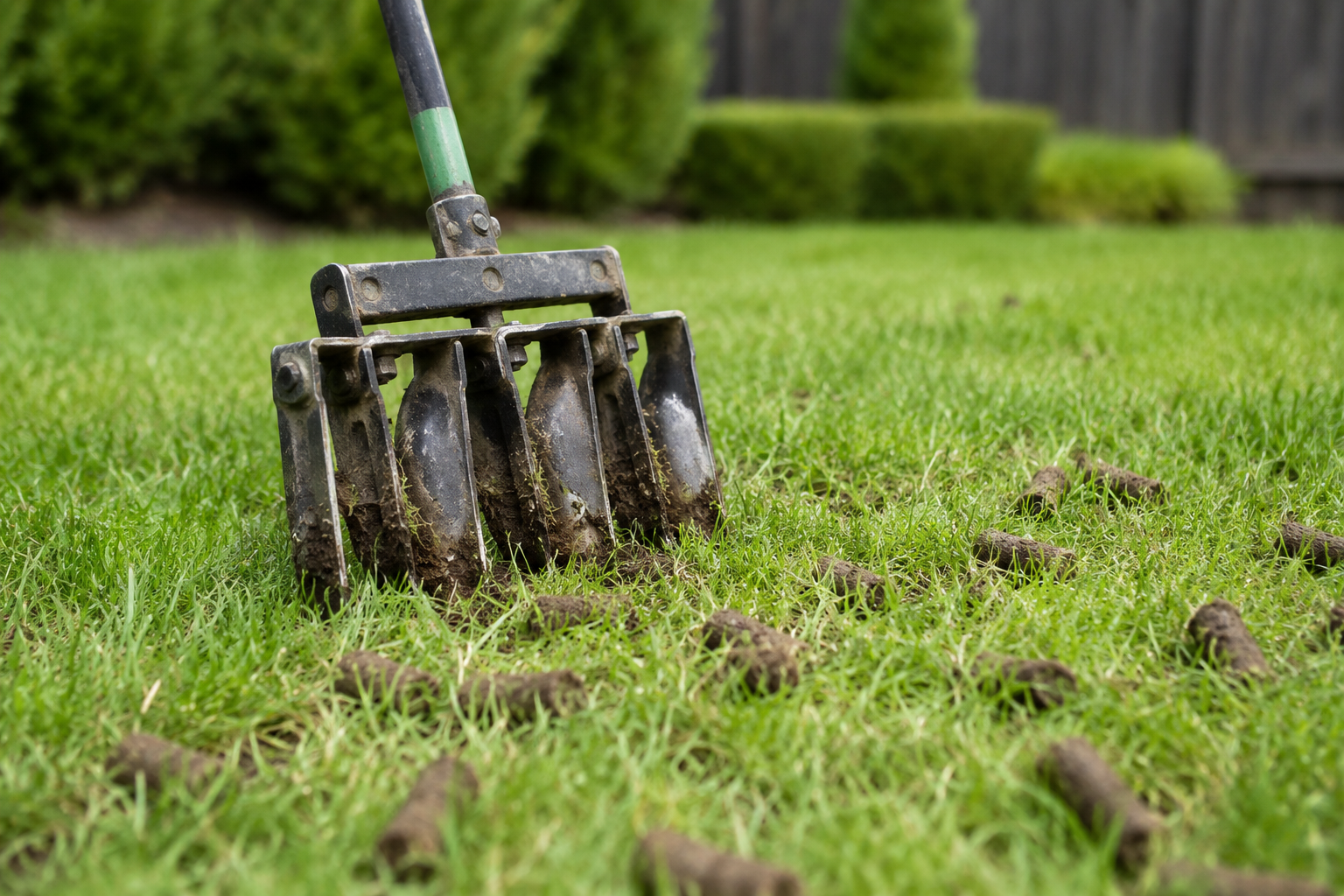
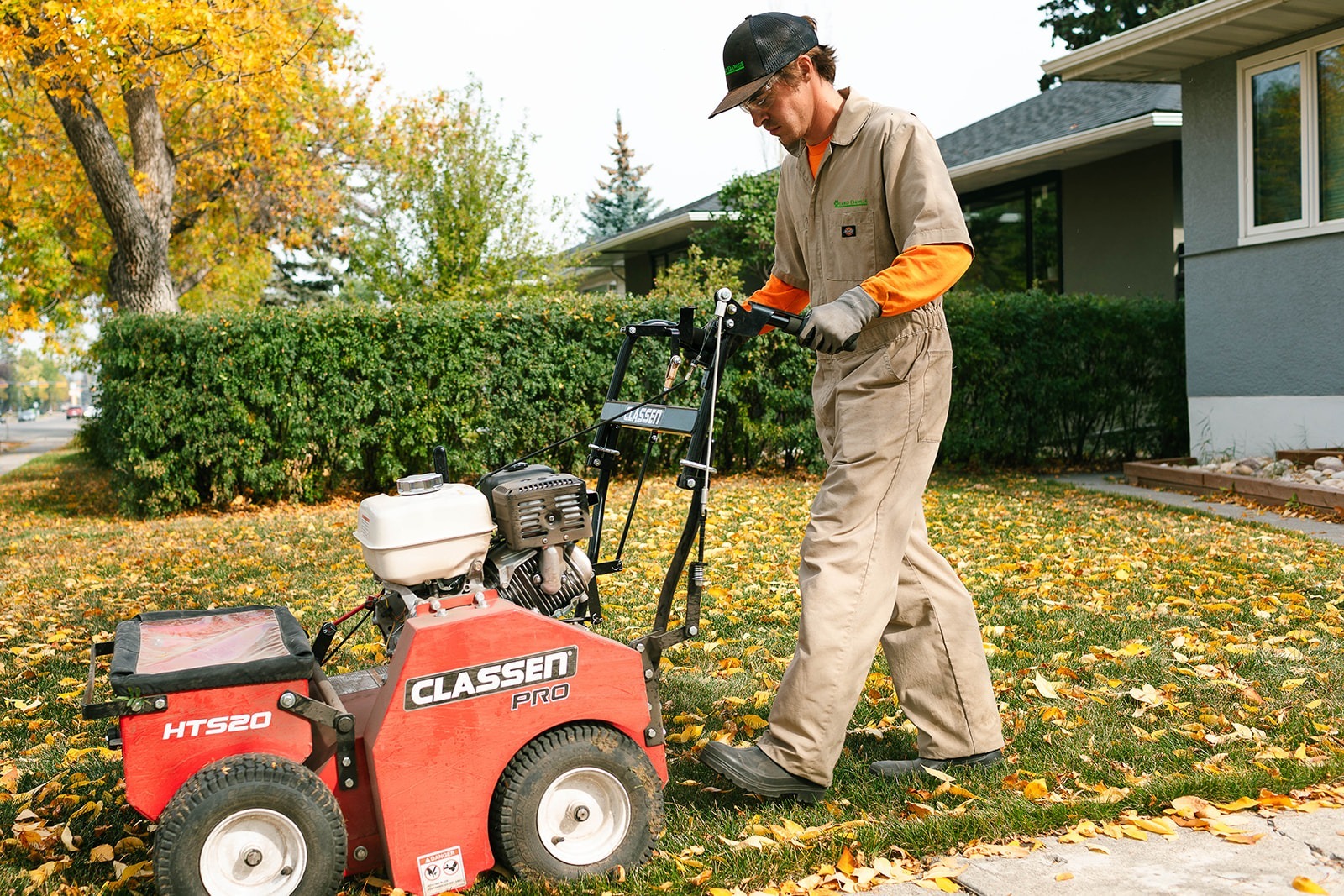
At Yard Dawgs, slit-seeding is our preferred method for overseeding. It cuts narrow channels directly into the soil before dropping seed, giving each seed direct soil contact rather than sitting on top of thatch where germination rates drop significantly.
Pair slit-seeding with mechanical aeration to relieve compaction, and you've given new seed the best possible environment to take hold.
What Reseeding Involves (and When Nothing Else Will Work)
Reseeding is a fundamentally different undertaking. Before a single seed goes down, the existing lawn needs to be removed, either mechanically or through herbicide application, and the bare soil must be prepared properly.
This means levelling the ground, loosening compaction, amending the soil where needed, and seeding into a clean, prepared seedbed. The payoff is a genuinely fresh start, but the commitment is real.
Expect the following when reseeding:
- Your lawn will be out of use for several weeks
- The yard will resemble a construction site during establishment
- Risk of erosion or seed washout increases during heavy rain
- Total time from bare soil to usable lawn can stretch to four to six weeks or more
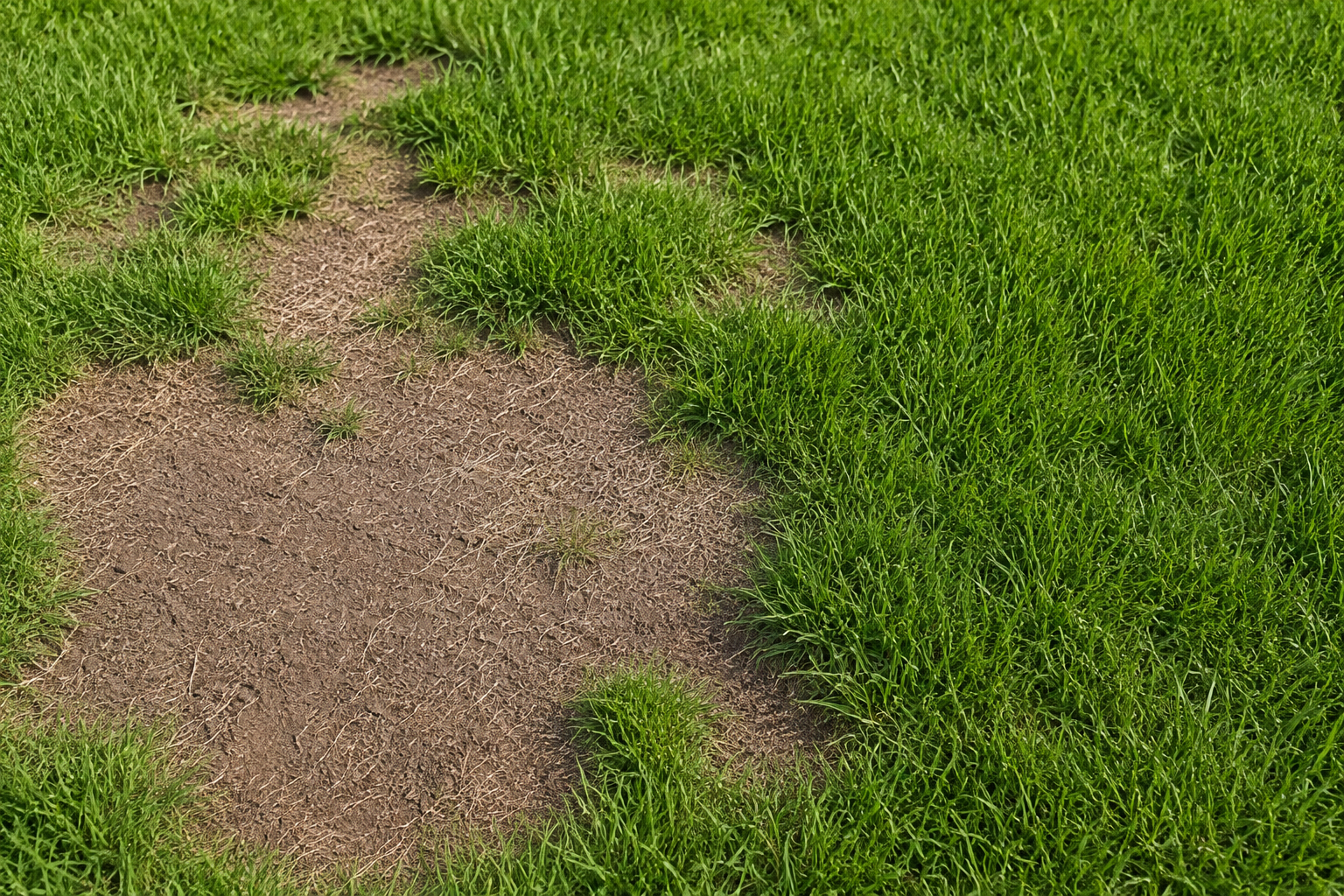
Reseeding makes the most sense in specific circumstances. If the majority of your green space is actually weeds rather than grass, overseeding into that environment just adds new seedlings into a losing battle. Similarly, if large sections of turf have been destroyed by grubs, disease, or severe drought stress and the underlying soil is heavily compacted or uneven, starting over lets you fix root causes rather than just cover them up.
The 50% Rule: A Practical Starting Point
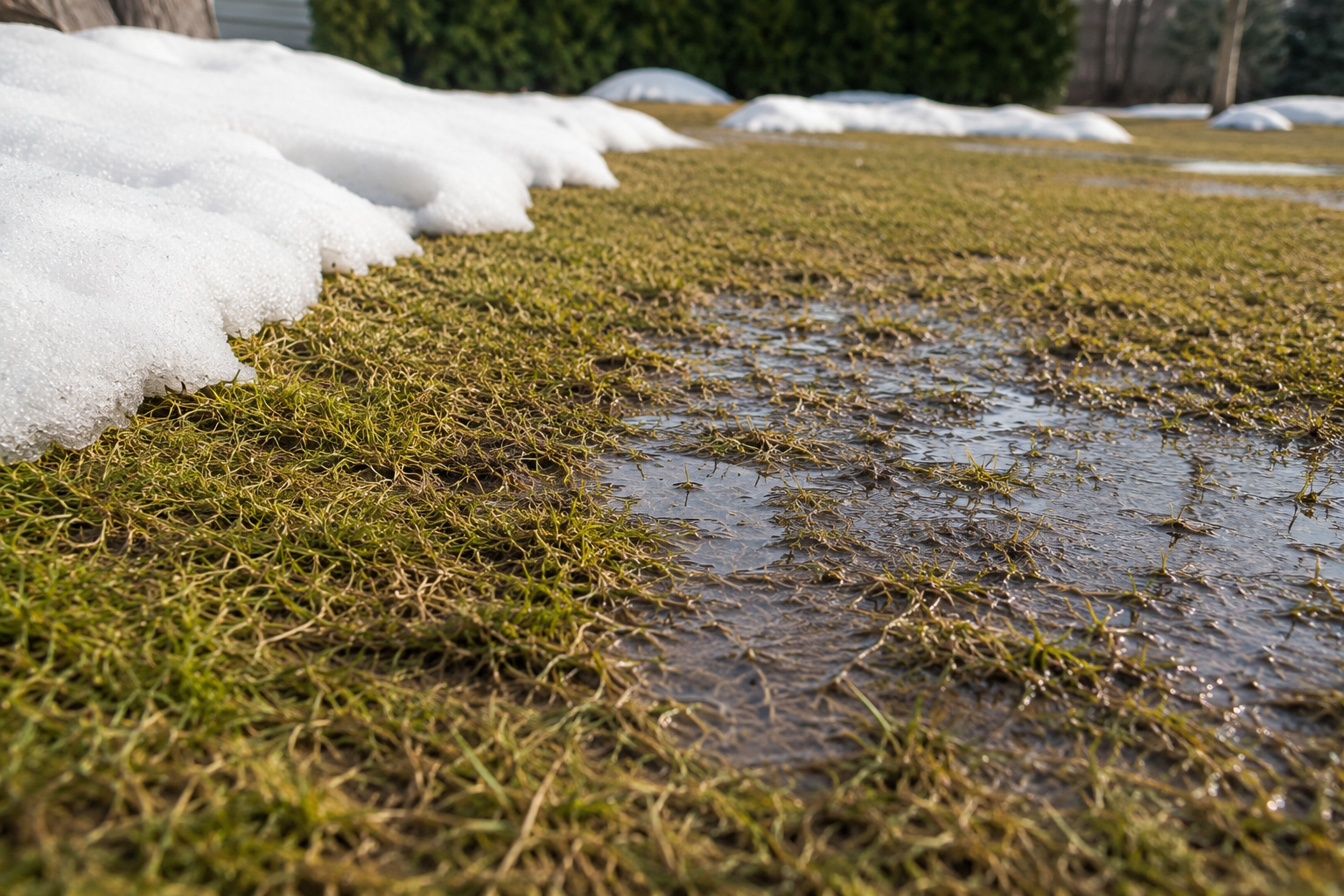
A useful benchmark when deciding between overseeding vs. reseeding is to look honestly at what's actually growing in your lawn. Walk it in sections and estimate what percentage is living grass versus weeds, bare soil, or dead material.
If living grass makes up more than 50% of the coverage, overseeding is your path. If weeds or bare soil dominate more than half the lawn, reseeding will likely give you better long-term results than trying to patch over the problem.
This isn't a perfect formula, soil conditions, the types of weeds present, and how badly compaction has set in all play a role, but it's a reliable first filter.
For homeowners dealing with persistent broadleaf weeds or creeping grassy invaders, professional weed control ahead of overseeding can dramatically improve results. Clearing out the competition before new seed goes down gives seedlings a fighting chance from day one.
Timing Matters More Than Most Homeowners Realize
In Calgary, Edmonton, Red Deer, Saskatoon, and surrounding areas, timing both methods correctly is critical given our climate. Cool-season grasses, which dominate Alberta and Saskatchewan lawns, seed best in late summer through early fall.
Soil temperatures are still warm enough for good germination, but the cooler air reduces stress on new seedlings and slows weed competition. Early spring is a secondary window, though it's shorter and less reliable.
Attempting to overseed in the heat of midsummer wastes both seed and effort. The same timing principles apply even more strictly to reseeding, since establishing a full lawn from bare soil requires a longer, uninterrupted establishment window.
Homeowners in Medicine Hat follow the same cool-season calendar, and lawn care in Medicine Hat requires the same attention to timing, don't let a warm September push you into seeding too late.
Supporting New Seed with the Right Treatments
Whether you're overseeding or reseeding, seed establishment doesn't end when the spreader goes back in the shed. Newly germinating grass has specific needs, and the weeks immediately following seeding are when most failures happen.
Here's what supports the best results after seeding:
- Fertilization, starter fertilizer and follow-up applications give new seedlings the nutrients needed for root development and early establishment
- Liquid aeration, improves soil structure and encourages deeper rooting without the disruption of mechanical aeration on freshly seeded areas
- Sea kelp applications, support root resilience and help new grass handle the stress of establishment, particularly during periods of temperature fluctuation
- Continued weed control, keeping competitive weeds suppressed during the establishment period prevents them from stealing light, water, and nutrients from emerging seedlings
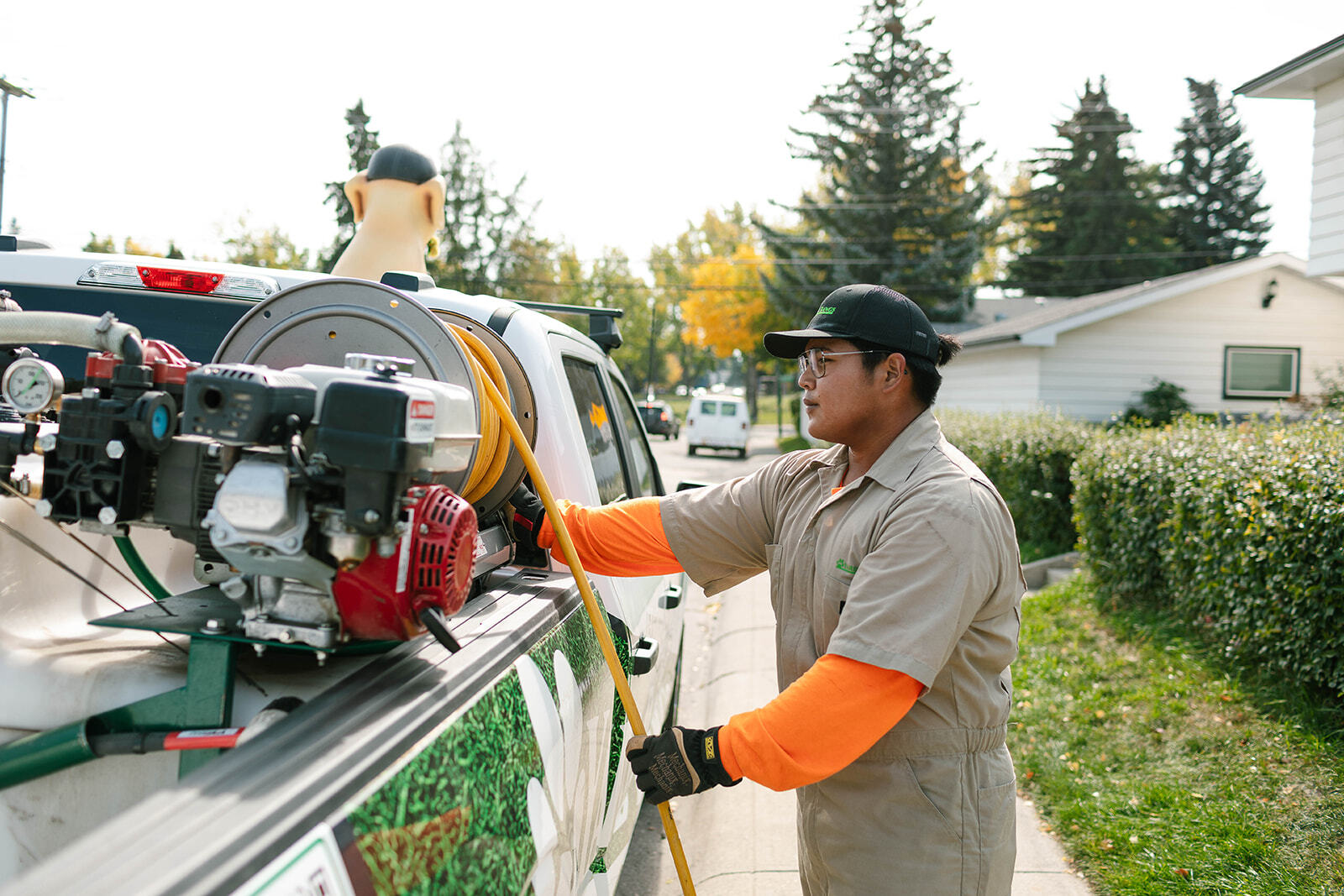
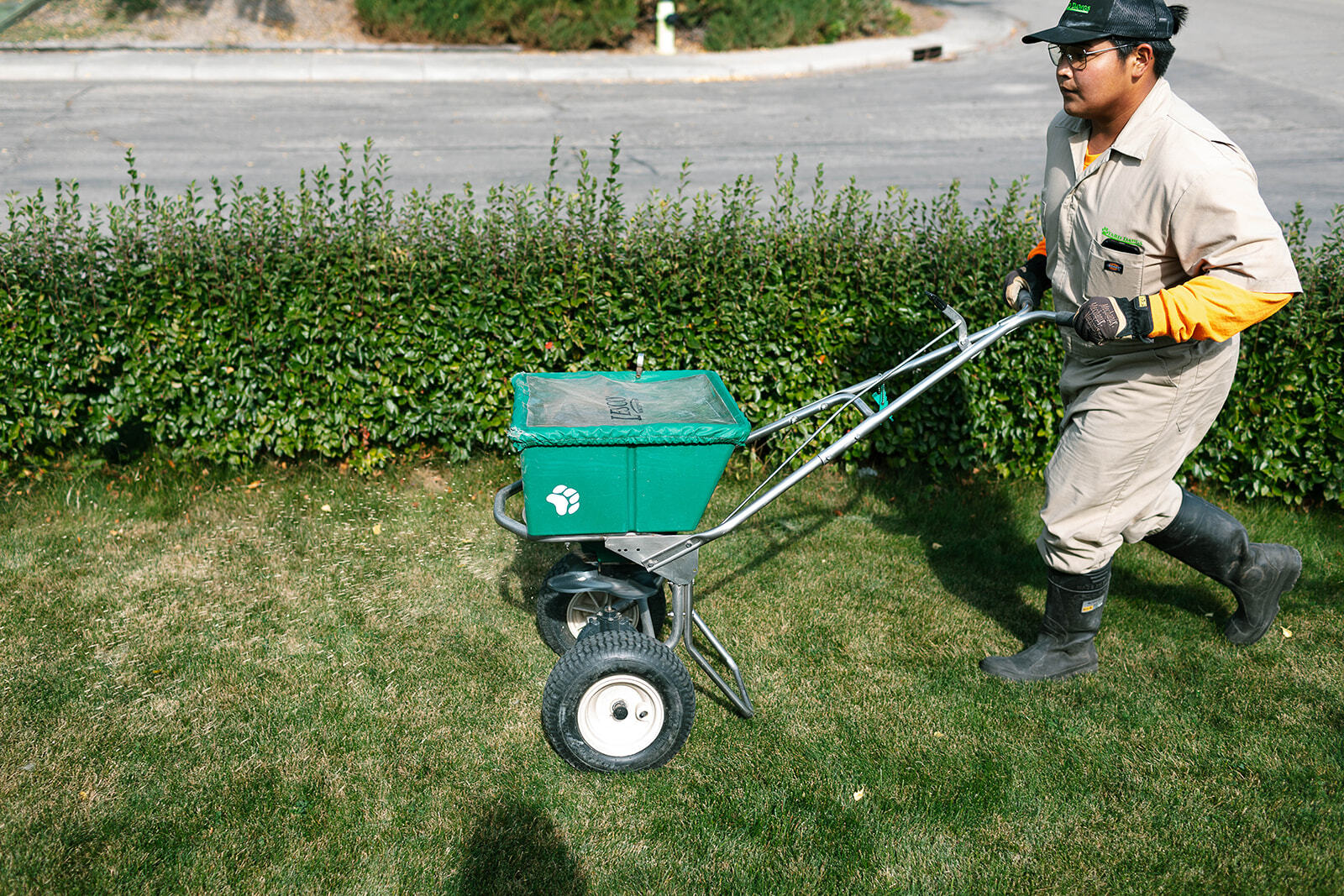
Yard Dawgs builds these follow-up treatments into ongoing lawn care plans, so you're not left managing the post-seeding window on your own.
Our team tracks your property history and knows what's been applied, what's coming up, and what your lawn needs next, without you having to start that conversation from scratch every time.
Stop Guessing. Start Growing.
The overseeding vs. reseeding decision doesn't have to be complicated, but it does require an honest look at your lawn's current condition. Most properties in Alberta and Saskatchewan are overseeding candidates, they just need the right technique, the right timing, and the right follow-up treatments to deliver visible results.
Full renovations are sometimes necessary, but they're rarely the first answer.
With more than 4,000 happy customers and dedicated teams who know each property they work on, Yard Dawgs takes the guesswork out of this process. We don't just drop seed and move on, we treat your lawn like a long-term project and stand behind every service we provide until your turf looks exactly the way it should.