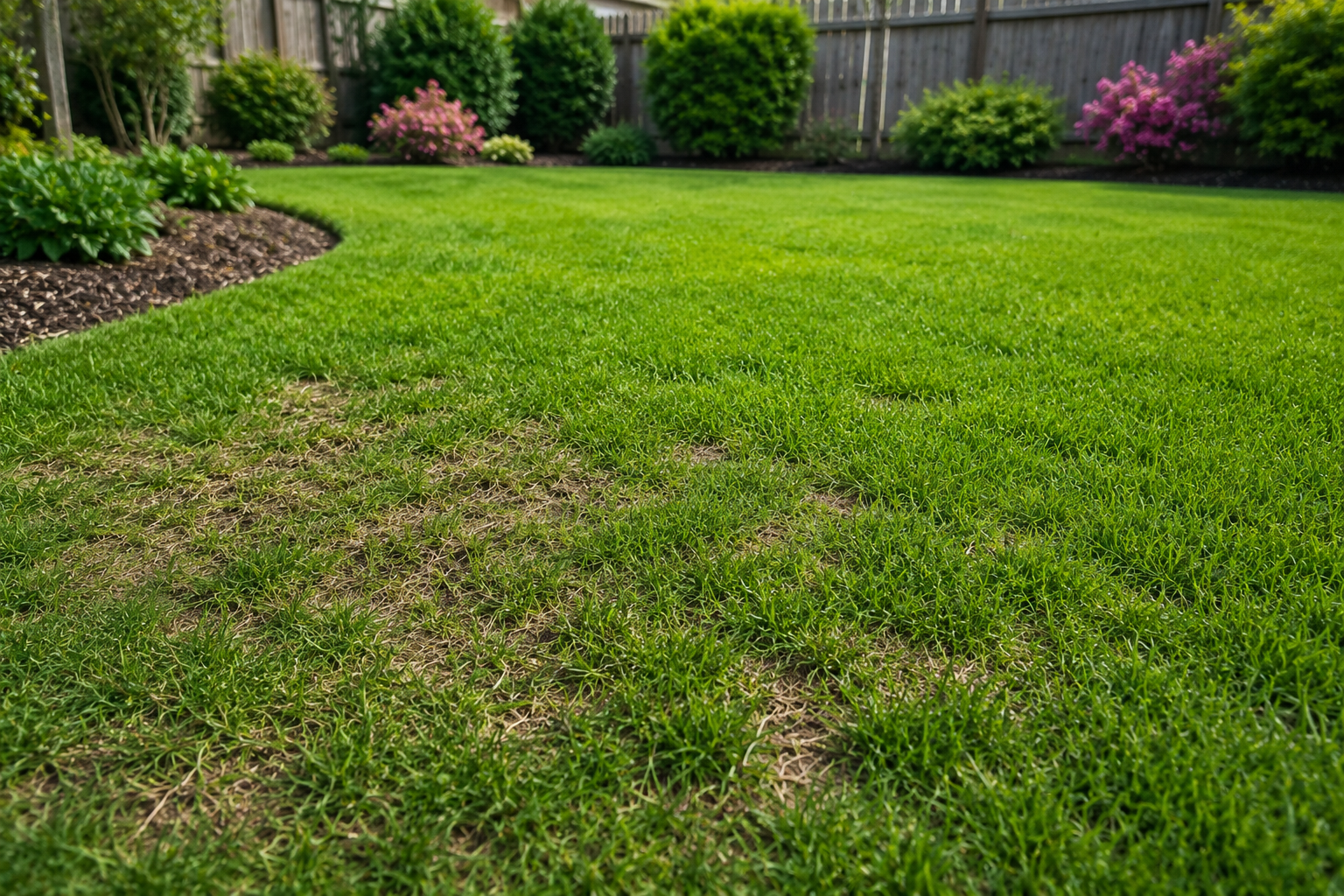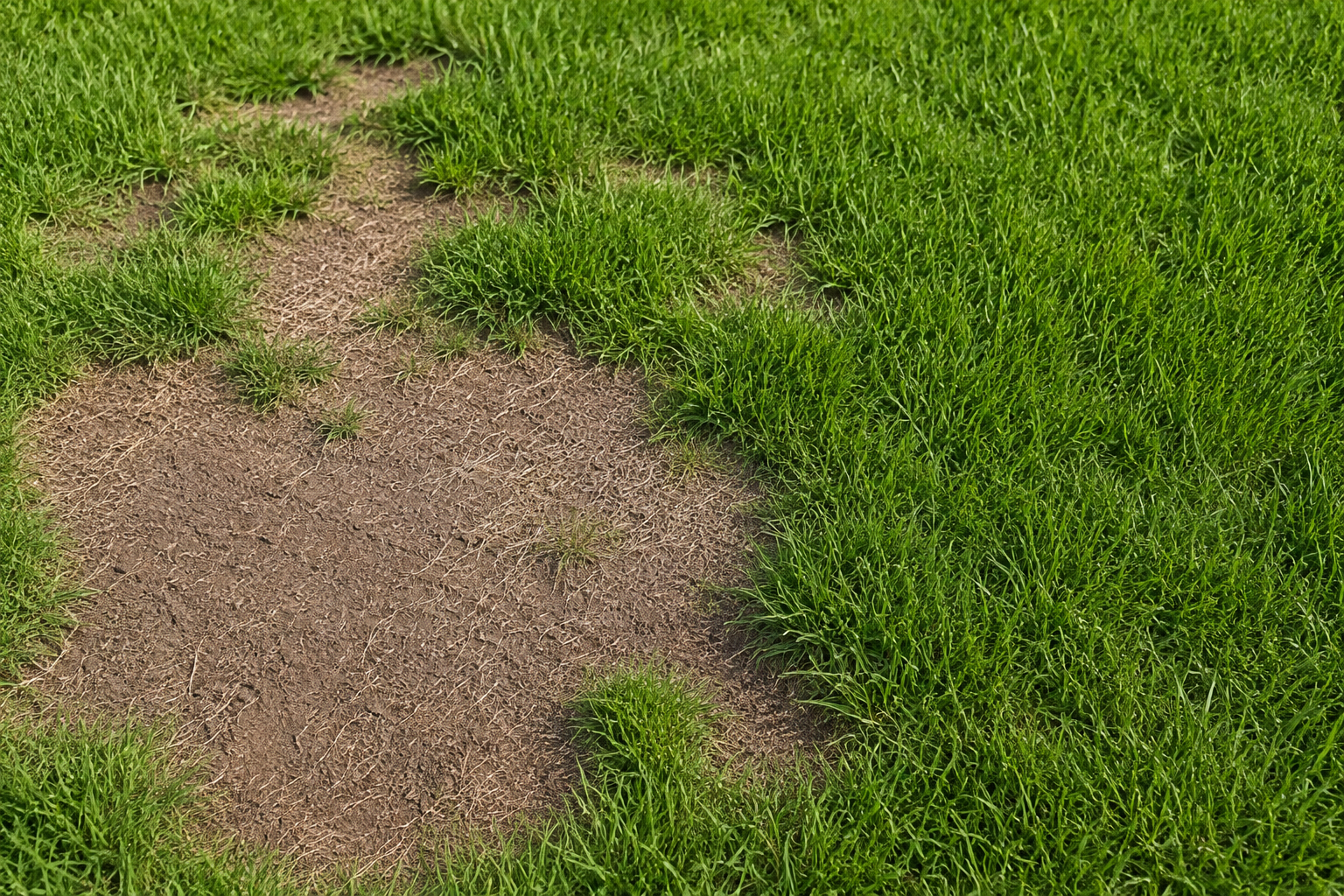







Fertilizer is one of the most misused products in residential lawn care because homeowners apply the right product the wrong way. Timing, method, and moisture conditions all determine whether your fertilizer feeds your lawn or simply washes away. Research from turfgrass institutions consistently shows that application technique can affect nutrient uptake by as much as 30–50%, meaning two lawns receiving identical products can produce dramatically different results based purely on how the fertilizer was applied.
In Alberta and Saskatchewan, where the growing season is short and every treatment window matters, knowing how to apply lawn fertilizer correctly is the difference between a lawn that recovers and thrives and one that plateaus no matter what you put into it.

Limited spots available!
Transform your lawn today

Limited spots available!
Transform your lawn today
The Five Main Application Methods
Not all fertilizers are applied the same way, and not all methods suit every lawn situation. Here's how each approach works and where it performs best.
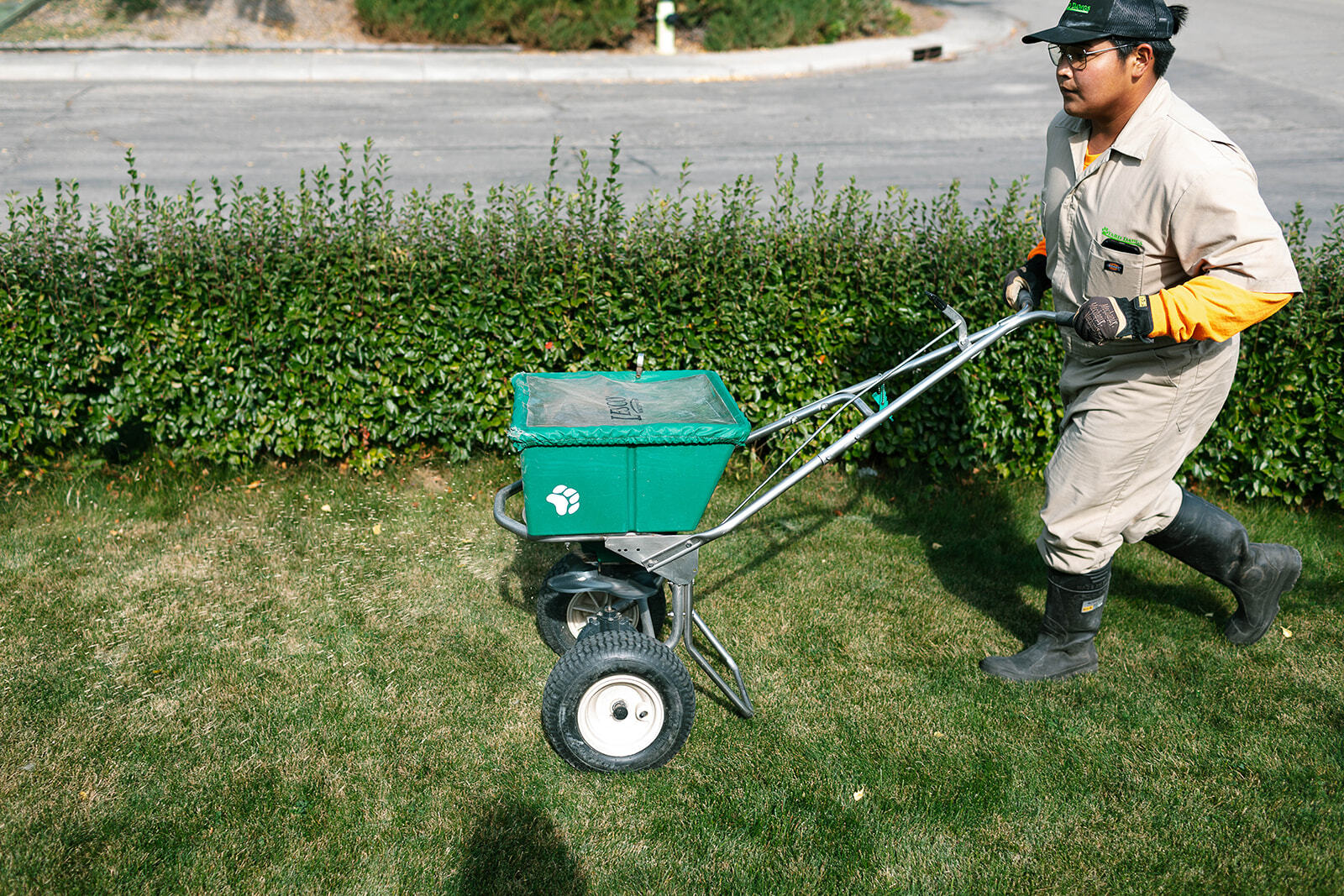
1. Broadcast spreading is the most common method for established residential lawns.
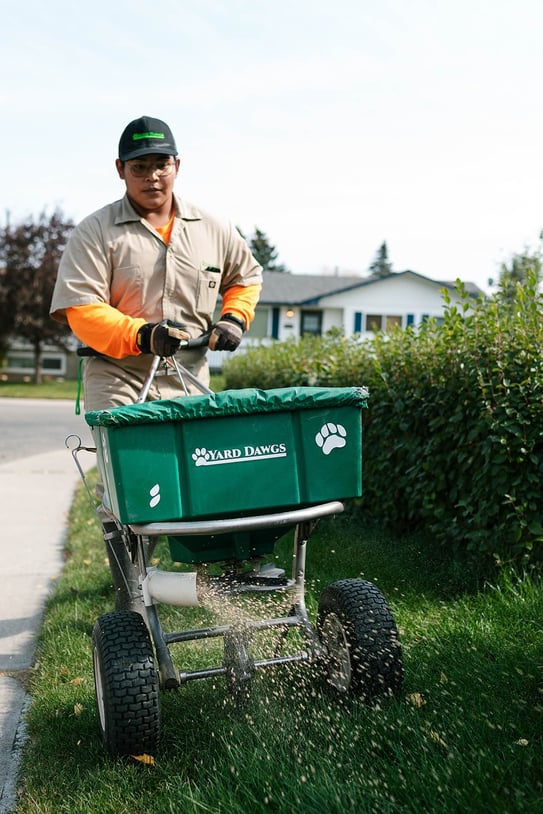
A rotary or drop spreader distributes granular fertilizer evenly across the turf surface, where it gradually breaks down and filters into the root zone. It's efficient for large areas and works well as part of a regular seasonal program. The main risk is runoff if rain arrives too soon after application or if too much product is applied at once.
2. Banding places concentrated fertilizer in narrow lines or zones near specific areas of the lawn rather than across the whole surface.
This is particularly useful around landscape beds, newly seeded patches, or areas being prepared for slit-seeding, where precision matters more than broad coverage. It reduces waste and directs nutrients exactly where growth is being encouraged.
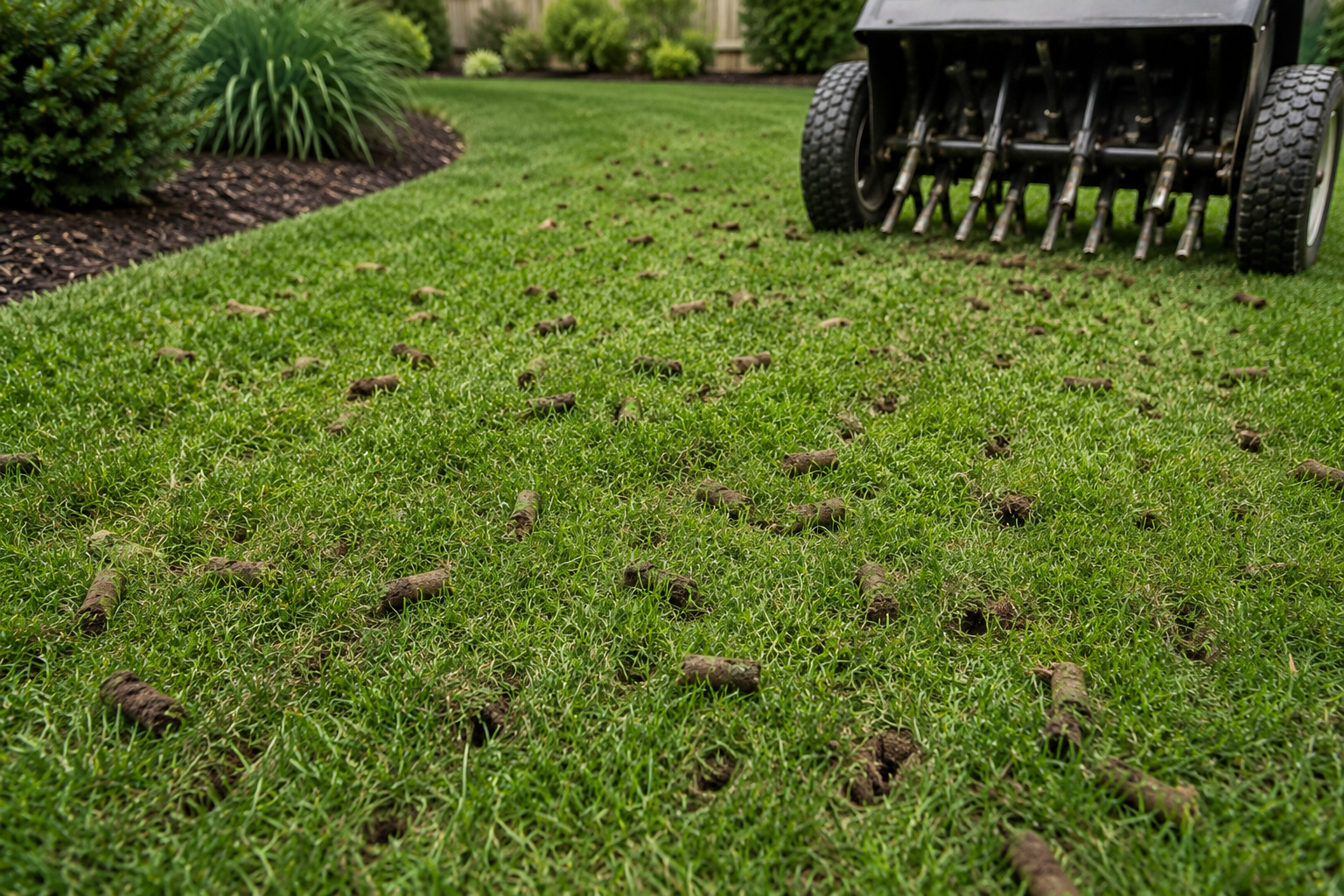
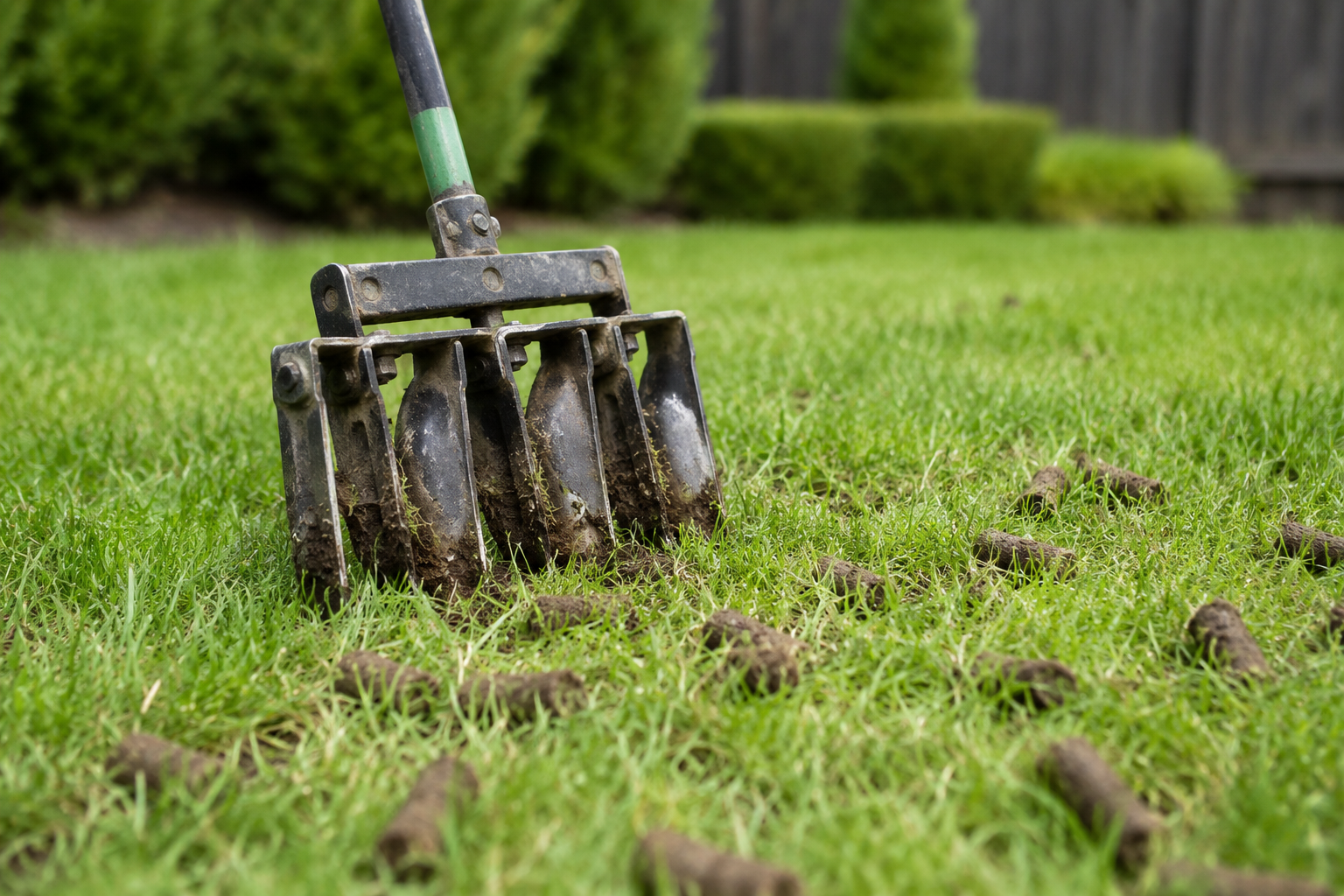
3. Post-aeration application involves spreading granular fertilizer immediately after mechanical aeration.
The holes punched through the soil surface act as direct delivery channels, pulling nutrients down into the root zone instead of leaving them sitting on top of compacted ground. This is one of the most effective combinations in lawn care, aeration solves the physical barrier, and fertilizer takes immediate advantage of the open pathways.
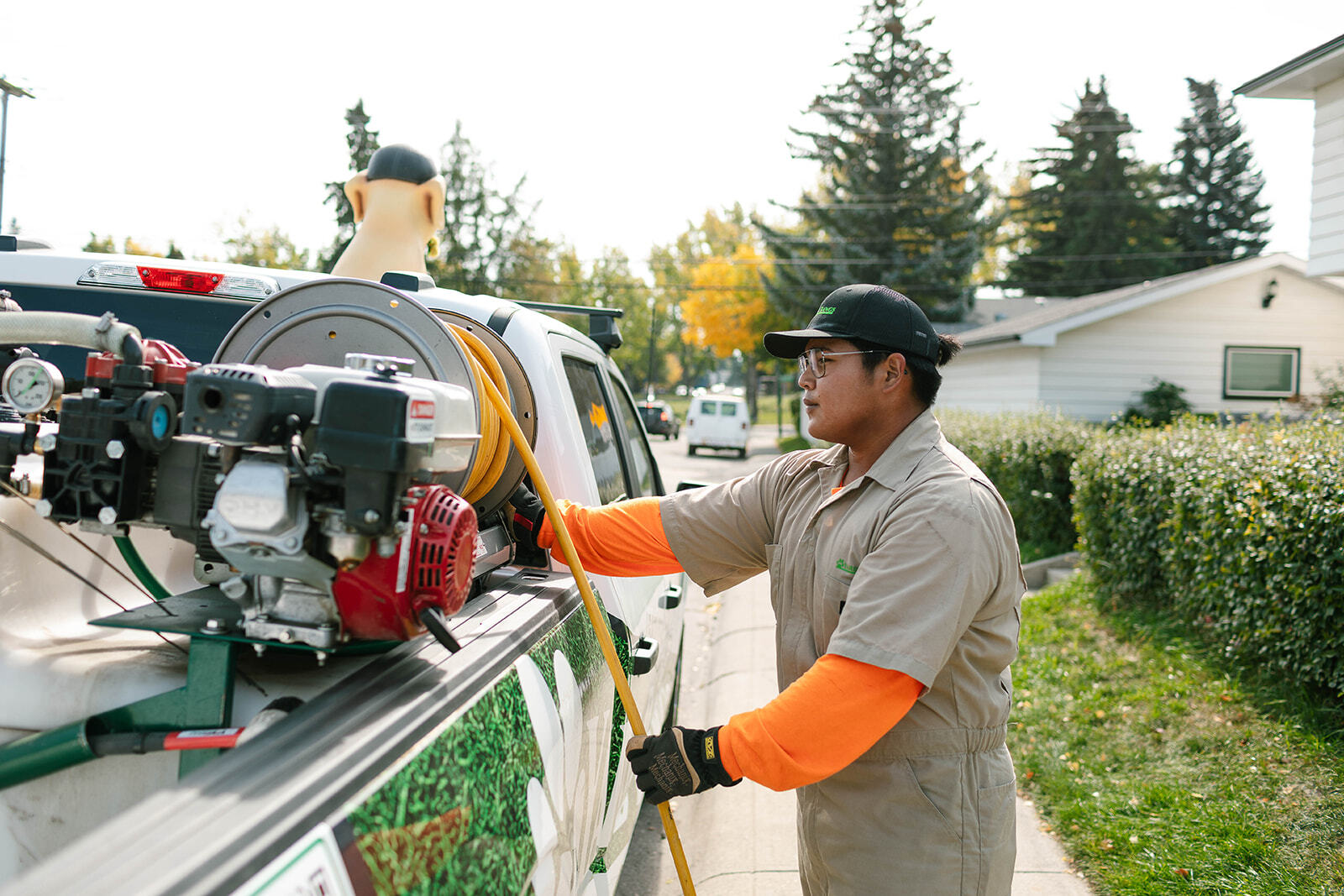
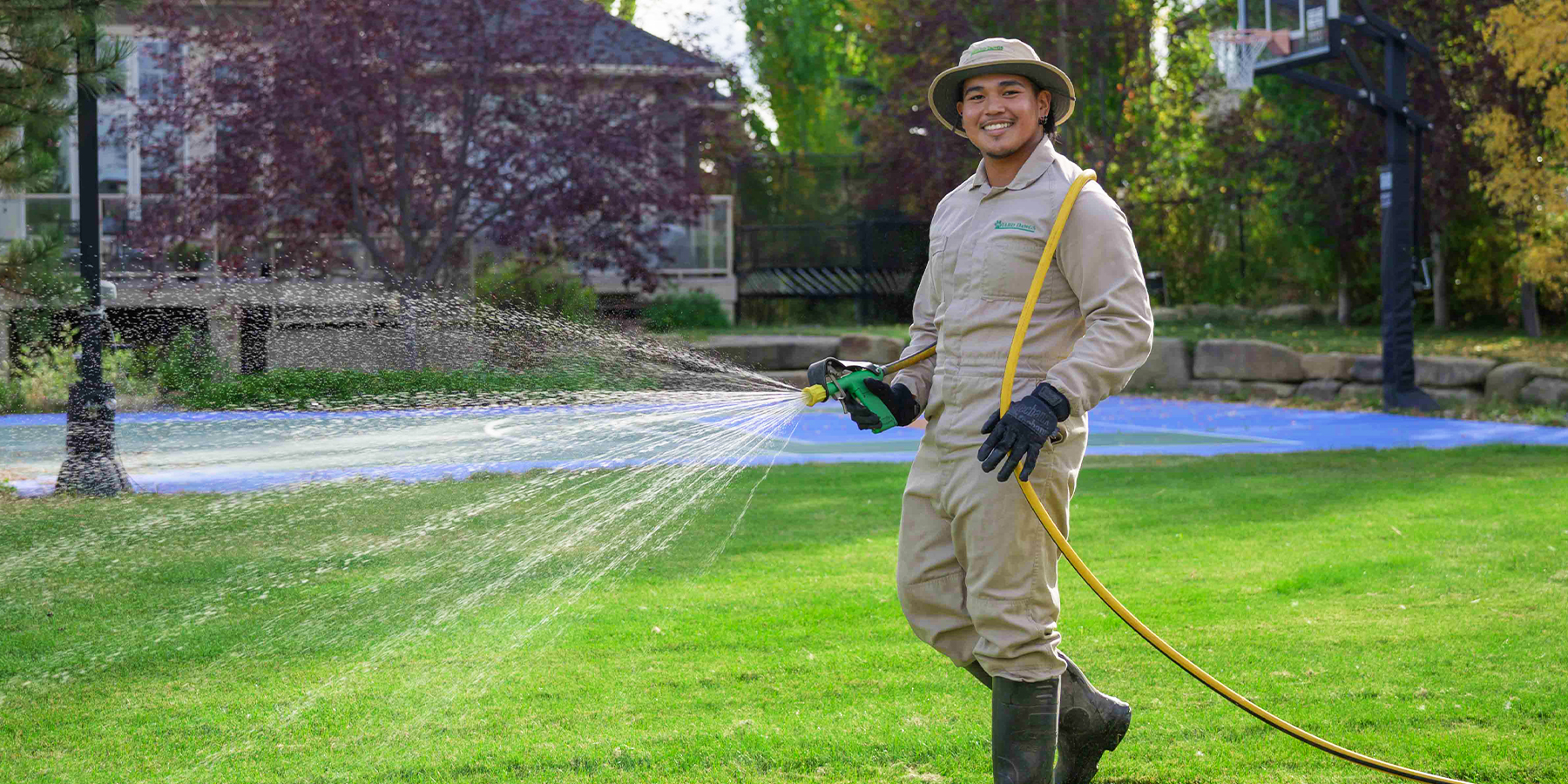
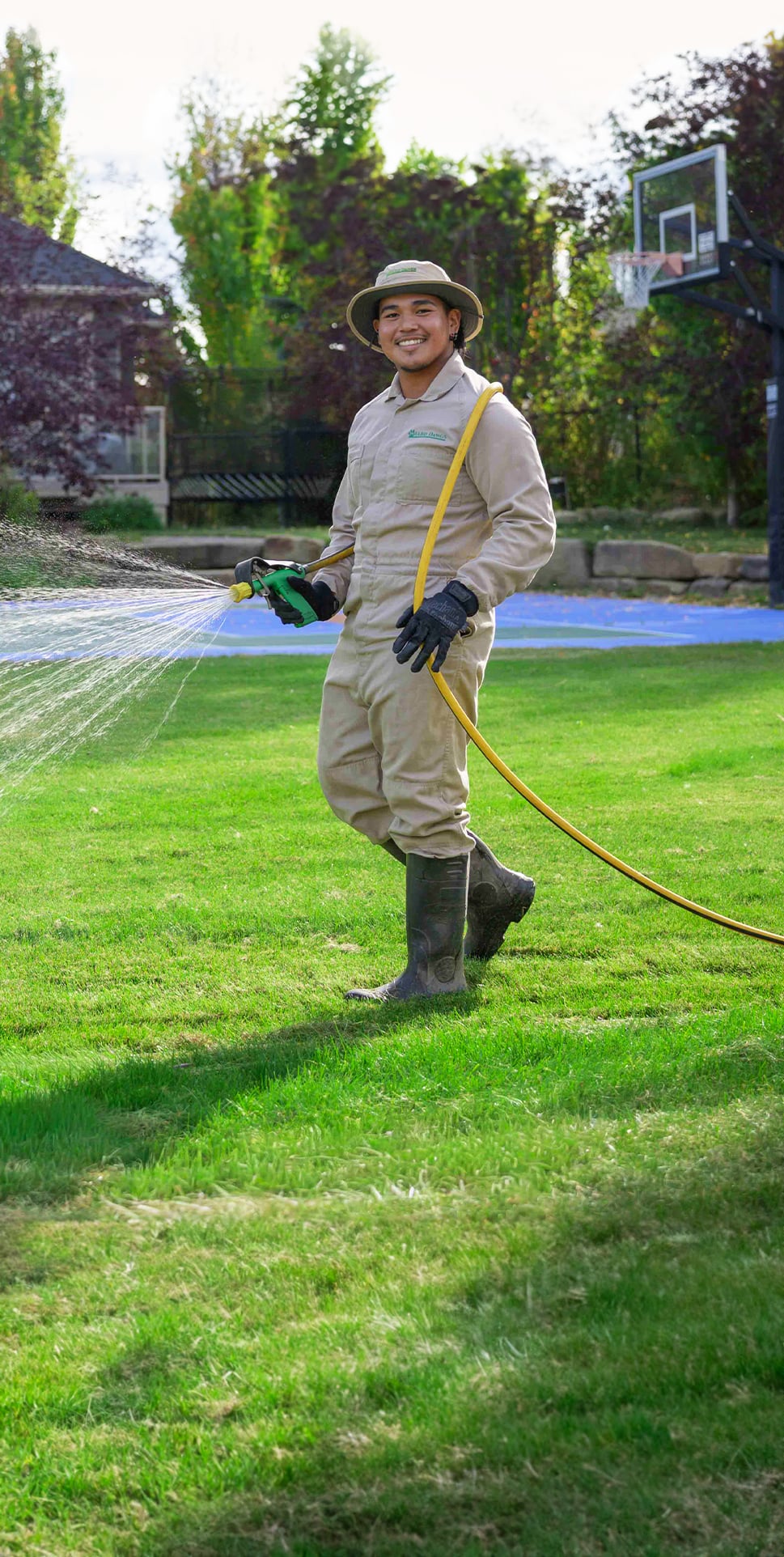
4. Liquid fertilizer application uses spray equipment to apply dissolved nutrients either directly to grass blades (foliar feeding) or to the soil surface.
Liquid formulas are absorbed quickly and can produce visible results within days. They're particularly useful for correcting deficiencies mid-season or supporting lawns under stress. Yard Dawgs uses liquid applications like Super Juice as part of targeted treatment programs, delivering a concentrated nutrient boost when the lawn needs a fast response.
5. Soil amendment applications such as sea kelp work differently from standard fertilizers.
Rather than simply supplying nitrogen, phosphorus, and potassium, these biostimulant applications improve the soil's ability to absorb and retain nutrients over time. Sea kelp supports root development and stress tolerance, making it a valuable companion to any fertilizer program rather than a standalone replacement.
Can You Apply Fertilizer to Wet Grass?
This is one of the most common questions homeowners ask, and the answer depends on what type of fertilizer you're using and how wet the grass actually is.
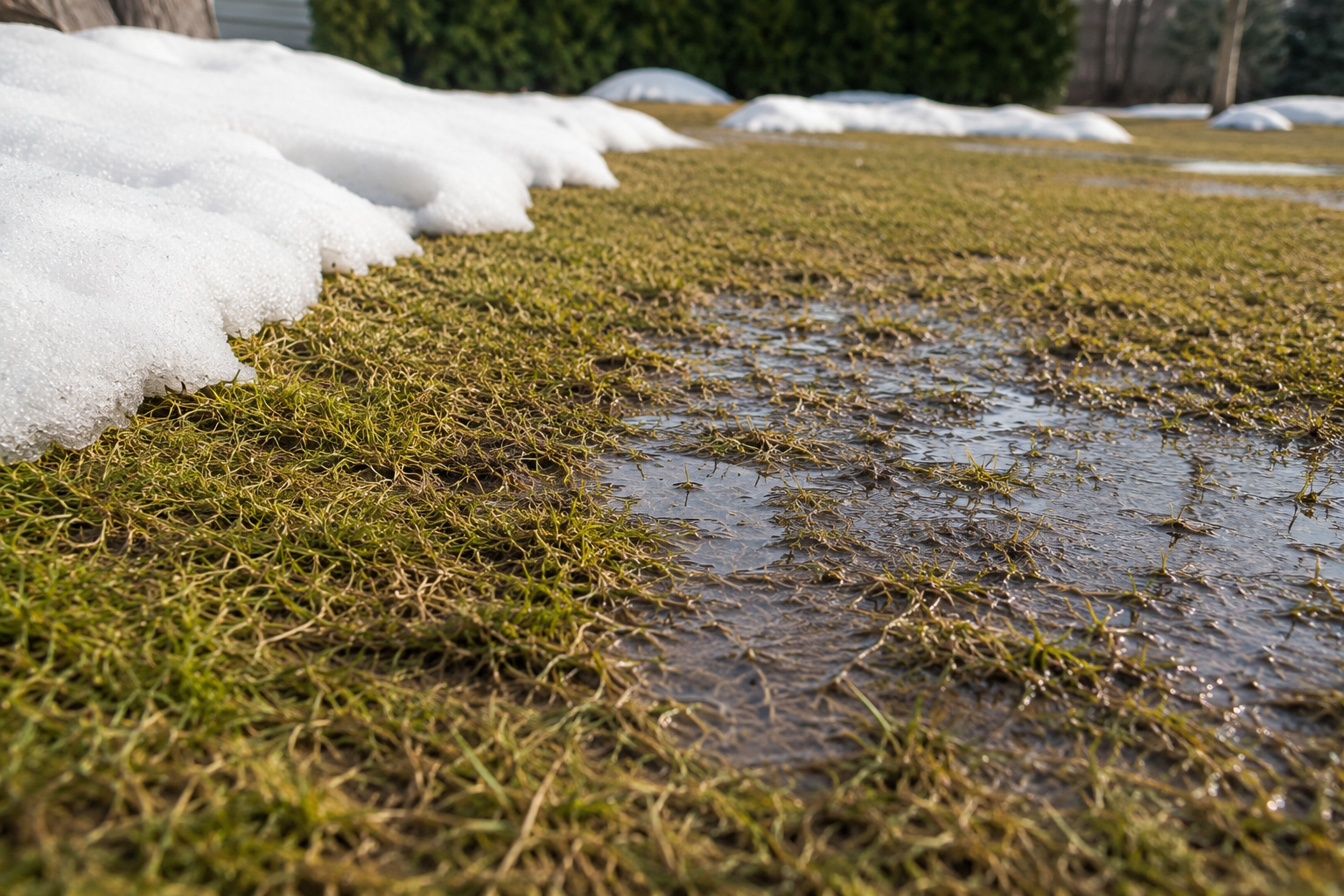
For granular fertilizers, light surface moisture, such as morning dew, is generally fine and can actually help granules make contact with the soil. However, applying granular fertilizer to saturated ground or immediately before heavy rainfall is a genuine problem. Excess moisture causes granules to dissolve too quickly and run off the surface before they can be absorbed, sending nutrients into drainage systems instead of into your lawn's root zone.
Liquid fertilizers behave differently. Wet grass blades dilute the product and reduce the concentration that actually contacts the leaf surface, which lowers uptake efficiency. For foliar applications especially, dry conditions at the time of spraying produce better results.
The practical rule is straightforward: a slightly moist lawn is acceptable for granular applications, but avoid any fertilizer application when rain is expected within 24 hours or when the ground is already waterlogged.
Can You Apply Granular Fertilizer in the Rain?
Light drizzle after application is often beneficial, it helps wash granules off grass blades and into the soil where they dissolve. The problem is heavy or sustained rain, which moves fertilizer laterally across the surface before it has a chance to penetrate.
Here's a quick reference for granular fertilizer and rain conditions:
- Light dew or moisture present at application: Generally acceptable, granules make good soil contact
- Light rain forecast 24–48 hours after application: Often beneficial for dissolution and absorption
- Heavy rain forecast within 12–24 hours: Avoid application, significant runoff risk
- Active rainfall or saturated soil: Do not apply, product will not reach the root zone effectively
- Extended dry period forecast after application: Water lightly within 24 hours to initiate dissolution
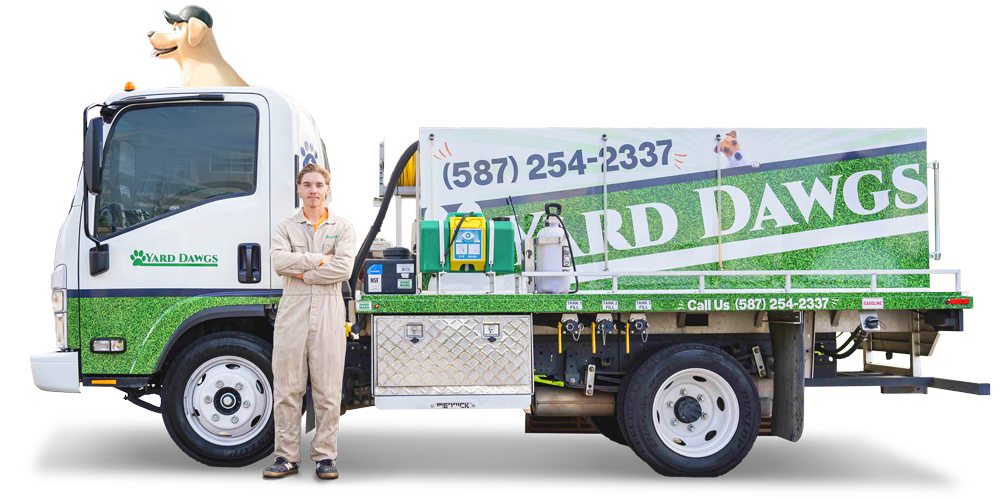
Professional lawn care programs account for weather windows precisely because mistimed applications waste product and can actually stress the lawn. At Yard Dawgs, our teams monitor conditions and time fertilizer applications around the forecast, not around a fixed calendar date.
Timing Fertilizer for Alberta and Saskatchewan Lawns
Knowing how to apply lawn fertilizer is only half the equation. Applying it at the wrong point in the season dramatically reduces its value.
Cool-season grasses, which cover the vast majority of lawns in Calgary, Edmonton, Red Deer, and Saskatoon, have two primary feeding windows. Early spring applications support the green-up phase and give grass the energy to push through the first flush of growth. Late summer through early fall is the most important window of the year: soil temperatures are still warm enough for uptake, root systems are actively developing ahead of winter, and the risk of heat stress on new growth is minimal.
Mid-summer fertilization during peak heat requires more caution. Fast-release nitrogen formulas during drought stress can burn turf rather than support it. This is where slow-release products or lower-nitrogen liquid applications become valuable.
Skipping fall fertilization is one of the most common mistakes on Canadian lawns. The roots continue developing well after the last mow of the season, and a well-timed fall application builds the carbohydrate reserves that fuel spring recovery.
Building a Fertilizer Program That Actually Works
Single applications rarely produce the results homeowners are hoping for. Sustainable lawn health comes from a program, a sequence of treatments timed to what the grass needs at each stage of the growing season.
A well-structured fertilizer program for cool-season lawns typically involves:
- Early spring, a balanced application to support green-up and early root activity
- Late spring to early summer, a follow-up focused on sustained growth and colour without pushing excessive blade growth
- Late summer, a treatment timed around any overseeding or slit-seeding work to support germination and establishment
- Early fall, the most critical application of the year, supporting root development and winter hardiness
Between these applications, supplemental treatments like sea kelp and liquid aeration address soil health and stress tolerance rather than just surface appearance. Hardscape weed control keeps fertilizer investment from being undermined by weeds encroaching from driveways, pathways, and bed edges. Lawn fertilizer in Calgary works best when it's part of a coordinated plan, not a one-off bag from a hardware store shelf.
Feed It Right, and It Will Show
How you apply fertilizer matters as much as what you apply. The right method for your lawn depends on soil conditions, grass type, the time of year, and what you're trying to achieve, and getting those variables aligned is what separates a lawn that looks decent from one that draws compliments from the neighbours.
Yard Dawgs builds fertilizer applications into annual plans that account for all of it. The same team visits your property each season, tracks what's been applied, and adjusts the program based on how your lawn is actually responding. Over 4,000 homeowners across Calgary, Edmonton, Red Deer, and Saskatoon trust that approach, and we back every treatment with a 100% satisfaction guarantee.