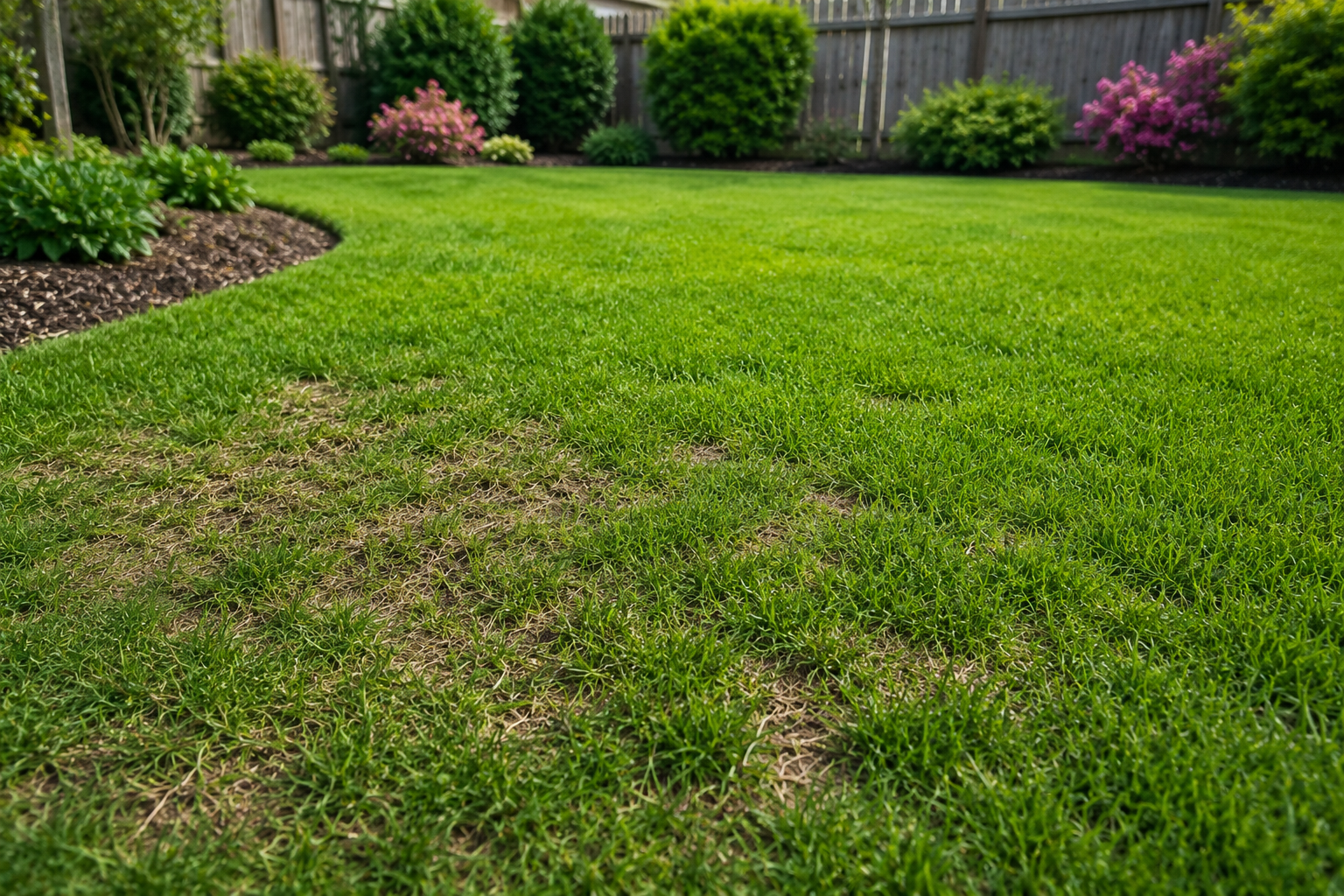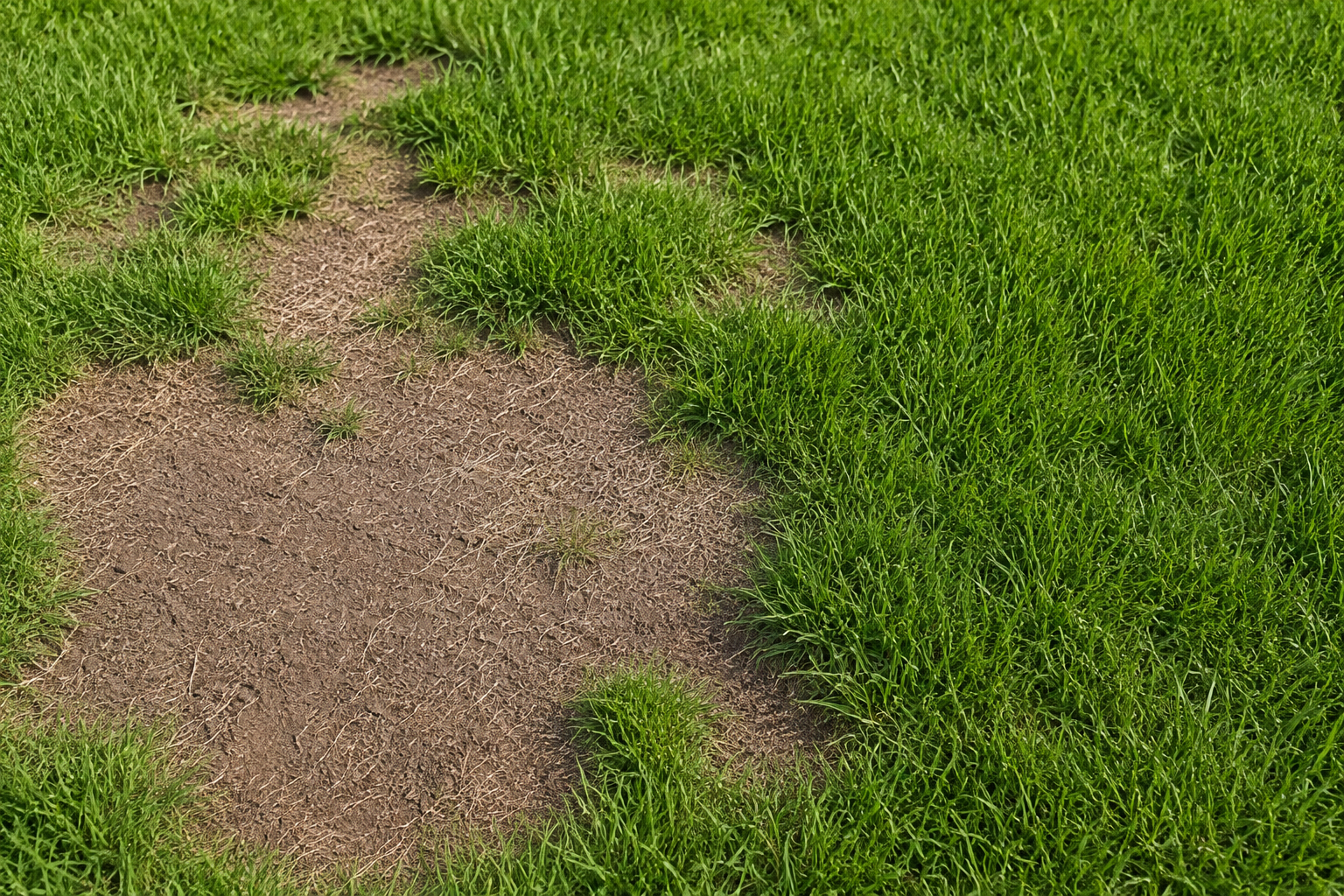







Bare spots have a way of ruining an otherwise healthy lawn. One patch turns into three, then suddenly you’re looking at uneven turf that never quite fills in, no matter how much you water or fertilize.
Here’s the part most people miss: bare spots are rarely just a “seeding problem.” They’re a signal. Something in your lawn, soil, nutrients, or structure, is preventing grass from establishing in the first place.
And unless you fix that underlying issue, even the best seed won’t last.
If you want to truly understand how to get grass to grow in bare spots, you need to approach it as a process, not a one-time fix.

Limited spots available!
Transform your lawn today

Limited spots available!
Transform your lawn today
What Causes Bare Spots in Lawn
Before you try to repair anything, you need to understand why those spots appeared.
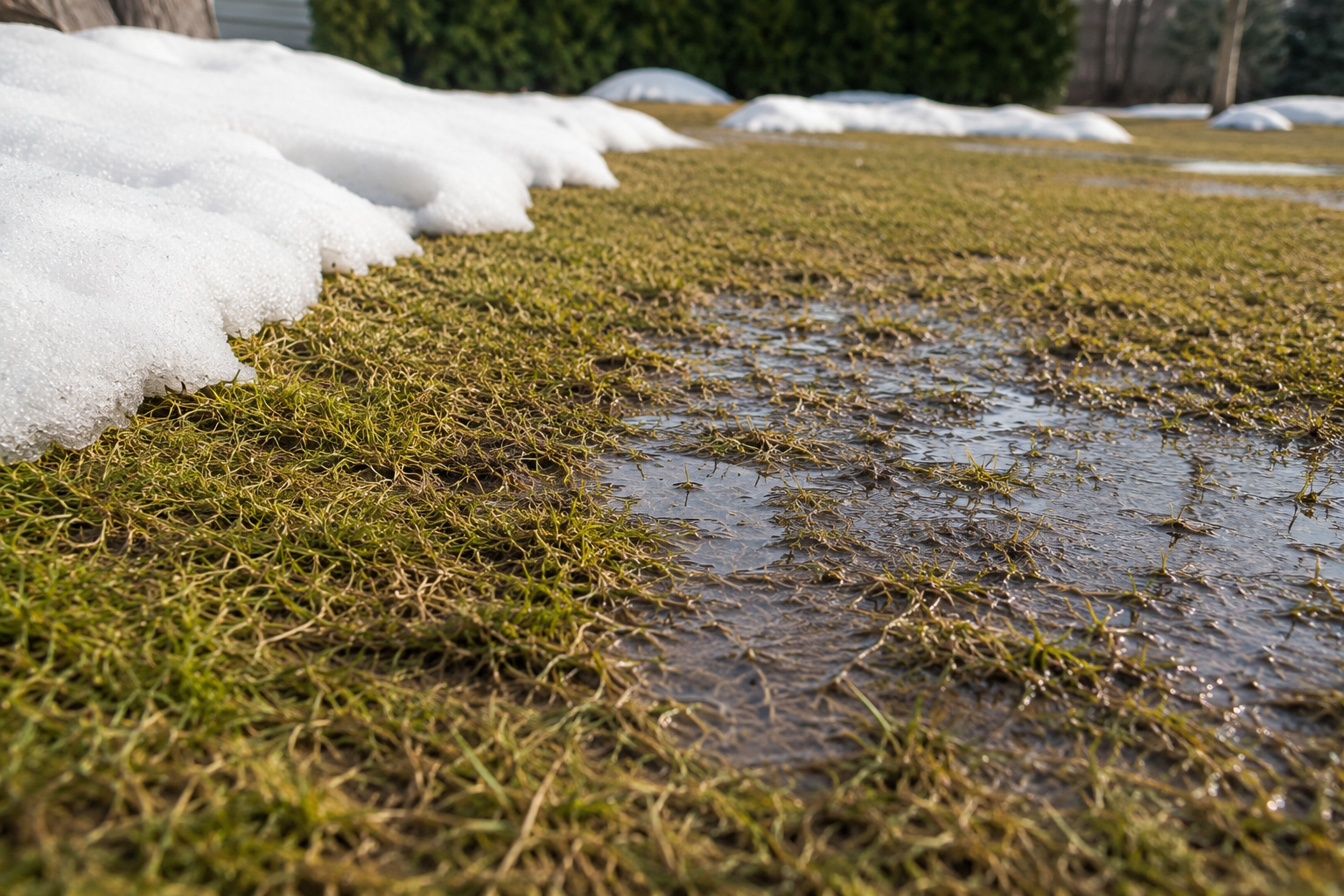
Bare areas don’t happen randomly. They develop where your lawn is under stress or unable to sustain growth. In colder regions like Calgary or Edmonton, winter alone can weaken turf enough to create patchy areas by spring.
But there are usually deeper causes involved.
- Compacted soil is one of the biggest issues. When soil becomes dense, roots can’t expand, and water struggles to penetrate. Grass simply can’t establish properly.
- Nutrient imbalance limits growth even if grass initially sprouts. Without consistent feeding, new grass struggles to survive beyond early stages.
- Pest activity, including chinch bugs, can damage grass at the root level, leaving areas that look dry and lifeless.
- Thin or stressed turf allows weeds or environmental stress to take over, gradually pushing grass out.
These factors often overlap. That’s why simply adding seed rarely solves the problem long-term.
A strong lawn care approach always starts by correcting these conditions first.
Why Bare Spots Get Worse Over Time
Bare spots don’t stay contained.
Once grass disappears, that area becomes vulnerable. Soil dries out faster, weeds establish more easily, and surrounding grass starts to weaken due to uneven conditions.
Over time, this creates a spreading effect. What started as a small patch can expand because the surrounding turf is now competing with poorer soil conditions and increased stress.
That’s why timing matters. The earlier you address bare spots, the easier they are to repair, and the less likely they are to spread.
When Is the Best Time to Seed Bare Spots in Lawn
If you’re serious about results, timing your repair correctly makes a major difference.
Spring is one of the best opportunities to repair bare spots because your lawn is entering an active growth phase. Soil temperatures begin to rise, moisture levels are more stable, and grass is naturally ready to grow.
That said, not all spring timing is equal.
Early spring repairs can work well, but they require proper soil preparation and consistent follow-up care. Mid-spring tends to offer more stable conditions, allowing seed to establish faster and more reliably.
What matters most is aligning your efforts with active growth. Seeding too early, when soil is still cold, slows germination. Waiting too long exposes new grass to summer stress before it’s fully established.
A well-timed approach gives new grass enough runway to root deeply and integrate into the existing lawn.
How to Plant Grass Seed in Bare Spots
Seeding bare spots sounds simple, but the details are what determine success.
The goal isn’t just to spread seed. It’s to create the right environment for that seed to establish strong roots and survive long-term.
Here’s how the process should actually look:
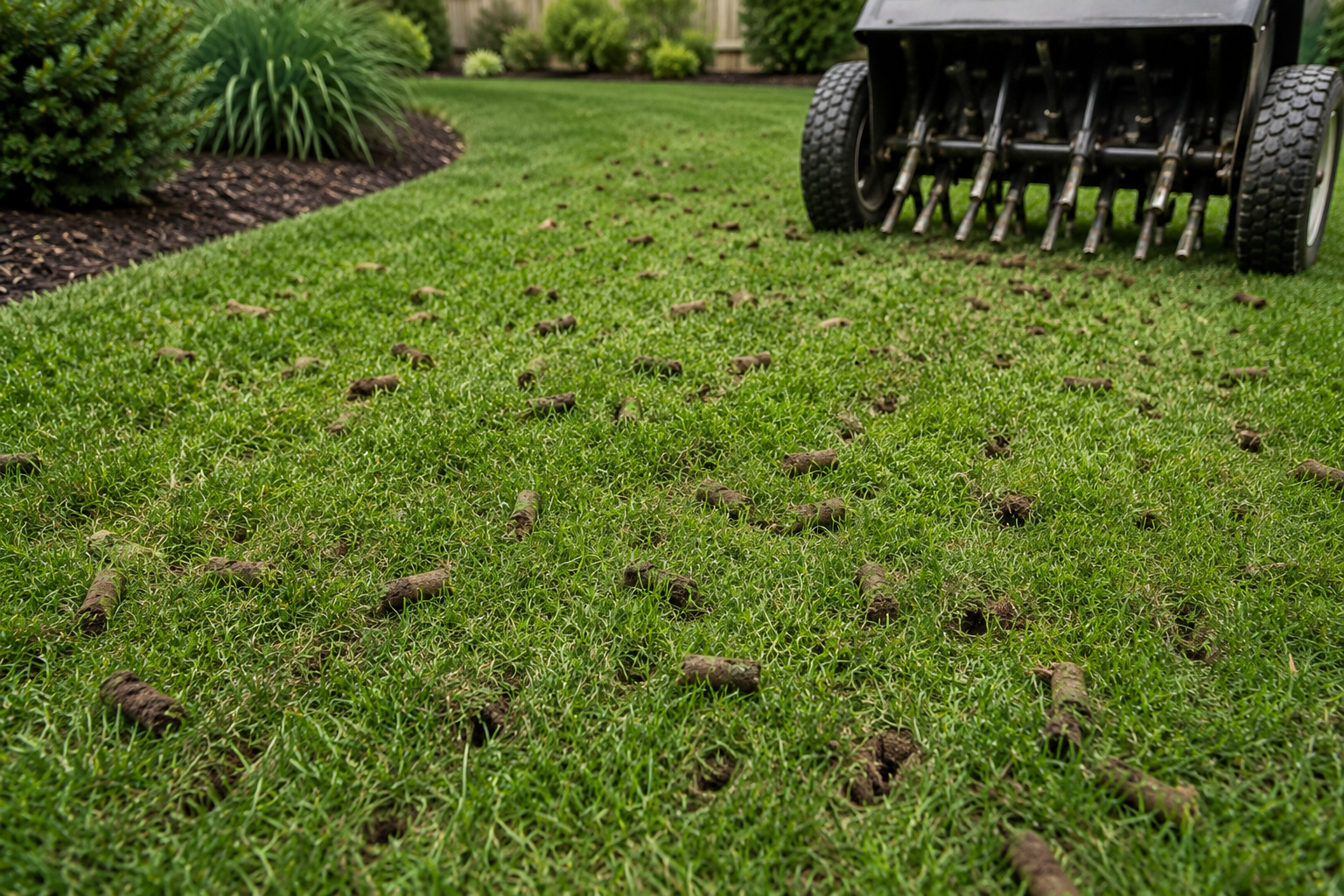
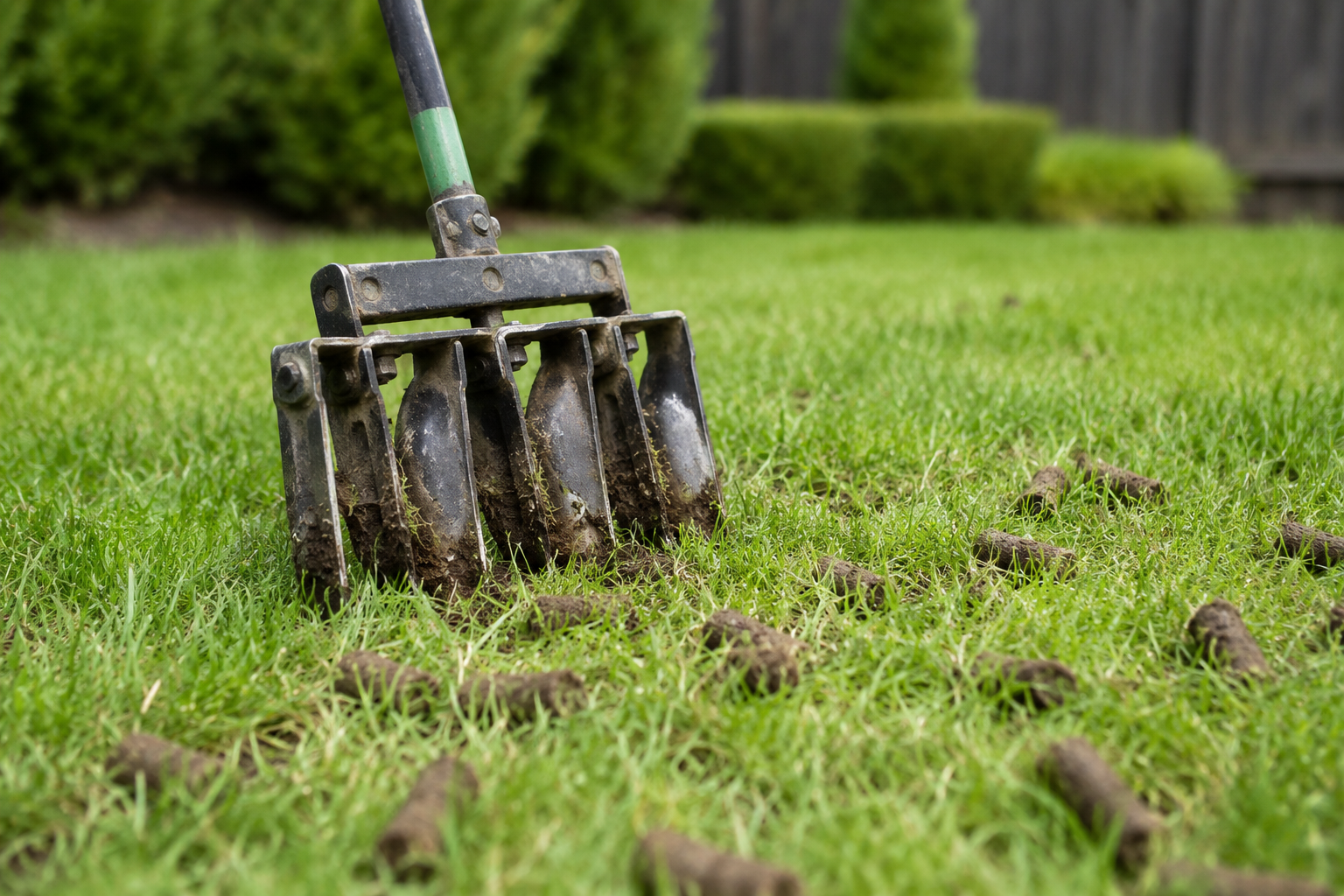
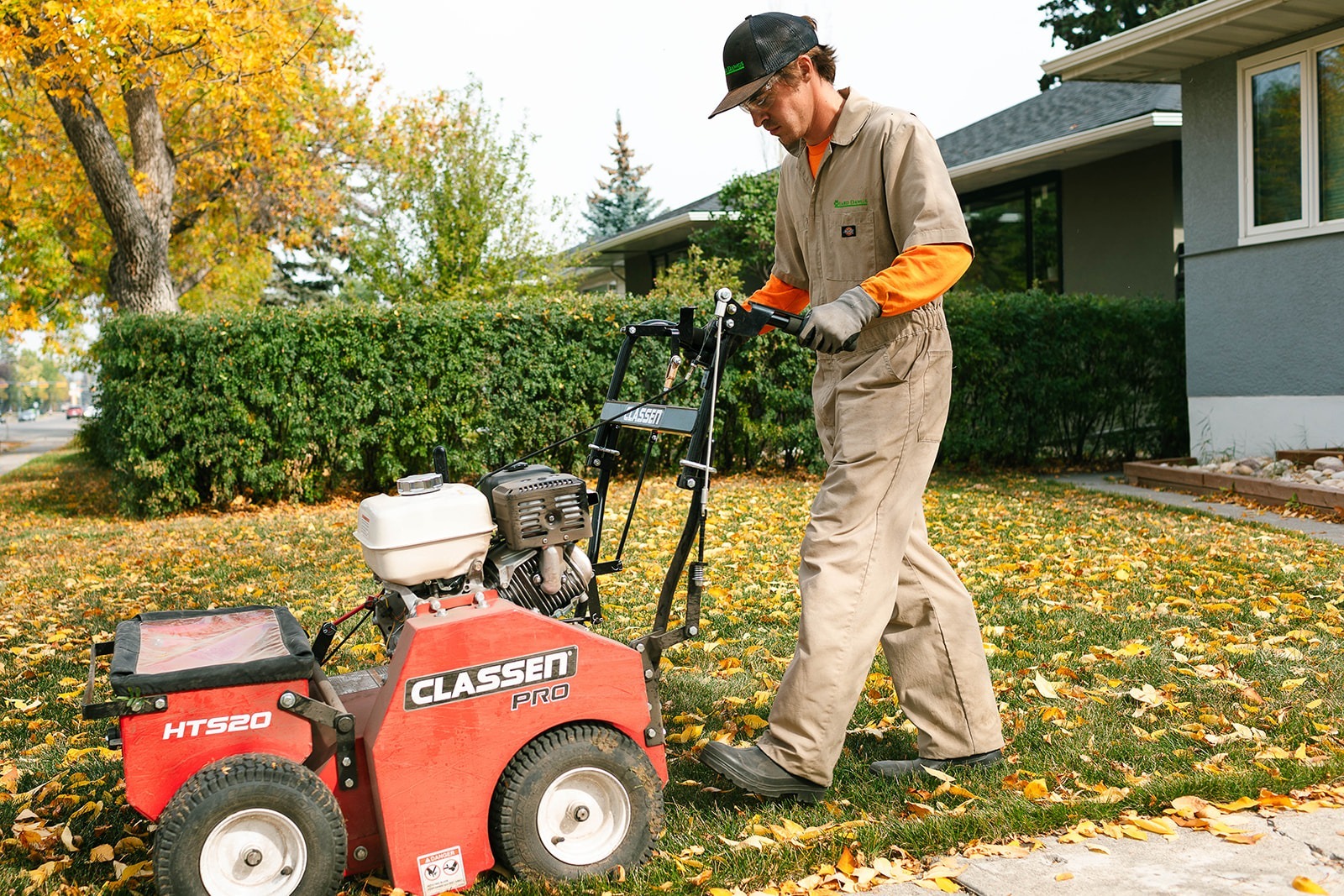
- Prepare the soil properly by loosening compacted areas. Mechanical aeration or liquid aeration improves structure and allows roots to grow deeper instead of staying shallow.
- Ensure seed-to-soil contact. Grass seed needs direct contact with soil to germinate effectively. If it sits on top, it dries out or gets displaced.
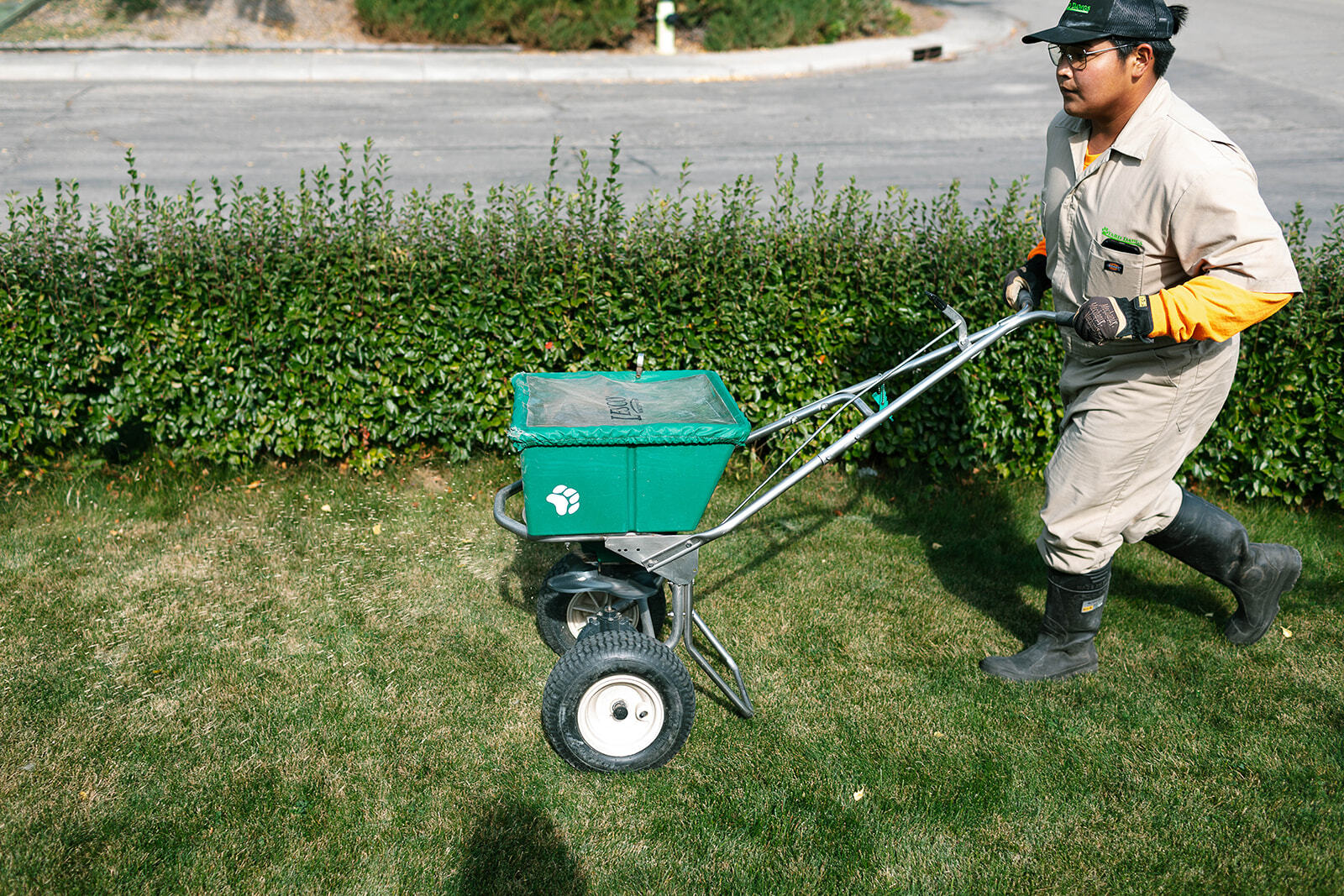
- Support growth with nutrients using fertilizer, along with treatments like sea kelp and super juice to improve nutrient absorption and reduce stress.
- Stabilize the area so new seedlings aren’t disrupted while they establish.
This is why professional methods like slit-seeding are so effective. Instead of leaving germination to chance, the seed is placed directly into the soil at the right depth, dramatically improving success rates.
When done correctly, new grass doesn’t just grow, it integrates seamlessly with the rest of your lawn.
The Role of Soil Health in Repairing Bare Spots
Soil is the foundation of everything.
If your soil is compacted, low in nutrients, or unable to retain moisture properly, new grass won’t survive, even if it germinates successfully.
That’s why improving soil conditions is often the turning point in repairing bare spots.
Mechanical aeration physically opens up the soil, allowing air, water, and nutrients to reach deeper levels. Liquid aeration works more gradually, improving soil structure and permeability over time.
Together, they create an environment where roots can expand naturally. And strong roots are what turn new grass into permanent growth instead of temporary improvement.
Why Fertilization Matters More Than You Think
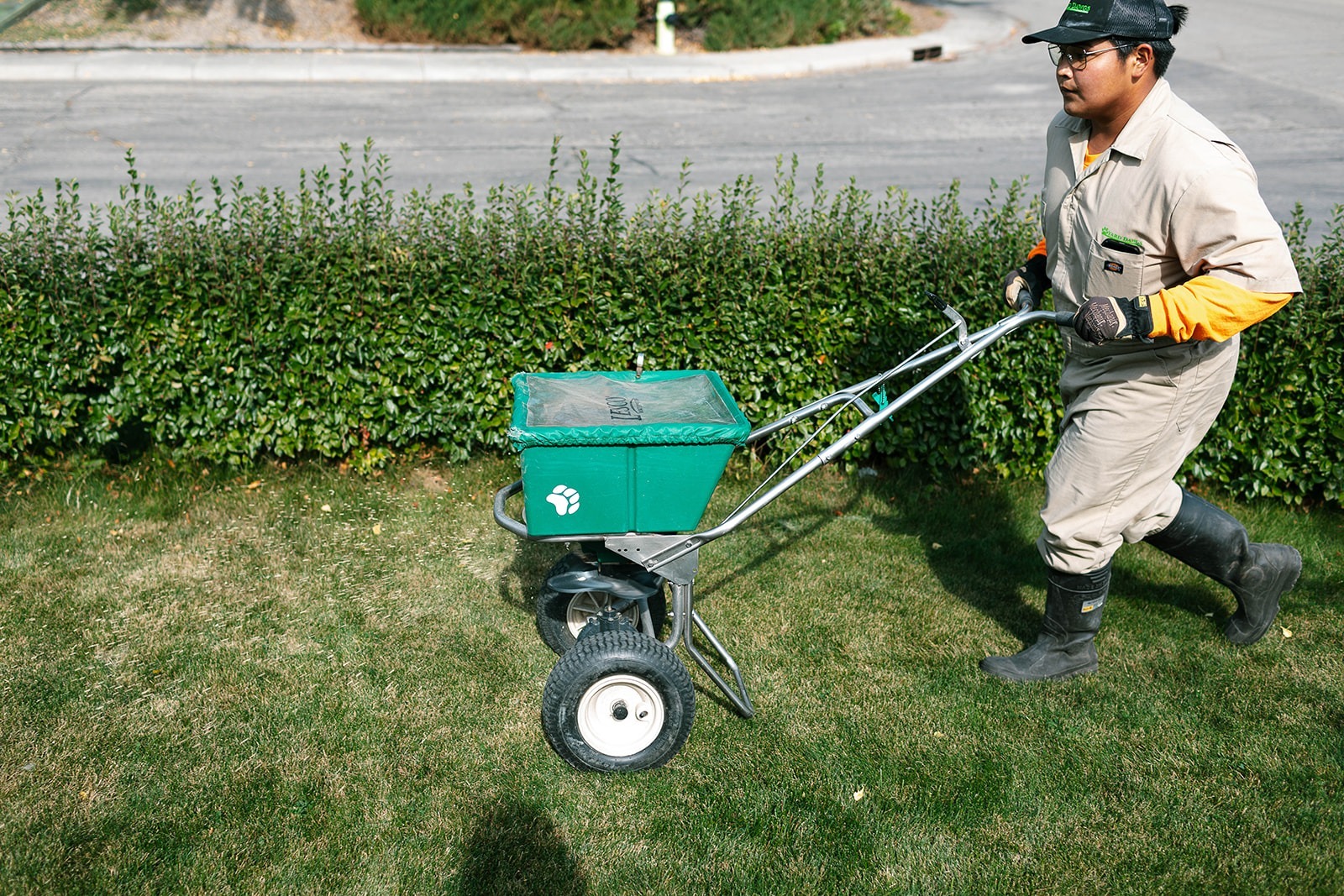
Fertilizer isn’t just about making your lawn greener, it’s about enabling growth at the root level.
When you’re trying to repair bare spots in lawn, consistent nutrient availability becomes even more important. New seedlings require steady feeding to establish strong roots and compete with surrounding grass.
Adding treatments like sea kelp and super juice enhances this process. They improve how efficiently your lawn absorbs nutrients and help reduce stress during early growth stages.
Without this support, even well-seeded areas can struggle to fully establish.
Preventing Bare Spots From Coming Back
Fixing bare spots once is good. Preventing them from returning is what actually saves you time and effort long-term.
- Maintain consistent fertilization so your lawn stays dense and resilient
- Improve soil structure regularly with aeration to prevent compaction
- Control weeds early so they don’t take over weakened areas
- Monitor for pests like chinch bugs that can quietly damage grass
These steps aren’t complicated, but they require consistency. Skipping them is what leads to recurring patchy areas season after season.
Why One-Time Fixes Usually Fail
A common mistake is treating bare spots as isolated issues.
You reseed, maybe add some fertilizer, see initial growth, and then the problem returns a few months later.
That happens because the underlying conditions haven’t changed.
Without improving soil, nutrient balance, and lawn density, you’re essentially resetting the same cycle. Grass grows temporarily, struggles, and disappears again.
Real results come from treating the lawn as a system, not a collection of individual patches.
A Smarter Approach to Lawn Repair
This is where a structured, ongoing approach makes a difference.
Instead of reacting to bare spots after they appear, continuous lawn care focuses on preventing them while repairing existing damage at the same time.
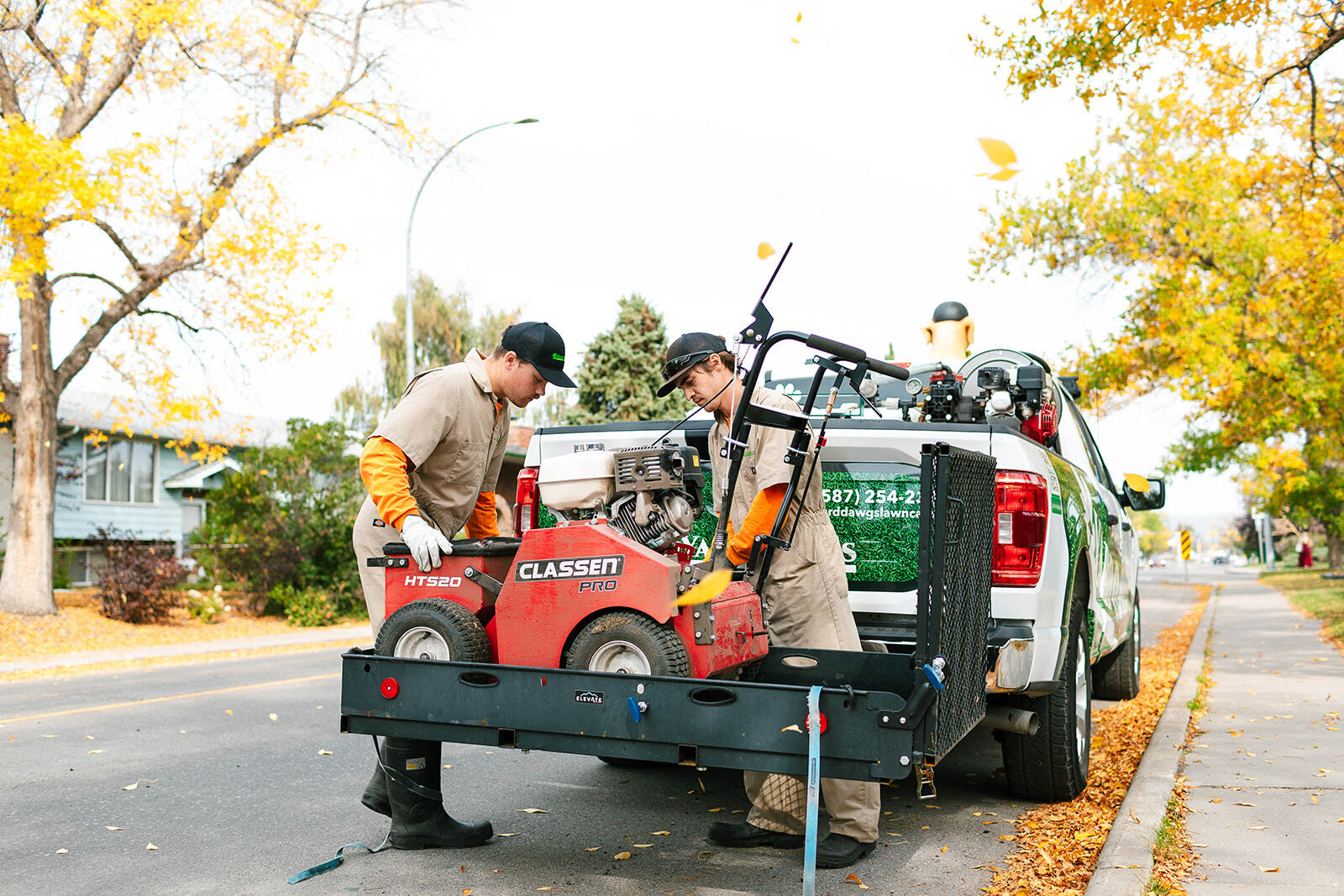
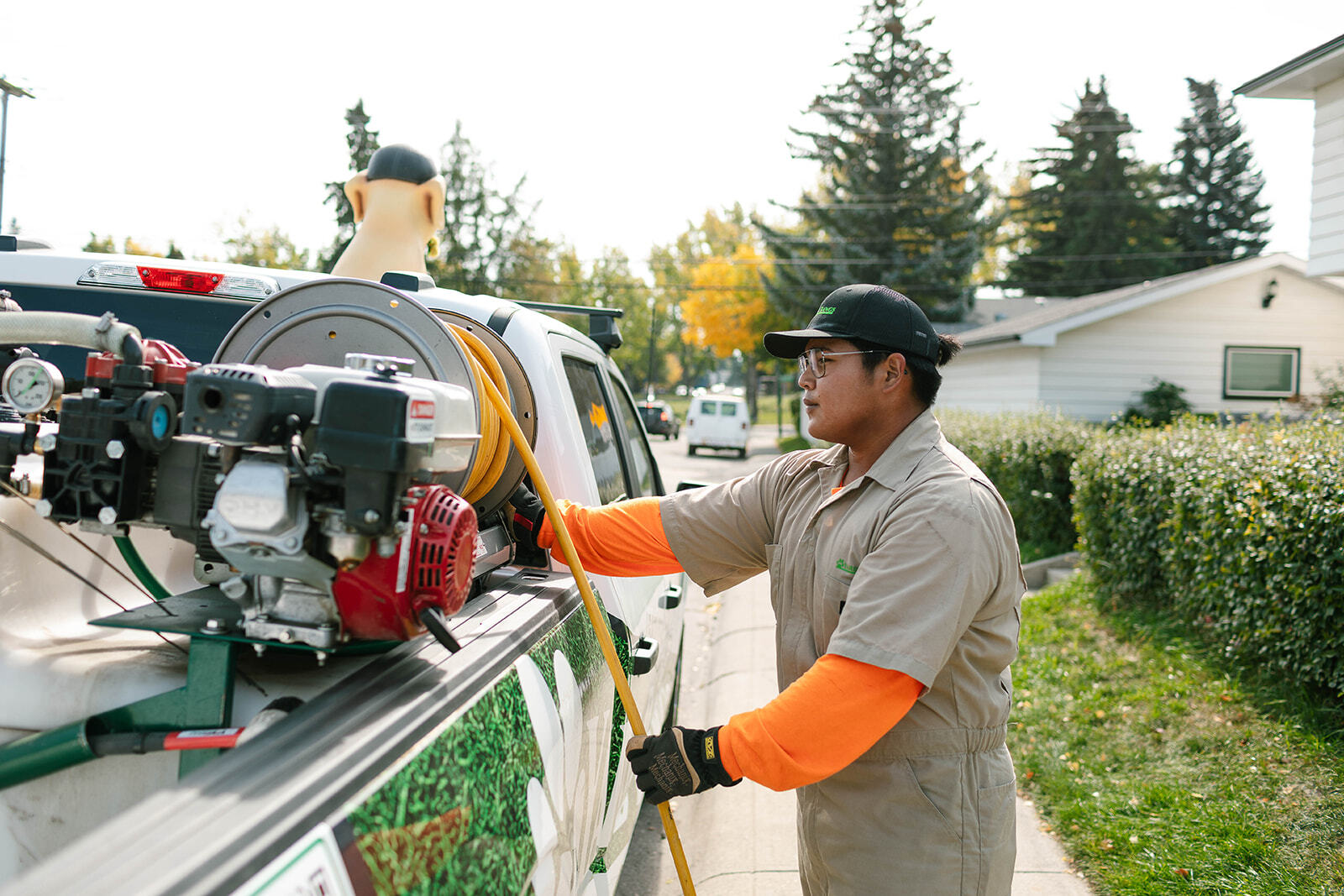
That’s how providers like Yard Dawgs approach it. Treatments aren’t applied randomly, they’re timed and adjusted based on how your lawn responds throughout the season.
You also get consistency. The same team works on your property, understands its history, and adapts the plan accordingly. That level of attention is what turns short-term fixes into long-term results.
What You’ll See When It Starts Working
When you approach bare spot repair correctly, progress is gradual but clear.
- New grass begins to fill in previously empty areas
- Surrounding turf becomes thicker and more uniform
- Soil retains moisture better, reducing stress
- Overall lawn resilience improves
By early summer, repaired areas should blend in naturally with the rest of your lawn, without standing out as “patch jobs.”
Common Mistakes That Slow Down Recovery
Even small missteps can delay results.
Seeding without improving soil, applying fertilizer inconsistently, or ignoring early weed growth can all limit how well new grass establishes.
Another common issue is expecting instant results. Grass needs time to root and strengthen. Rushing the process often leads to weaker, less durable growth.
Patience, combined with the right steps, always delivers better outcomes.
Fix the Cause, Not Just the Patch
If you want to master how to get grass to grow in bare spots, keep it focused:
- Improve the soil before you seed
- Use methods that ensure strong seed-to-soil contact
- Support growth with consistent nutrients
- Prevent future damage with ongoing care
Do that, and bare spots stop being a recurring problem, and start being something you solve once, properly.