






Every spring, the same question comes up for homeowners: do you actually need spring fertilizer for your lawn, or is it just another seasonal add-on? The short answer is yes, but not for the reasons most people think.
Grass doesn’t magically “wake up” in spring fully ready to grow. After months of cold stress, compacted soil, and depleted nutrients, your lawn is running on empty. What you do in early spring doesn’t just affect how green it looks in April, it shapes how resilient it will be in July heat, weed pressure, and heavy use.
For homeowners across Calgary, Edmonton, Red Deer, and Saskatoon, where winters are long and harsh, spring fertilizer becomes less of an optional boost and more of a reset button. The difference between a lawn that struggles all season and one that stays consistently healthy often comes down to how well this first step is handled.

Limited spots available!
Transform your lawn today

Limited spots available!
Transform your lawn today
What Actually Happens to Your Lawn Over Winter
Before deciding whether spring fertilizer is necessary, it helps to understand what your lawn goes through during winter, because this is where most of the damage happens.
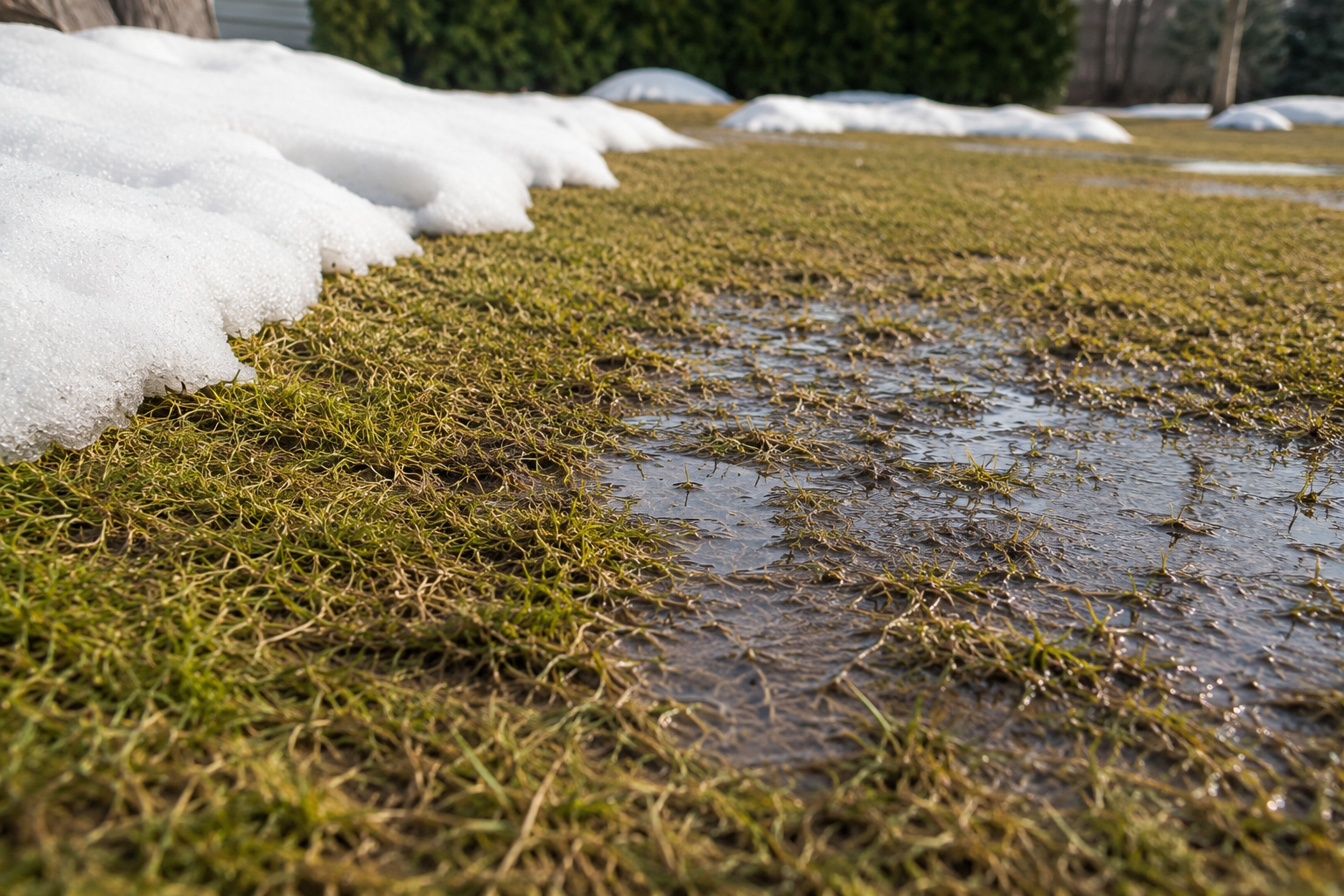
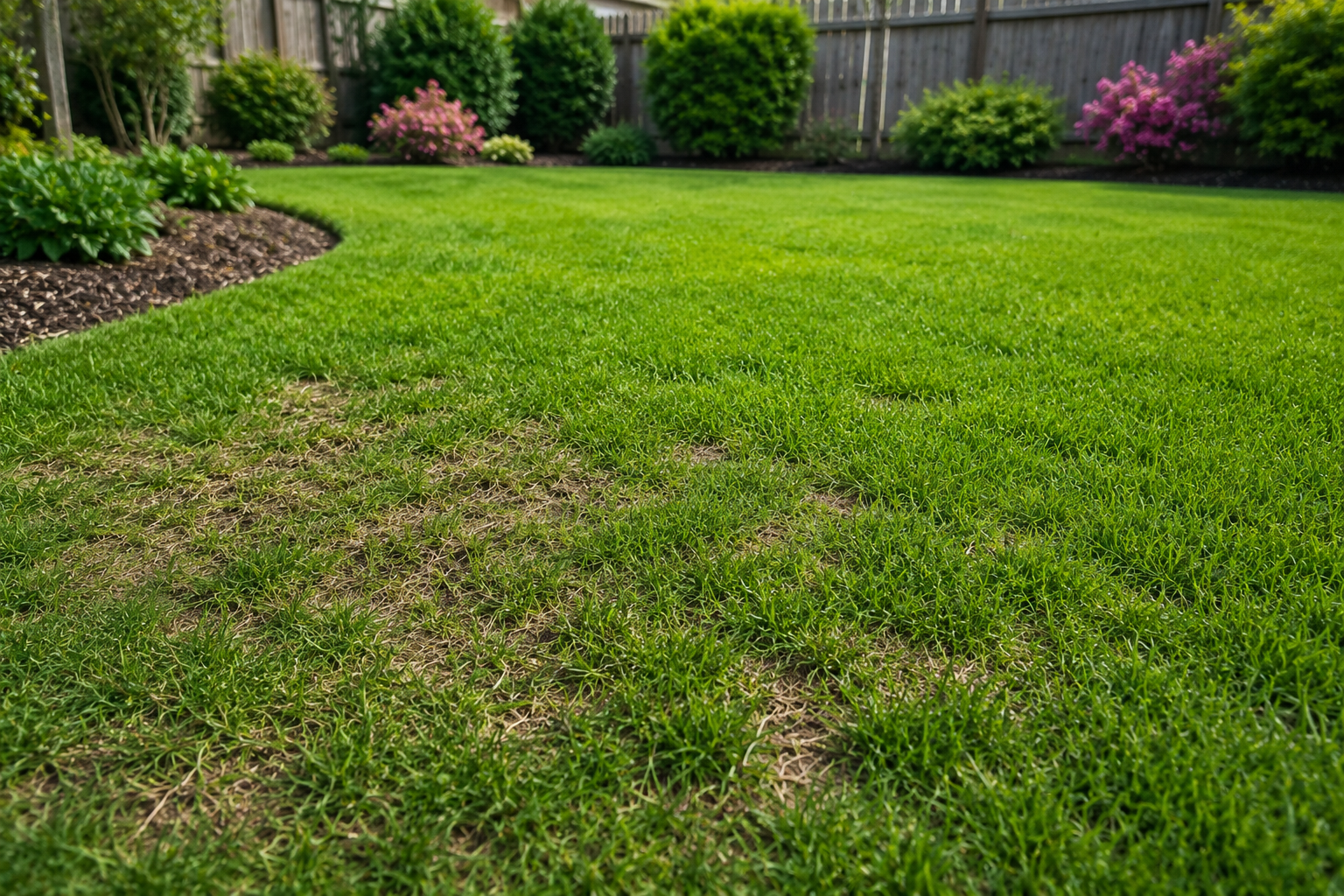
Grass enters dormancy to survive freezing temperatures. During this time, it relies on stored nutrients accumulated in the previous growing season. By the time snow melts, those reserves are largely depleted. On top of that, several hidden issues develop:
- Soil becomes compacted from snow cover and moisture cycles
- Root systems weaken due to lack of oxygen and activity
- Nutrient levels drop significantly, especially nitrogen
- Early weed seeds begin to germinate as temperatures rise
This means your lawn doesn’t just need a “boost”, it needs recovery support. Without it, growth starts uneven, patchy, and vulnerable to stress.
That’s exactly where spring fertilizer for lawns plays a critical role.
Why Spring Fertilizer Matters More Than You Think
Spring fertilization is often misunderstood as something purely cosmetic, something that makes your lawn greener, faster. But its real value goes deeper.
When applied correctly, spring fertilizer for lawn works at the root level. It helps rebuild the lawn’s internal strength before visible growth even begins. Instead of forcing rapid top growth, a well-balanced application supports steady development and long-term resilience.
Here’s what it actually does beneath the surface:
- Replenishes lost nutrients. After winter, your lawn lacks essential elements like nitrogen and potassium. Fertilizer restores this balance, allowing grass to grow properly instead of struggling to survive.
- Stimulates root recovery. Healthy roots are what keep your lawn stable during drought and heat. Spring feeding encourages deeper, stronger root systems.
- Improves early-season density. A thicker lawn naturally crowds out weeds, reducing the need for aggressive weed control later.
- Prepares the lawn for summer stress. Lawns that start strong in spring are far more resistant to heat, dryness, and foot traffic in peak season.
Skipping this step doesn’t just delay growth, it weakens the entire season’s performance.
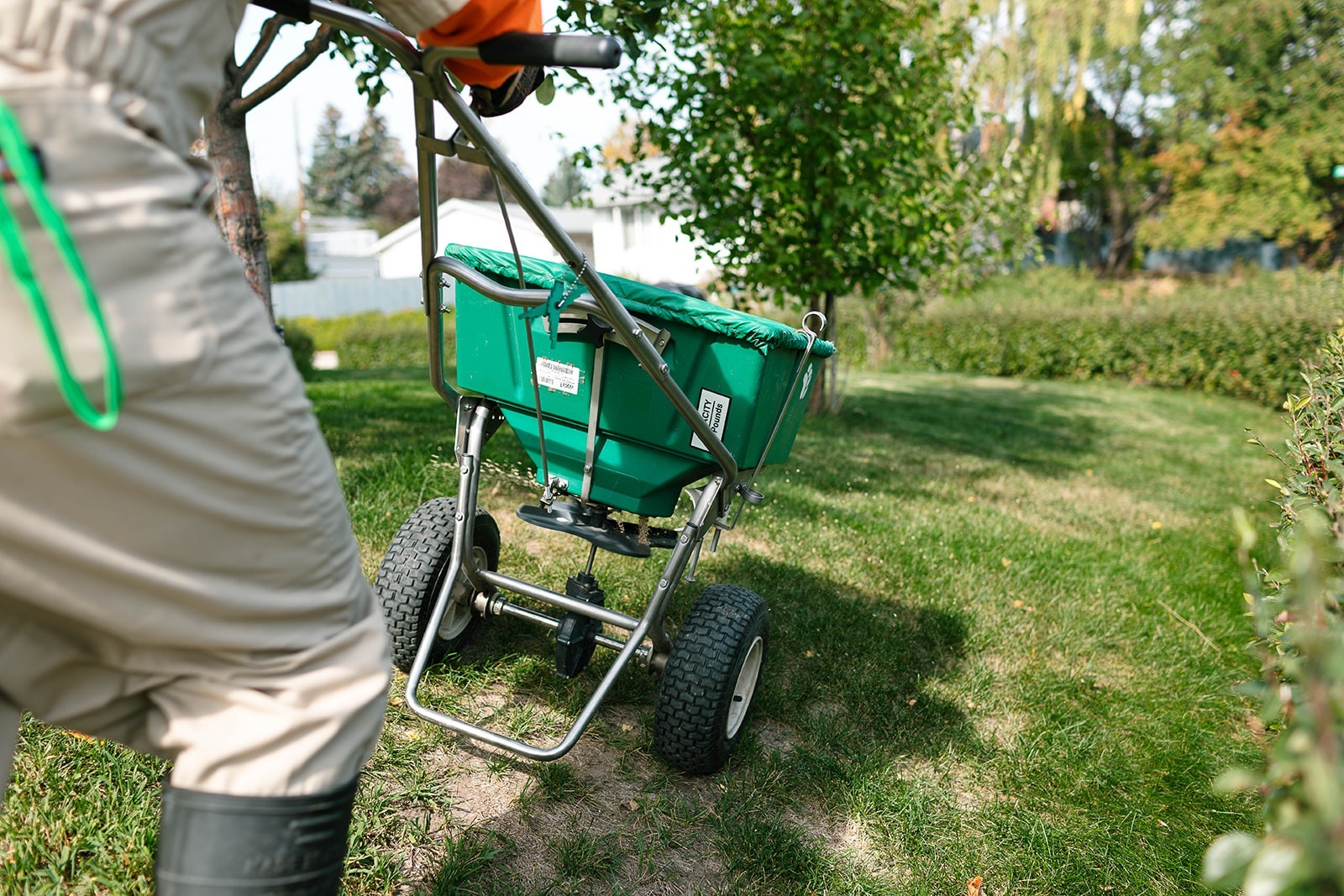
Is Spring Fertilizer Always Necessary?
Here’s the honest answer: not every lawn needs the same level of intervention, but most lawns in colder climates benefit significantly from spring fertilization.
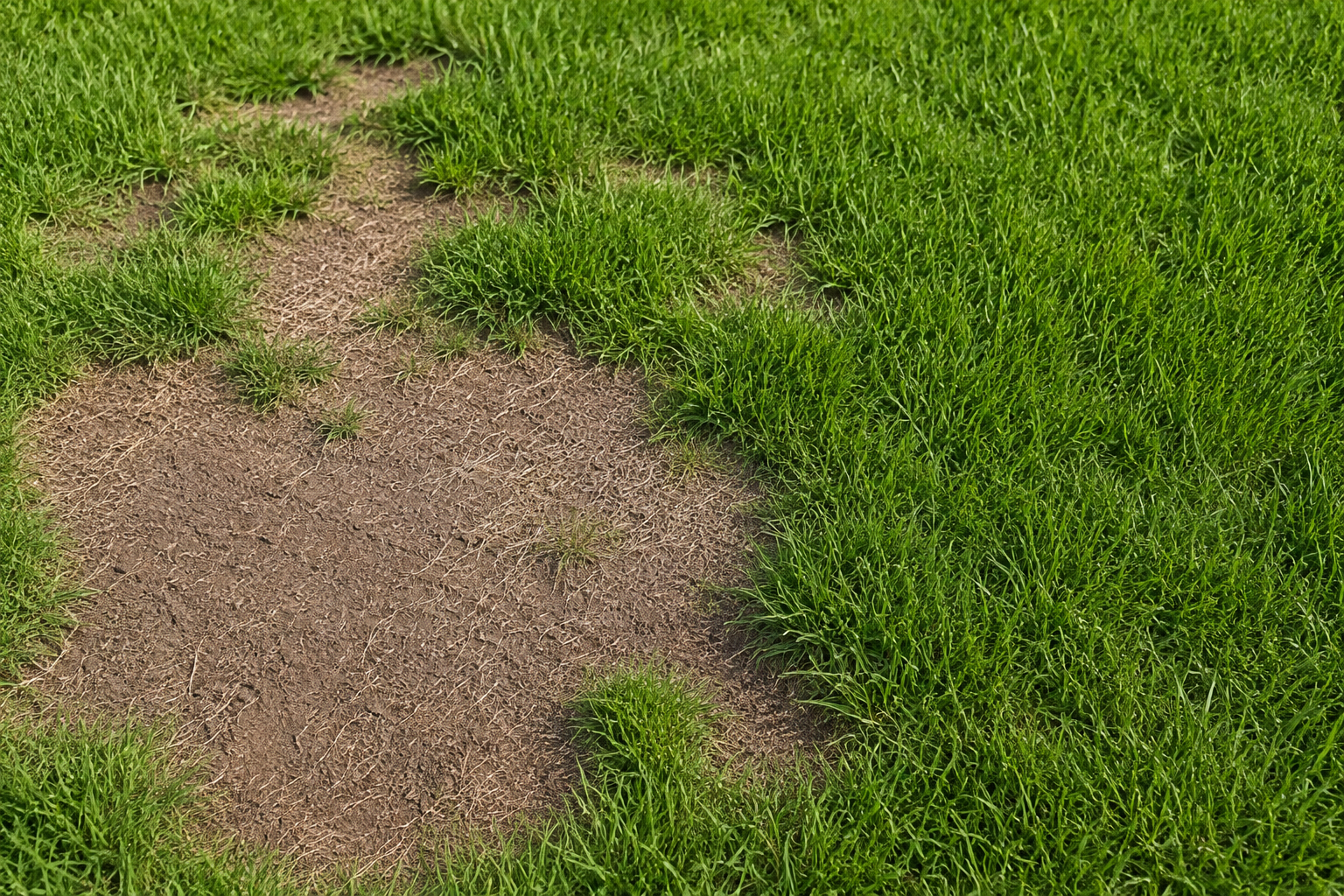
If your lawn already shows signs of stress, thin patches, uneven color, slow growth, spring fertilizer is not optional. It’s fundamental.
However, the real question isn’t whether to fertilize, but how to do it correctly.
Over-fertilizing too early can push weak growth. Applying the wrong formula can feed weeds instead of grass. And skipping complementary treatments, like aeration or overseeding, can limit the results.
That’s why professional programs, like those offered by Yard Dawgs, don’t treat fertilization as a standalone service. It’s part of a coordinated approach that considers soil condition, grass type, and seasonal timing.
The Role of Timing: When Spring Fertilizer Works Best
Timing is everything with spring fertilizer for lawns. Apply it too early, and nutrients won’t be absorbed effectively. Apply it too late, and you miss the critical recovery window.
The ideal timing usually aligns with soil temperatures, not just air temperature. When soil consistently reaches around 8–10°C, grass roots begin active growth, making it the perfect moment for nutrient uptake.
But timing also depends on local conditions. In places like Calgary or Saskatoon, where spring can be unpredictable, this window shifts year to year.
That’s why structured lawn care plans matter. Instead of guessing, consistent monitoring ensures fertilizer is applied when your lawn can actually use it, not when it’s convenient.
Fertilizer Alone Isn’t Enough
One of the biggest misconceptions is that fertilizer alone will “fix” a lawn. In reality, it’s just one part of the system.
For spring fertilizer to work effectively, it often needs to be combined with other treatments that improve soil and seed conditions.
Here’s where supporting services come into play:
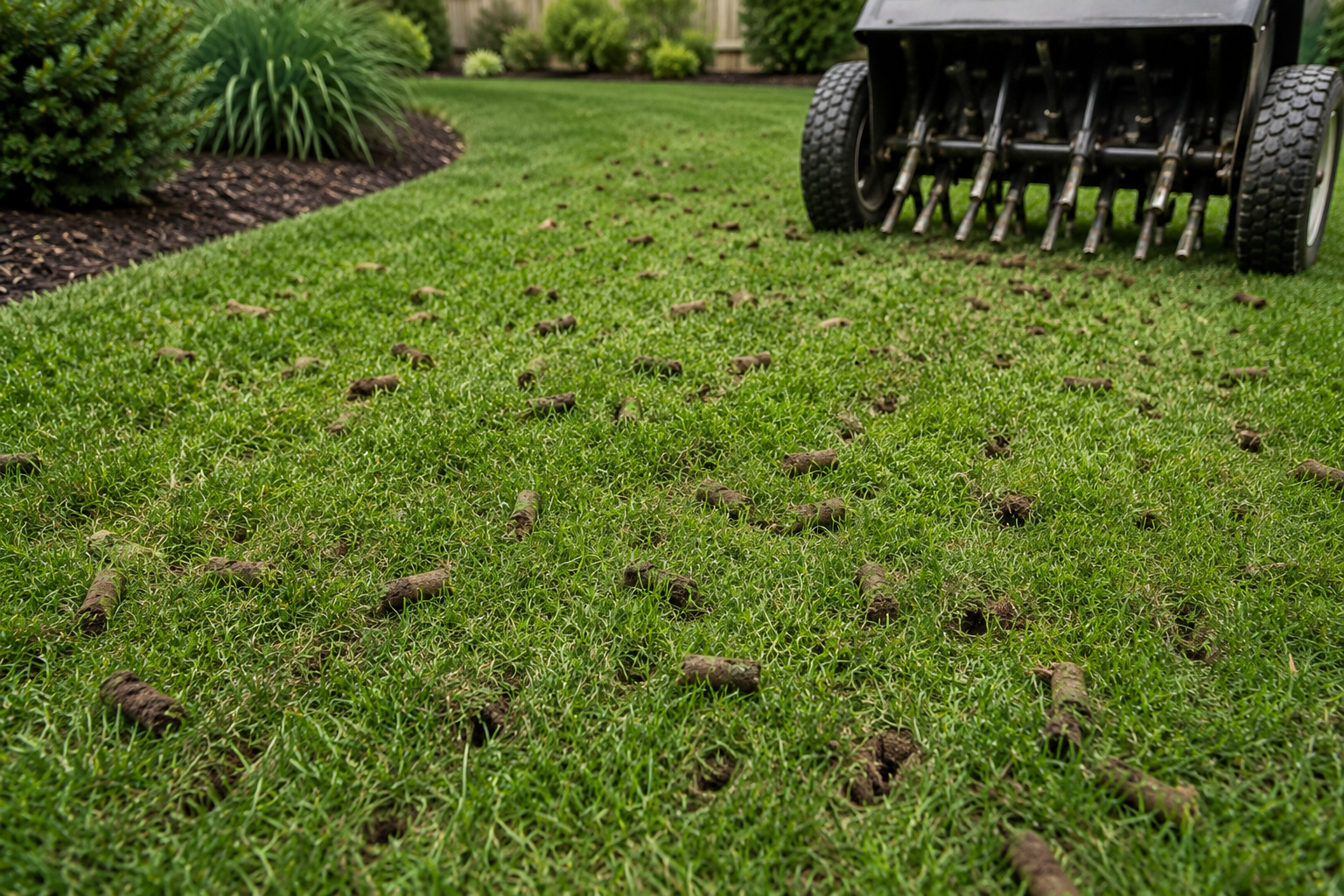
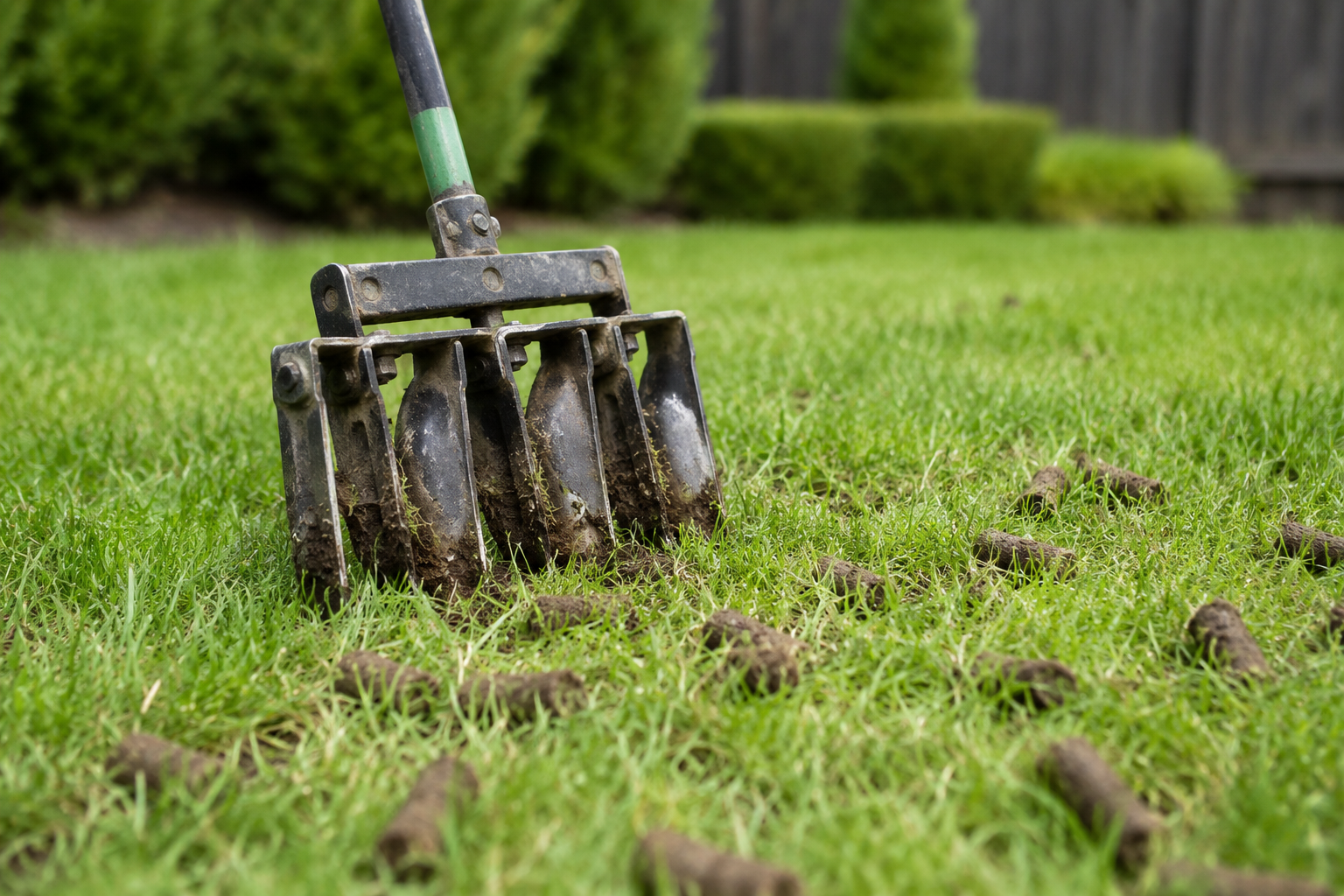
- Mechanical aeration helps relieve soil compaction, allowing nutrients and water to reach the roots more efficiently
- Slit-seeding introduces new grass into thin areas, improving density and overall lawn health
- Weed control prevents weeds from absorbing the nutrients meant for your grass
Without these, even the best fertilizer may underperform.
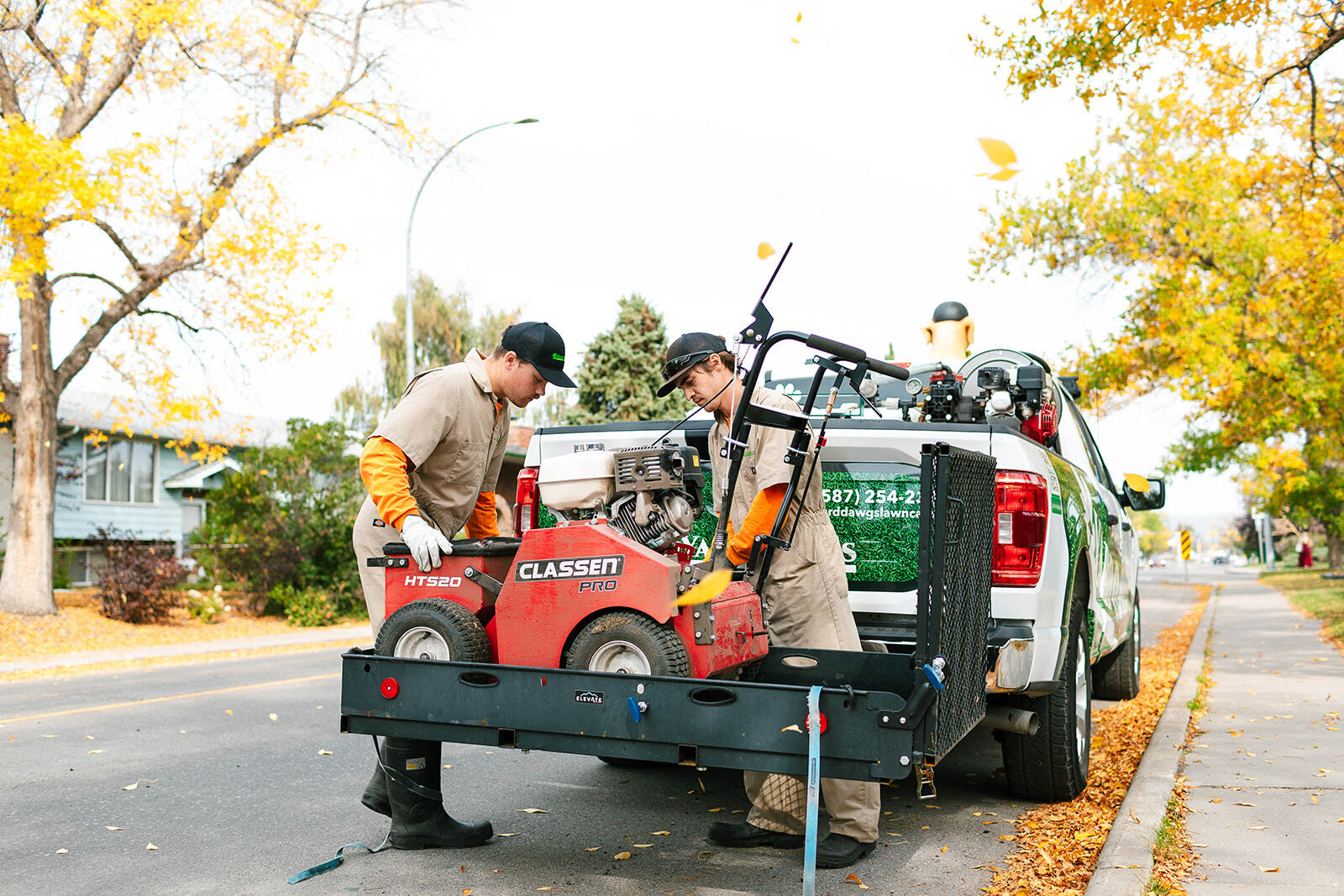
Yard Dawgs integrates these services into a broader strategy, ensuring that every treatment reinforces the next instead of working in isolation.
What Makes a Spring Fertilizer Program Effective
Not all fertilization approaches are equal. The difference between average and exceptional results usually comes down to consistency and customization. An effective spring fertilizer program focuses on:
- Balanced nutrient composition. The right mix ensures steady growth without overstimulation.
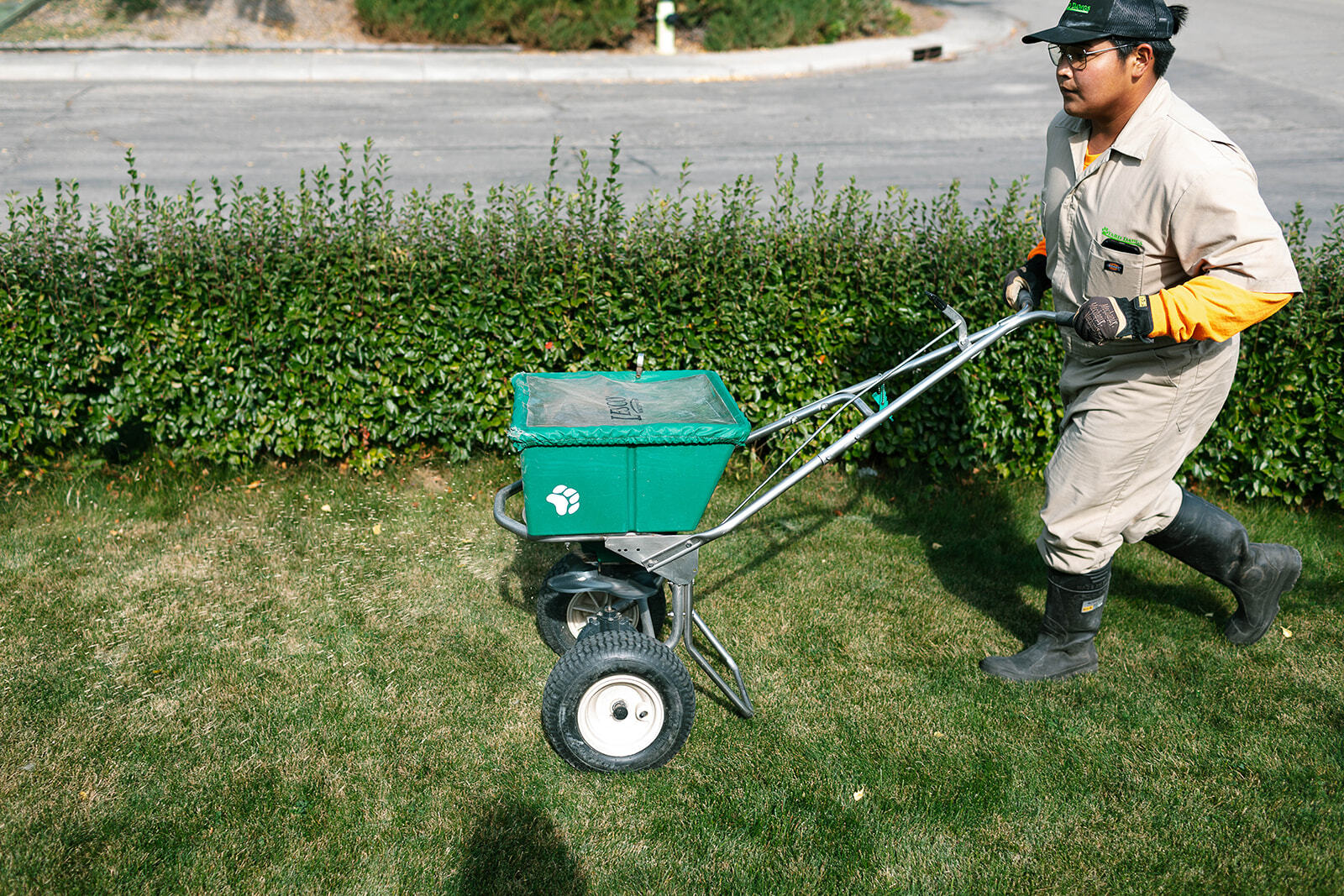
- Gradual nutrient release. Slow-release formulas provide ongoing support instead of short bursts.
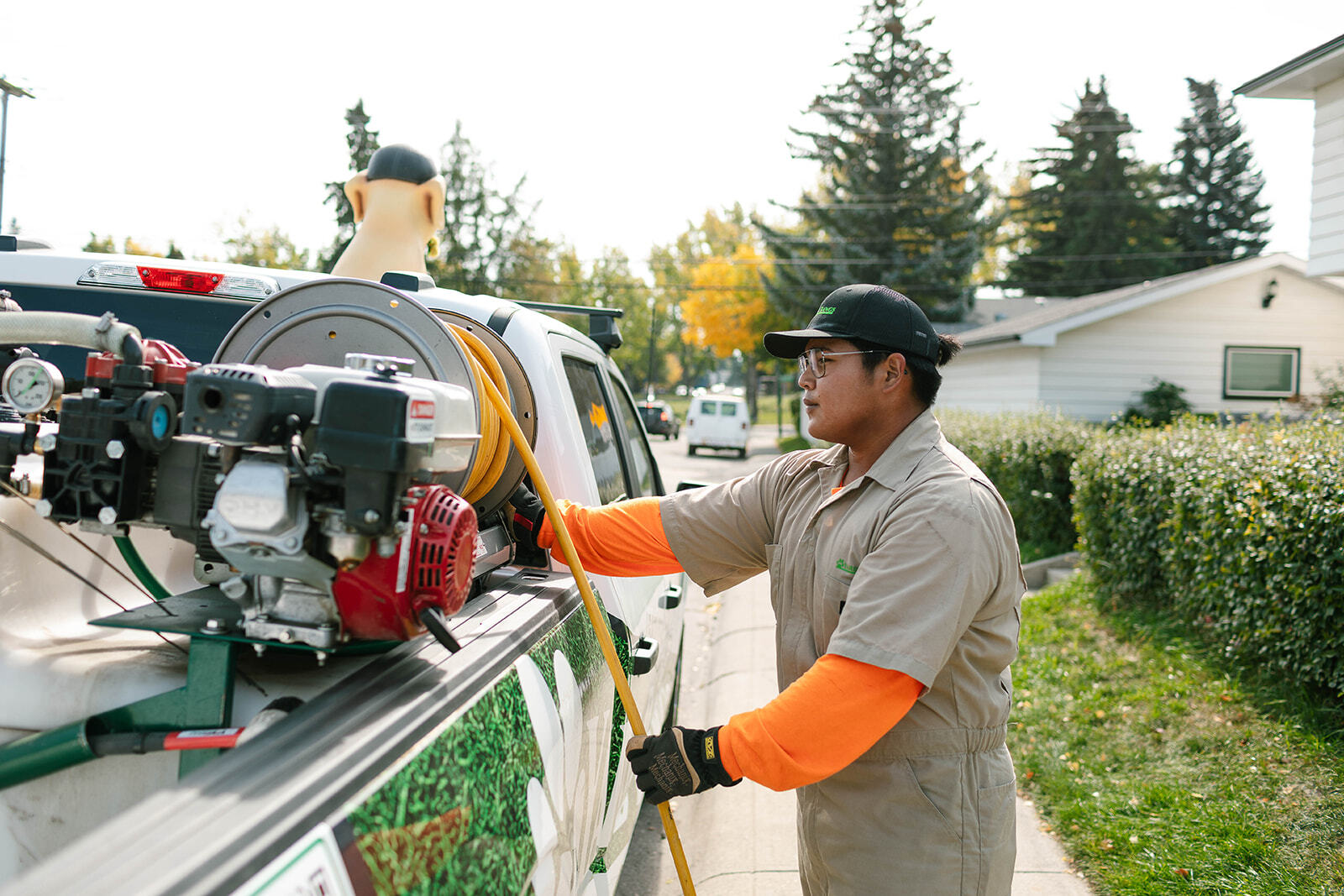
- Integration with soil health treatments. Products like sea kelp and specialized blends (such as Super Juice) support microbial activity and nutrient absorption.
- Adaptation to your lawn’s condition. Every lawn is different. What works for one property may not work for another.
This is where having a dedicated team matters. Instead of generic applications, you get treatments that reflect your lawn’s history and current needs.
Common Mistakes Homeowners Make
Even with the best intentions, spring lawn care often goes wrong in subtle ways. These mistakes don’t always show immediate consequences, but they impact the entire season.
The most common issues include:
- Applying fertilizer too early, before the lawn is actively growing
- Using too much nitrogen, leading to weak, fast growth
- Ignoring soil compaction, which blocks nutrient absorption
- Skipping follow-up treatments, leaving the lawn unsupported
These are easy traps to fall into, especially when trying to manage everything independently.
That’s why ongoing lawn care plans, where adjustments are made throughout the season, tend to outperform one-time treatments.
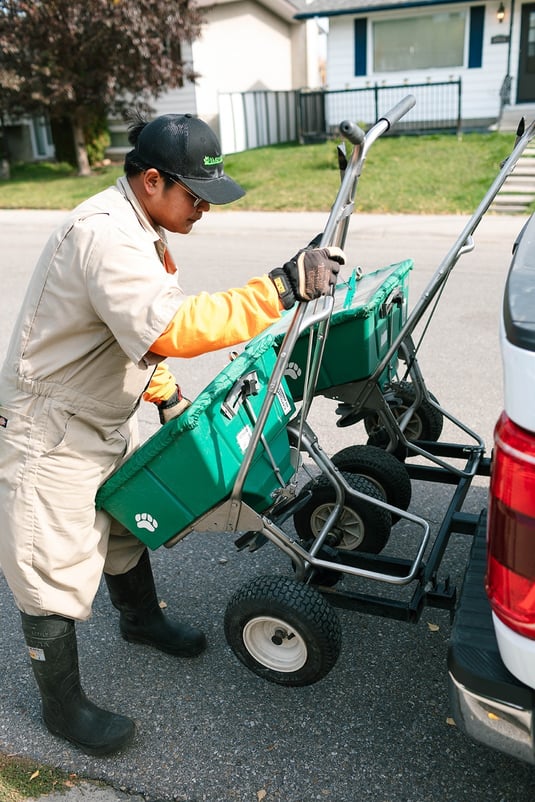
How Spring Fertilizer Fits Into a Bigger Lawn Care Strategy
Think of spring fertilization as the first move in a much longer game. It sets the tone, but it doesn’t carry the entire season on its own.
A strong lawn care program builds on this foundation with continuous support:
- Nutrient replenishment throughout the growing season
- Targeted weed control to maintain density
- Soil treatments like liquid aeration to improve structure
- Monitoring and adjustments based on lawn response
This is exactly how Yard Dawgs approaches lawn care, through consistent, ongoing service rather than isolated treatments.
With annual plans that can be adjusted anytime, homeowners aren’t locked into rigid programs. Instead, the lawn gets what it needs, when it needs it.
So, Is Spring Fertilizer Really Necessary?
Yes, but not as a quick fix.
Spring fertilizer for lawn is necessary because it restores what winter takes away. It rebuilds strength, supports root development, and prepares your lawn for the stress ahead. Without it, everything that follows becomes harder, growth, weed control, and overall appearance.
But the real takeaway is this: fertilization works best when it’s part of a bigger system.
If you treat it as a one-time seasonal task, results will be limited. If you integrate it into a structured lawn care plan, with proper timing, complementary services, and ongoing support, you’ll see a completely different level of performance.
What Actually Makes the Difference
A lawn doesn’t become thick, green, and resilient by accident. It’s the result of consistent, well-timed care that starts in spring and continues throughout the season.
Spring fertilizer is the starting point, but execution is what determines the outcome.
With a trusted provider like Yard Dawgs, you’re not just getting fertilizing services. You’re getting a coordinated approach backed by a dedicated team that understands your lawn, tracks its progress, and adjusts treatments as needed.
And that’s what turns a lawn from “good enough” into something you actually feel proud of every time you step outside.