







Edmonton lawns don’t ease into spring, they earn it. After months of frozen ground, compacted soil, and prolonged snow cover, grass doesn’t simply start growing again; it has to rebuild. That’s why spring fertilization is the single most influential step that determines how your lawn performs for the rest of the season.
When done correctly, lawn fertilization Edmonton homeowners rely on helps grass recover root strength, improve colour gradually, and compete naturally against weeds and pests. When mistimed or misapplied, fertilizer can do the opposite, stressing turf, encouraging shallow growth, or fuelling weeds instead of grass.
This guide breaks down what spring fertilization really means for Edmonton lawns, how it fits into professional lawn care programs, and why a measured, science-backed approach delivers stronger results than quick fixes.

Limited spots available!
Transform your lawn today

Limited spots available!
Transform your lawn today
Why Spring Fertilization Sets the Tone for the Season
Grass emerging from winter isn’t focused on height or thickness yet. Its priority is underground recovery. Roots that survived freeze–thaw cycles need oxygen, nutrients, and moisture balance to become efficient again.
Spring fertilization supports this recovery phase by supplying nutrients in forms grass can actually absorb while soil temperatures rise. Instead of forcing rapid top growth, professional spring applications work with the plant’s natural growth curve, building strength before peak summer stress arrives.
For anyone investing in long-term lawn care in Edmonton, this early-season support determines how resilient the lawn will be when conditions become less forgiving.
Understanding Edmonton’s Soil in Spring
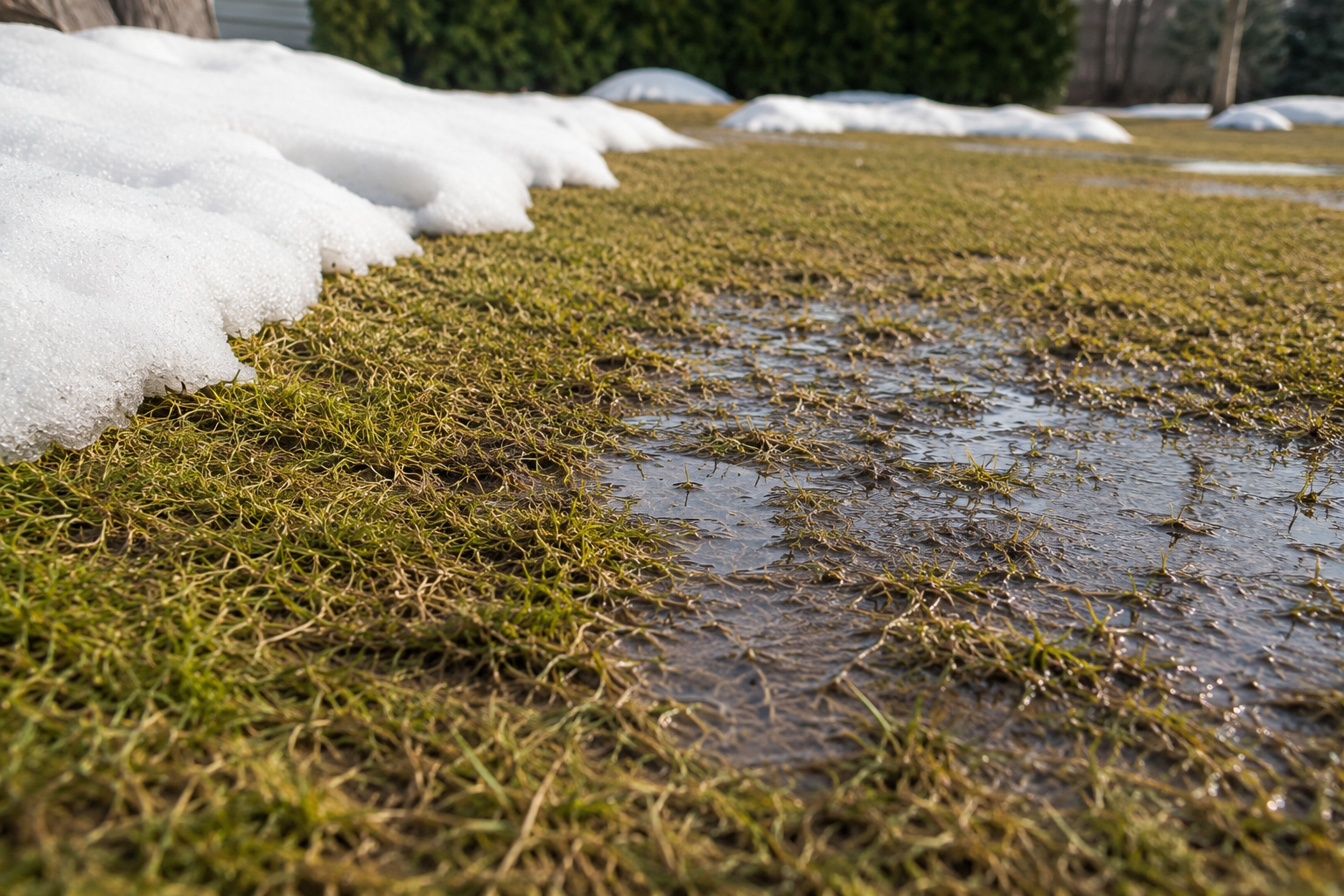
Edmonton soil tends to be heavy, often compacted, and slow to warm. Spring snowmelt can leave excess moisture trapped near the surface, limiting oxygen availability for roots.
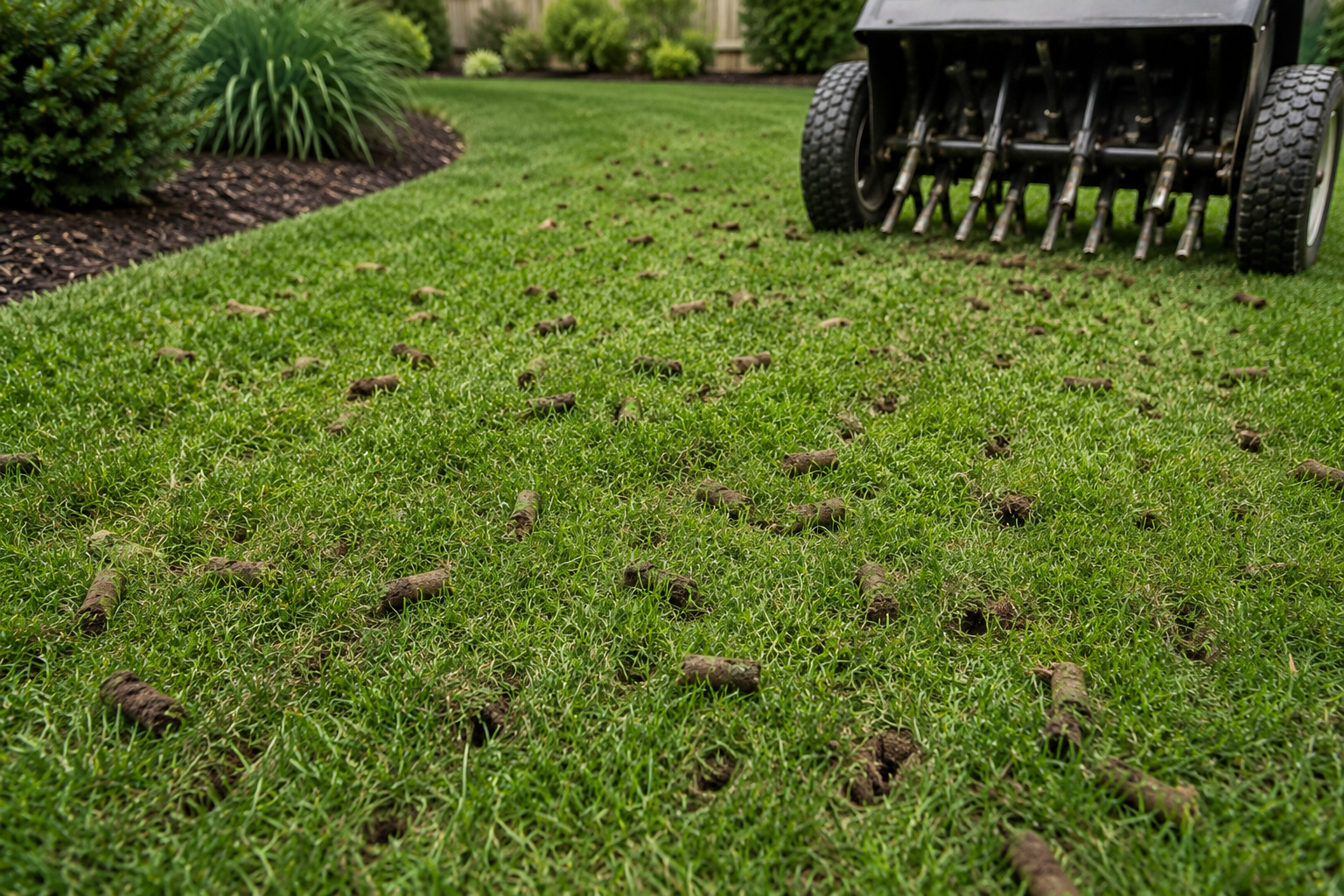
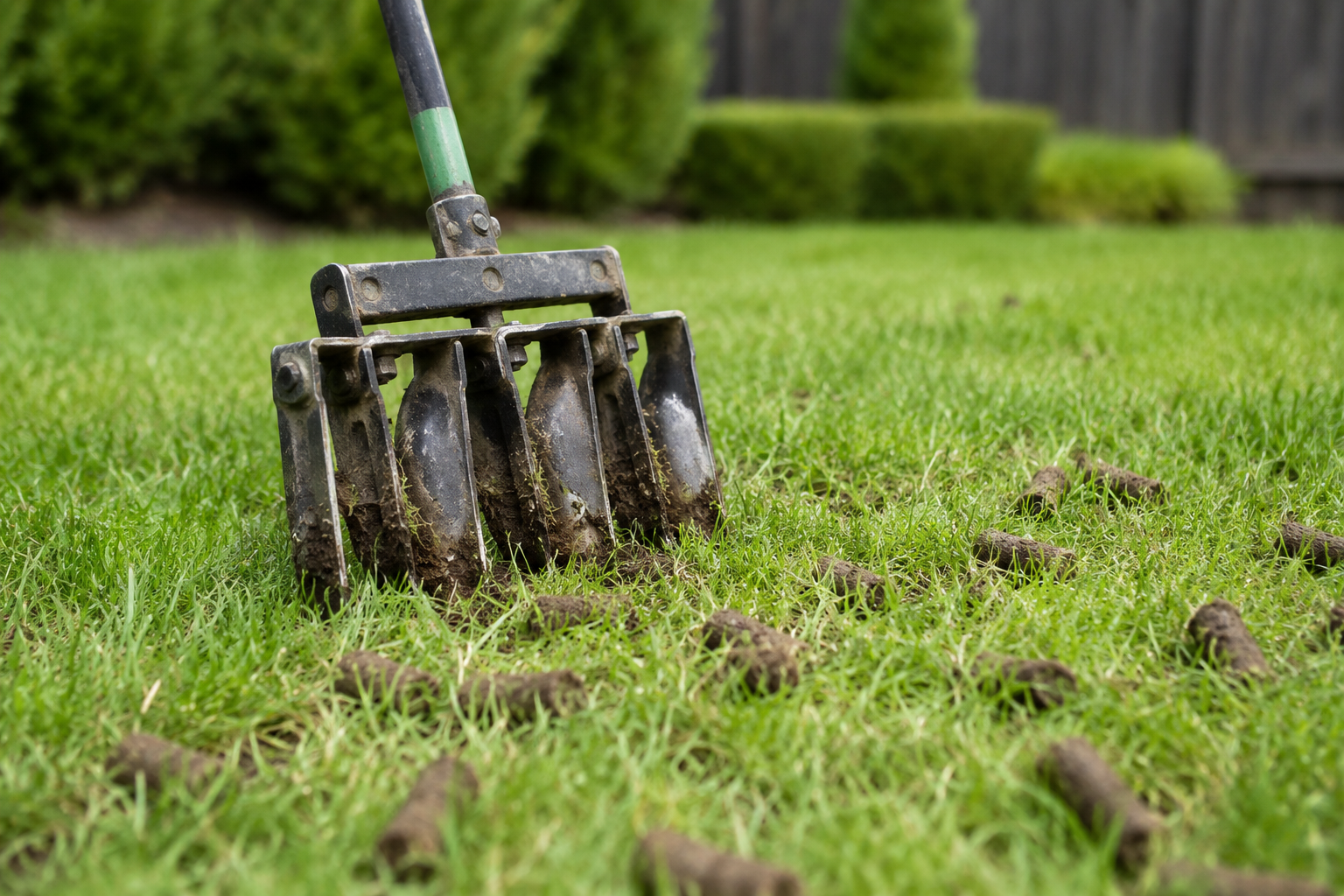
This is why spring fertilization works best when combined with services that improve soil structure. Mechanical aeration or liquid aeration allows fertilizer to move beyond the surface and reach the root zone where it’s needed.
Without proper soil access, even the highest-quality fertilizer can underperform.
When Spring Fertilization Should Actually Begin
Timing is everything. Applying fertilizer too early wastes product and risks runoff. Too late, and grass may already be under stress from weeds and uneven growth.
Edmonton lawns are ready for spring fertilization when:
- The ground has fully thawed and is no longer waterlogged
- Soil temperatures are consistently rising, not fluctuating below freezing
- Grass has begun active growth, not just surface greening
This window usually opens in mid to late spring, depending on weather conditions. Professional programs monitor conditions closely to ensure fertilizer is applied at peak effectiveness rather than on a fixed calendar date.
What Makes Spring Fertilization Different From Other Seasons
Spring fertilizer isn’t about instant colour. It’s about balance.
Early-season formulas focus on:
- Supporting root development rather than aggressive blade growth
- Improving nutrient uptake efficiency
- Enhancing soil biology so grass can feed itself more effectively
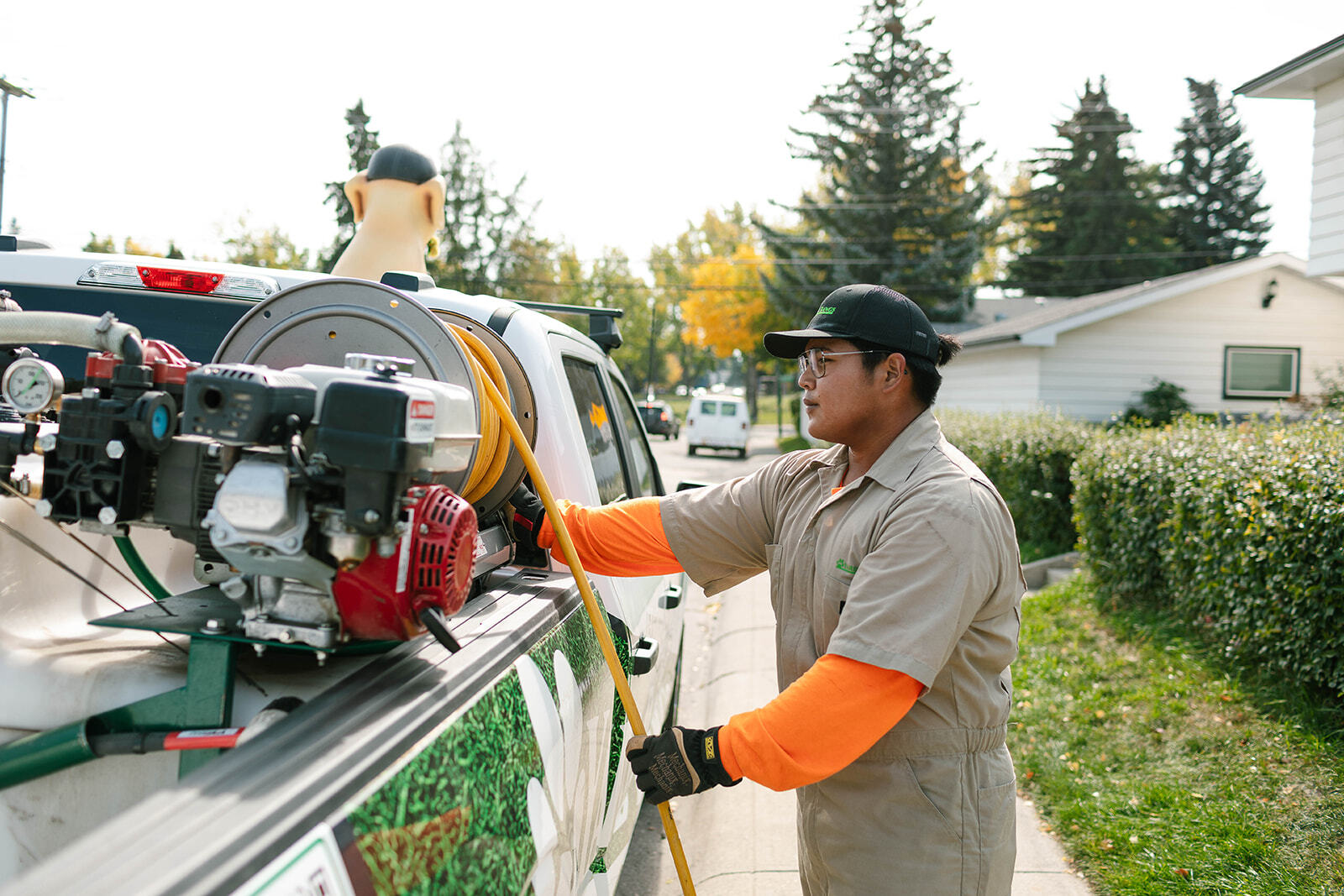
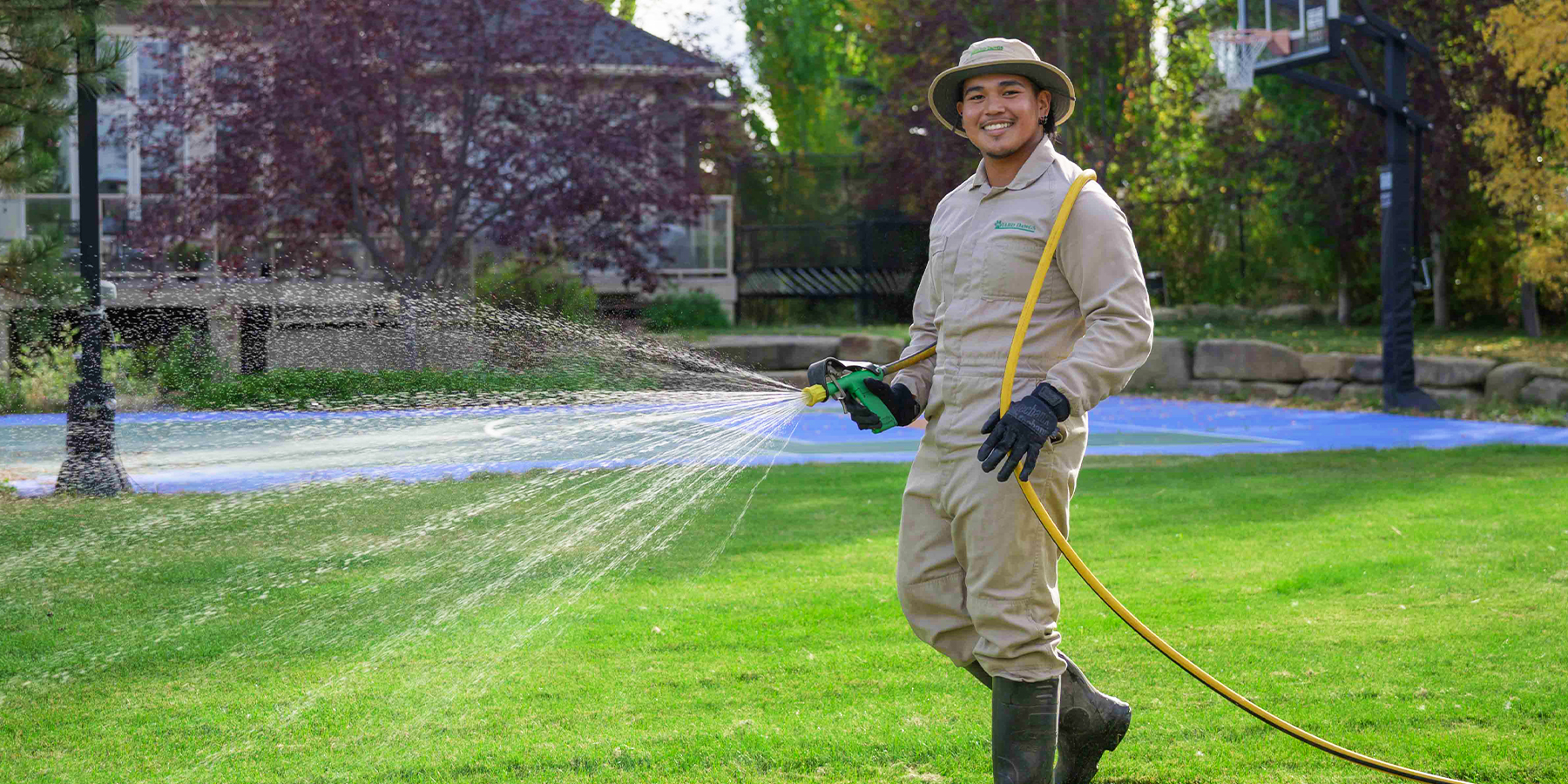
Liquid fertilizer applications are especially effective in spring because they deliver nutrients evenly and activate quickly without overwhelming recovering turf.
Many spring programs also integrate soil-enhancing supplements such as Super Juice and sea kelp, which improve nutrient transport and stress tolerance without pushing excessive growth.
Fertilization and Weed Pressure: Getting Ahead Early
Spring is when weeds quietly gain an advantage. If grass enters the season underfed or stressed, weeds establish faster and spread deeper.
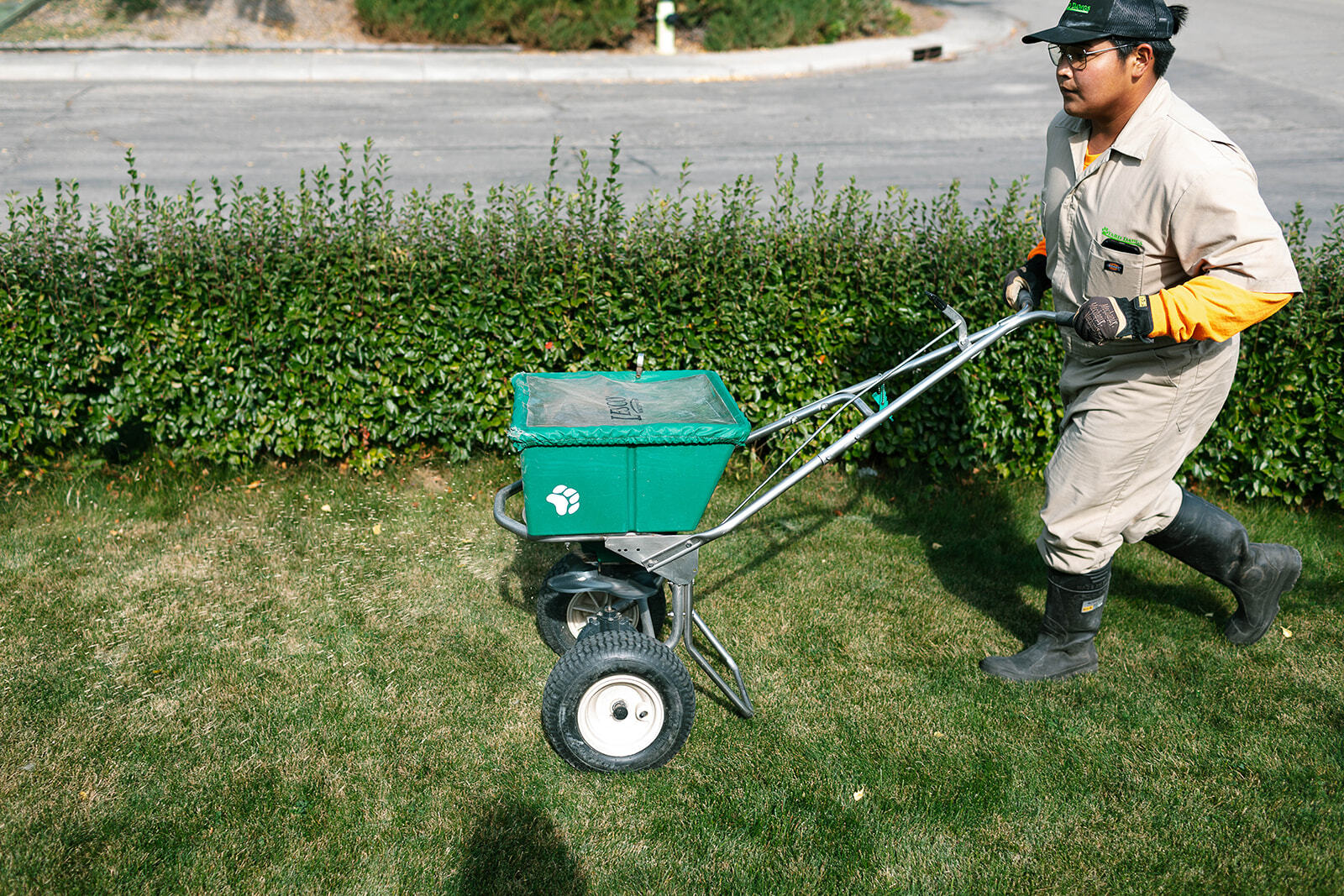
Proper lawn fertilization Edmonton programs strengthen turf density early, naturally reducing space for weeds to thrive. When paired with professional weed control, fertilization supports grass while targeted treatments suppress unwanted growth.
This proactive approach minimizes the need for aggressive corrections later in summer.
How Fertilization Works Best With Other Spring Services
Fertilizer doesn’t operate in isolation. Its effectiveness depends heavily on how well the lawn can absorb what’s applied.
In professional spring programs, fertilization is often coordinated with:
- Mechanical aeration to relieve compaction
- Liquid aeration to improve moisture and nutrient movement
- Aeration plus in thin areas so new grass establishes with proper nutrition
- Chinch bug monitoring to reduce stress factors competing for nutrients
By sequencing these services correctly, fertilizer supports both existing grass and new growth without creating uneven results.
Common Fertilization Mistakes Edmonton Homeowners Face
Spring fertilizer problems usually come from good intentions paired with poor timing or technique. Some of the most common issues include:
- Applying fertilizer before soil is ready, leading to runoff or uneven uptake
- Using too strong a formulation early, which stresses recovering turf
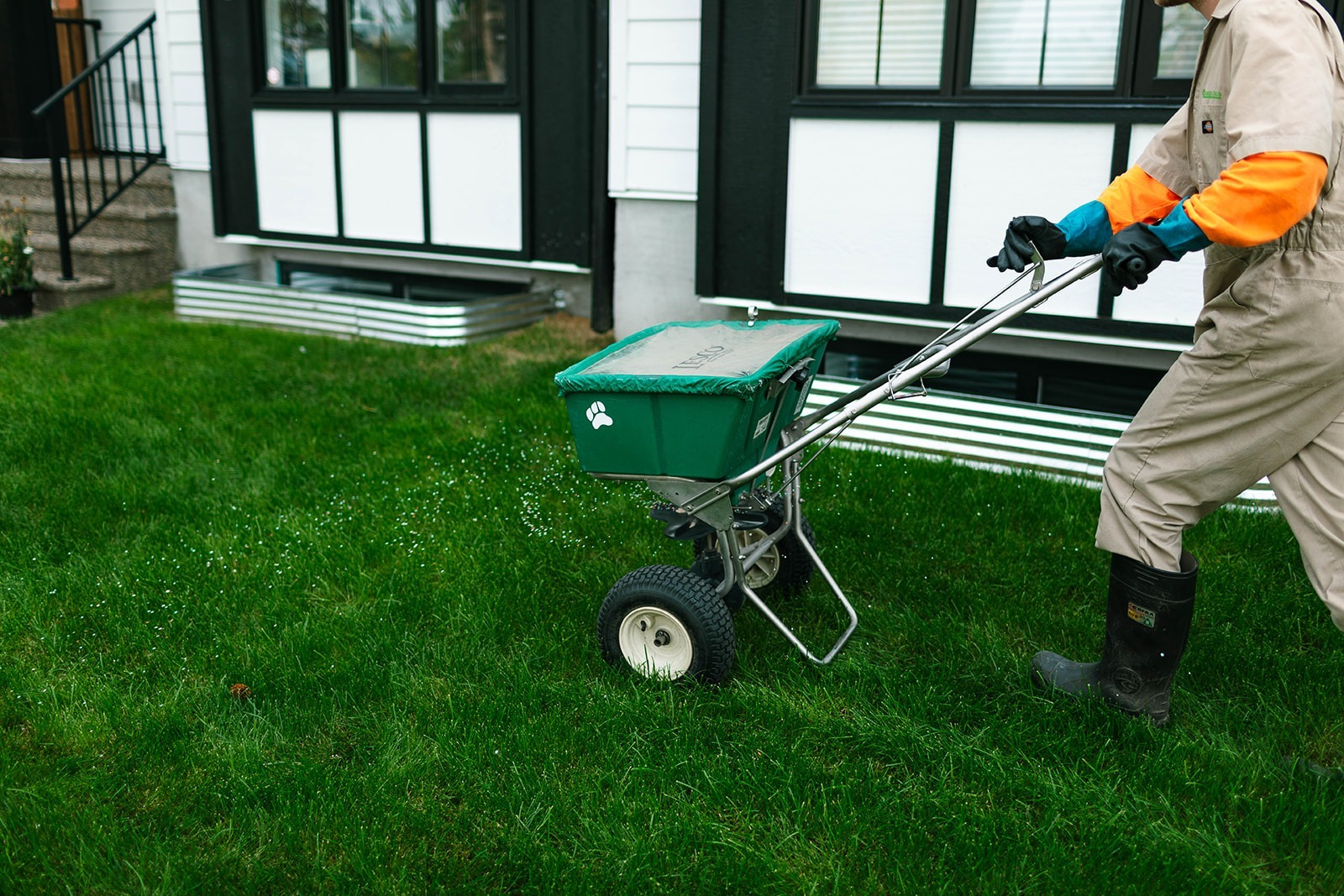
- Overlapping applications, causing striping or burn marks
- Ignoring soil compaction, which limits fertilizer effectiveness
Professional programs avoid these mistakes through calibrated equipment, trained technicians, and consistent monitoring throughout the season.
Why Liquid Fertilizer Plays a Key Role in Spring
Liquid fertilizer offers precision that granular products struggle to match, especially early in the season.
Liquid applications:
- Distribute nutrients evenly across the lawn
- Begin working immediately when absorbed
- Reduce the risk of over-application in specific areas
- Work well alongside soil conditioners like sea kelp
For spring fertilization, this controlled delivery supports steady recovery rather than forcing rapid colour changes that can weaken grass long term.
The Value of Consistency Over One-Time Applications
Spring fertilization isn’t a standalone solution. Its true value shows when it’s part of a continuous service plan.
With a dedicated lawn care team assigned to your property, treatments evolve based on how your lawn responds, not a generic schedule. If growth patterns shift, soil conditions change, or weed pressure increases, adjustments happen without you having to chase answers.
This consistency is one of the biggest advantages of professional lawn care in Edmonton, especially in a climate that rarely behaves predictably.
Support That Understands Your Lawn
Spring fertilization often raises questions, especially after winter. Homeowners want to know why growth looks uneven, why colour is slow to return, or whether adjustments are needed.
A dedicated success team ensures those questions are answered by people who know your lawn’s history, treatment plan, and soil conditions. Changes to pricing, services, or scheduling are handled with full context, not guesswork.
That level of support turns fertilization from a one-time treatment into an ongoing strategy.
A Smarter Way to Feed Edmonton Lawns
Lawn fertilization Edmonton homeowners trust isn’t about pushing grass as fast as possible. It’s about creating conditions where grass can thrive naturally, resist stress, and stay balanced throughout the season.
By combining the right timing, liquid fertilizer, soil-enhancing supplements, aeration, and weed control, spring fertilization becomes the foundation for a healthier lawn, not a temporary cosmetic fix.

Spring Fertilization Sets the Pace for the Year
Strong roots now mean fewer problems later. When fertilization is applied thoughtfully in spring, lawns enter summer with better colour, improved density, and greater tolerance to heat, drought, and pests.
If you want a lawn that improves steadily instead of reacting to issues as they appear, spring fertilization is where success begins.