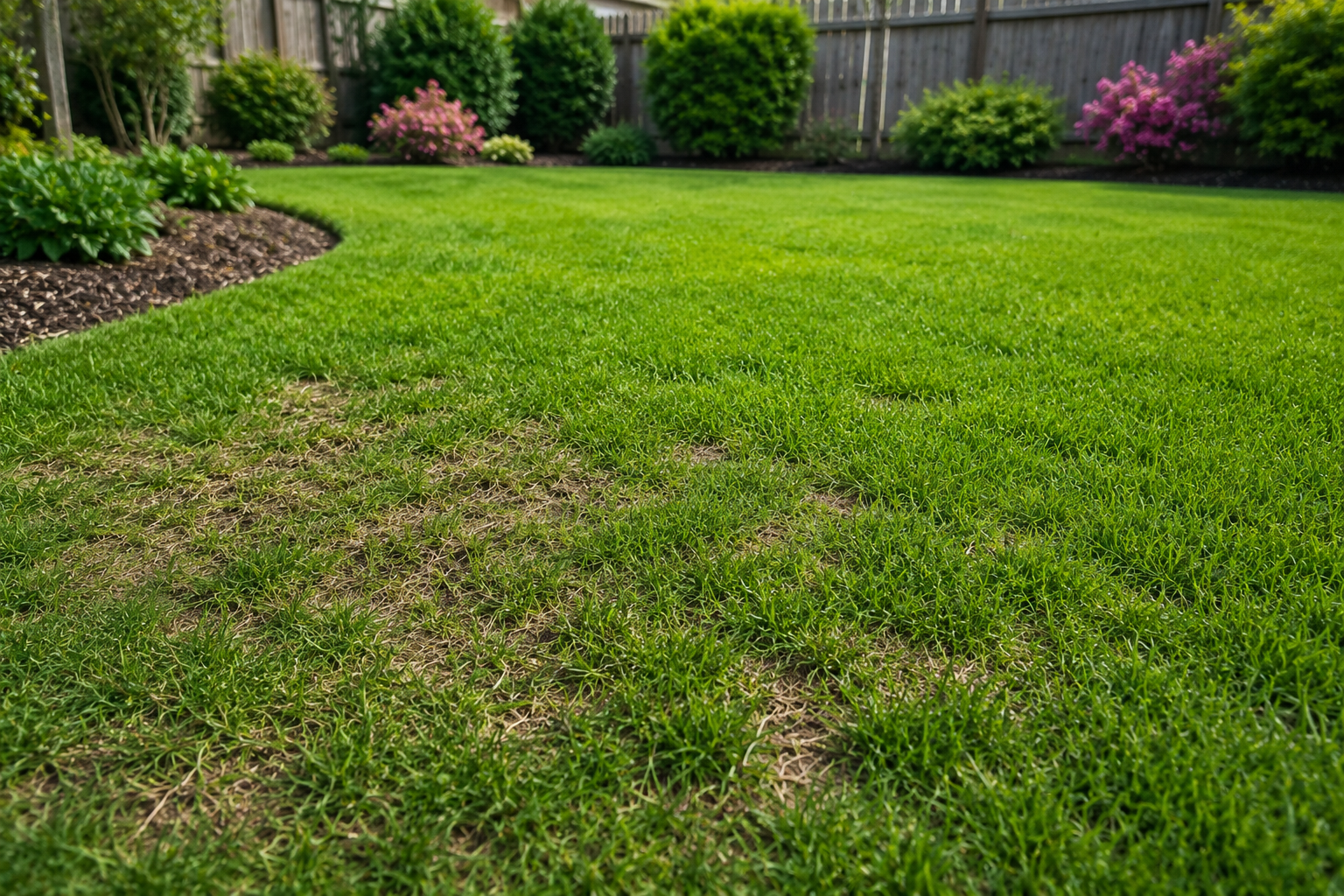







Every spring, Alberta lawns wake up carrying more than just winter fatigue. Beneath the surface, many are dealing with an invisible issue that quietly limits growth, blocks nutrients, and weakens turf before the season even begins. That issue is thatch. What surprises most homeowners is that excess thatch often builds up over several seasons, but spring is when its effects become most obvious.
Dethatching your lawn in spring is about restoring balance so air, water, and nutrients can actually reach the soil where roots need them. Done at the right time and supported by proper follow-up treatments, lawn dethatching can dramatically improve density, colour, and overall performance for the rest of the year.

Limited spots available!
Transform your lawn today

Limited spots available!
Transform your lawn today
What Thatch Really Does to Your Lawn
Thatch is a dense layer of organic material that forms between the grass blades and the soil surface. A small amount is normal and even helpful. It can insulate roots and reduce moisture loss. Problems begin when that layer thickens faster than it decomposes.
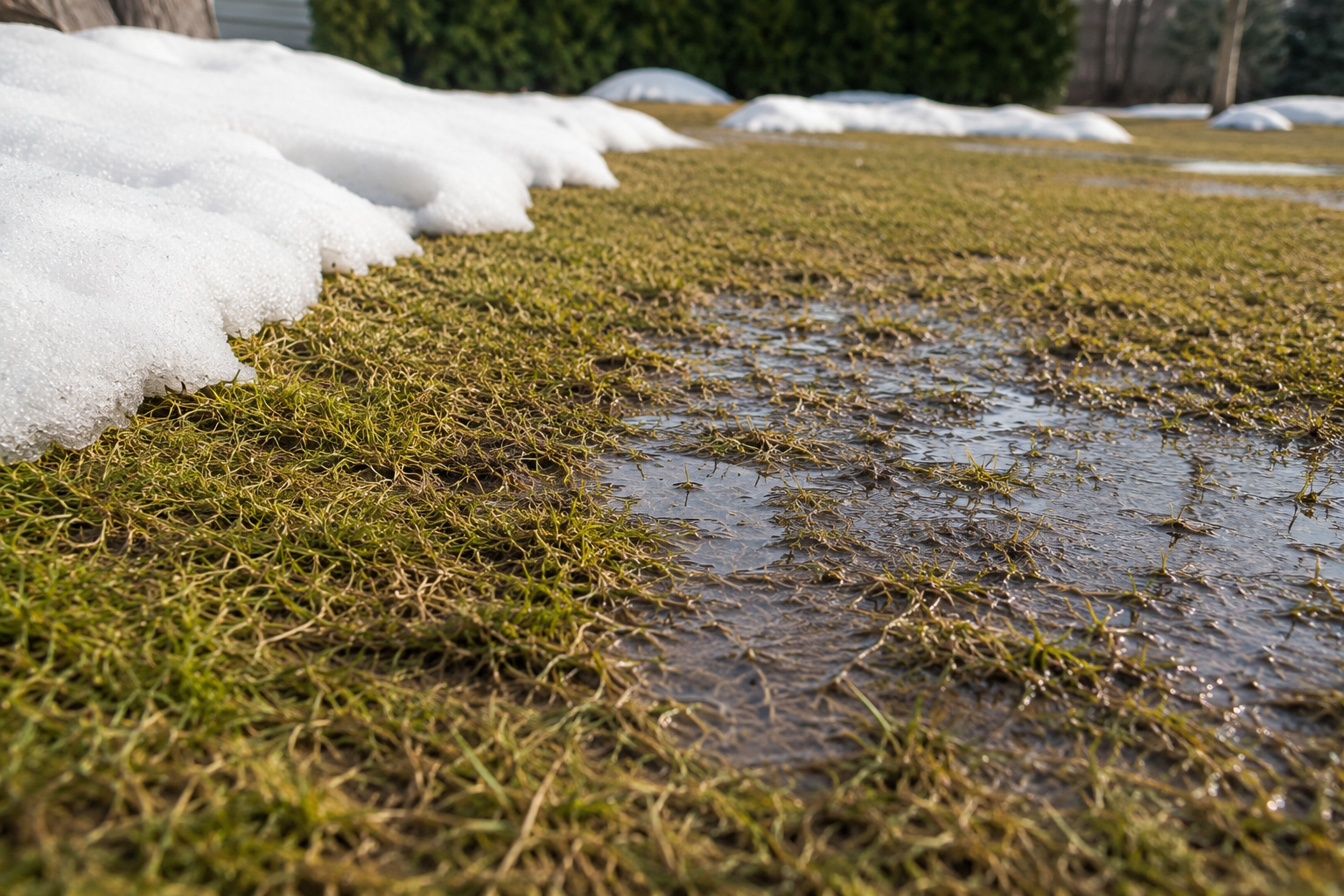
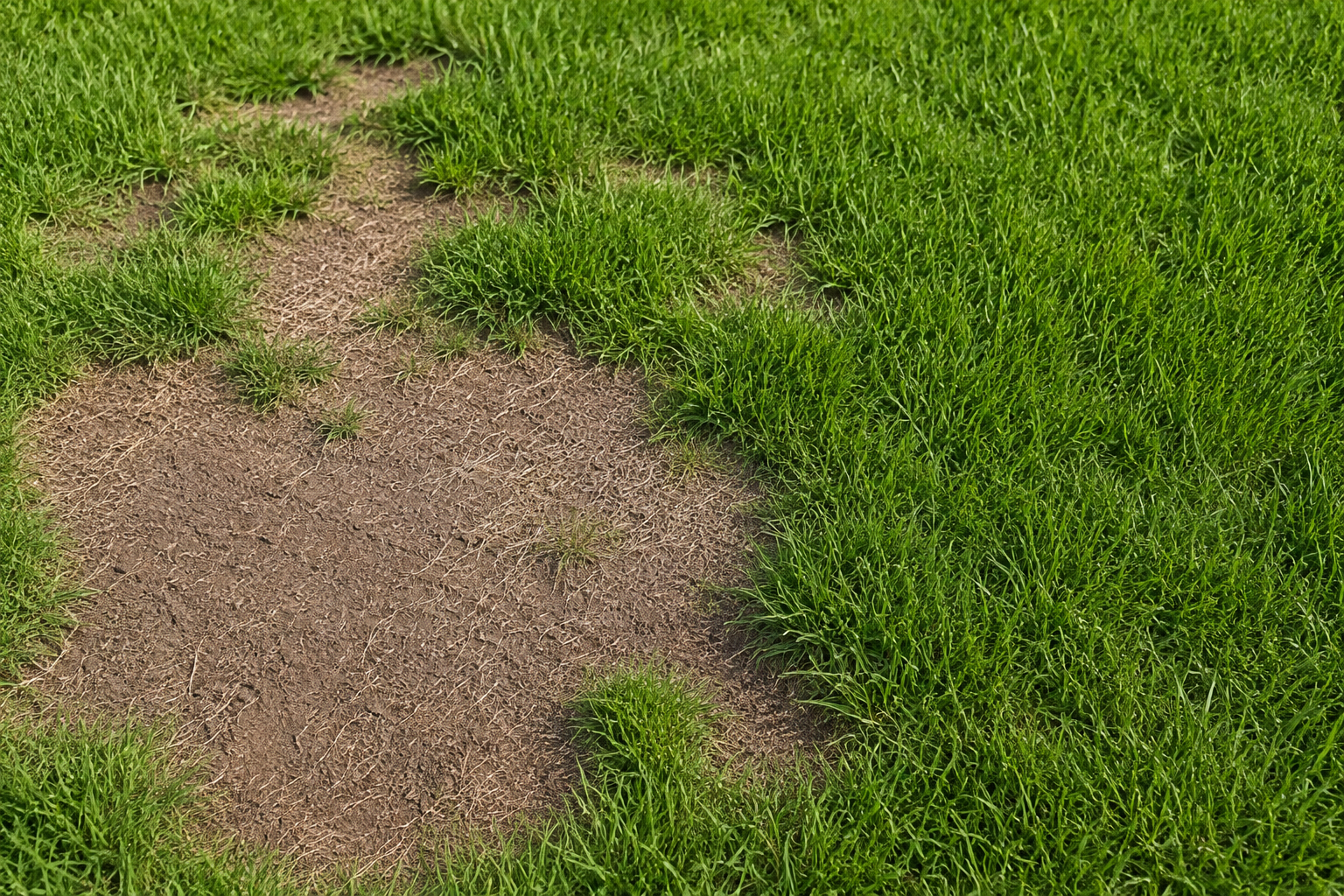
In Alberta’s climate, cool springs and compacted soil slow natural breakdown. When thatch becomes excessive, it stops functioning as a cushion and starts acting like a barrier. Water can sit on top instead of soaking in. Fertilizer may never reach the roots. Grass roots themselves can get trapped in the thatch layer, making them far more vulnerable to heat and drought stress later in the season.
This is why dethatching lawn areas that show poor spring response often leads to noticeable improvement within weeks.
Why Spring Is a Critical Window for Lawn Dethatching
Dethatching lawn in spring works best when grass has just resumed active growth but hasn’t yet entered peak stress periods. At this stage, turf can recover faster from disturbance, and follow-up treatments are more effective.
In Alberta cities like Calgary, Edmonton, Red Deer, Saskatoon, Medicine Hat, and Regina spring dethatching usually lines up with:
- Fully melted snow
- Soil that has thawed and is no longer waterlogged
- Daytime temperatures that remain consistently above freezing
Spring lawn dethatching at the wrong time, too early or too late, can slow recovery. That’s why timing is just as important as the method itself.
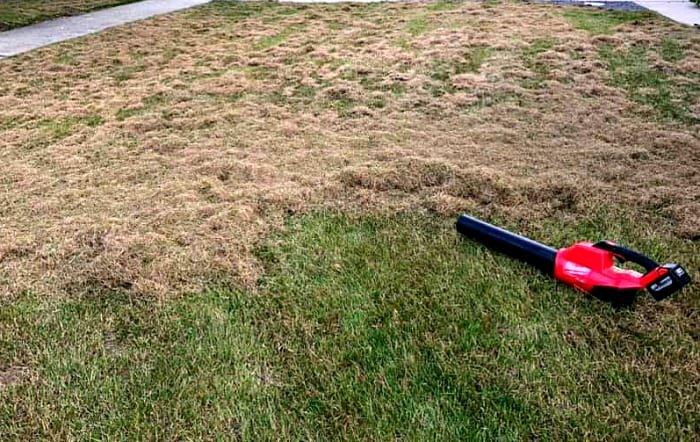
Is Dethatching a Lawn Necessary for Every Property
Not every lawn needs to be dethatched every spring. In fact, unnecessary dethatching can cause more stress than benefit. The key question isn’t should you dethatch, it’s does your lawn actually need it?
A lawn that struggles with poor water absorption, uneven green-up, or spongy turf underfoot may be signaling excessive thatch. Lawns with a history of heavy fertilization, compacted soil, or aggressive growth patterns are more likely to develop thatch problems over time.
Dethatching a lawn becomes necessary when:
- Grass looks weak despite proper fertilizer
- Water pools or runs off instead of soaking in
- Turf feels springy rather than firmly rooted
When these signs appear, lawn dethatching is corrective.
How Dethatching Fits with Modern Lawn Care
One common misconception is that dethatching is a standalone fix. In reality, it works best as part of a broader lawn care approach. Removing thatch opens the door, but what you do next determines how well the lawn recovers.
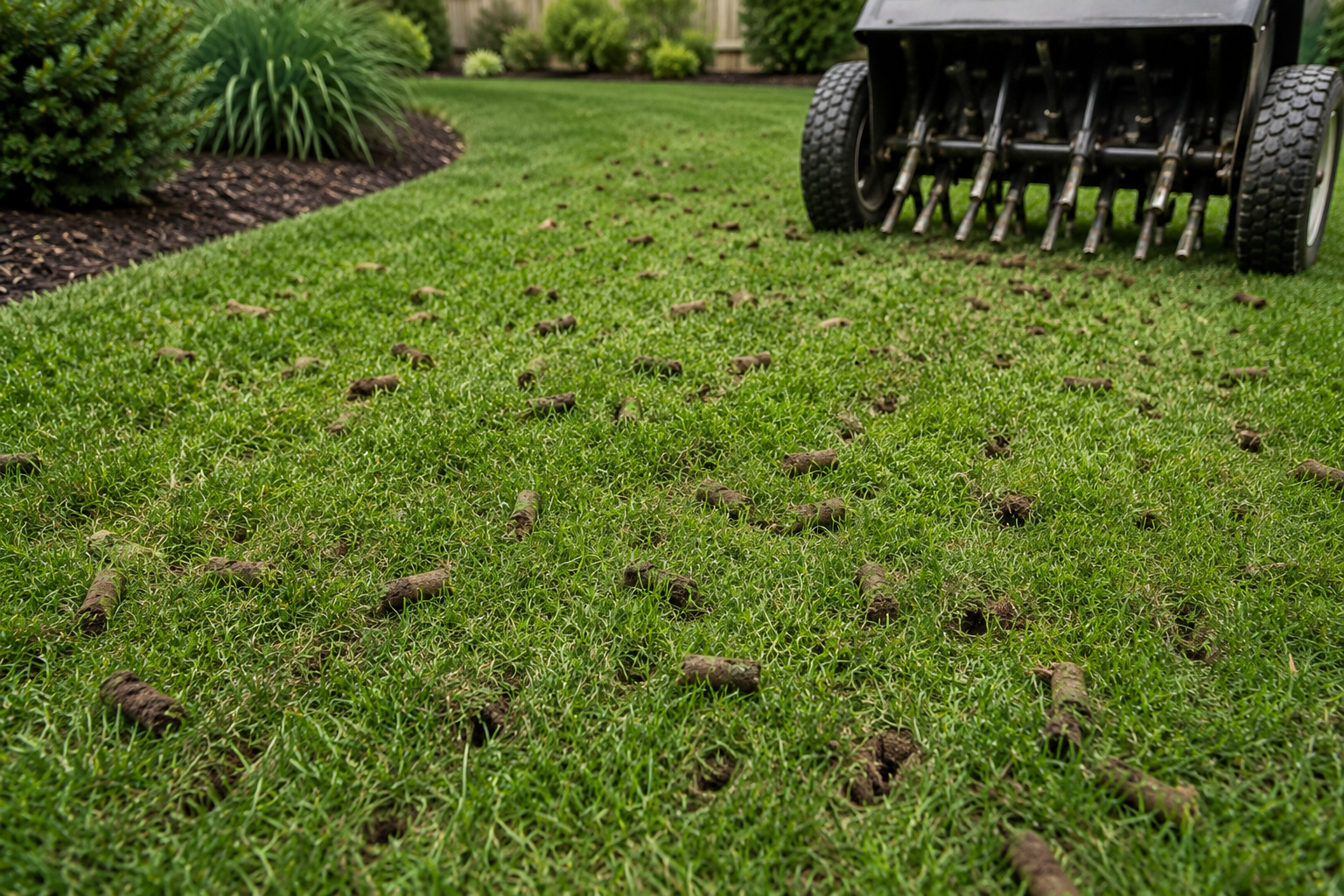
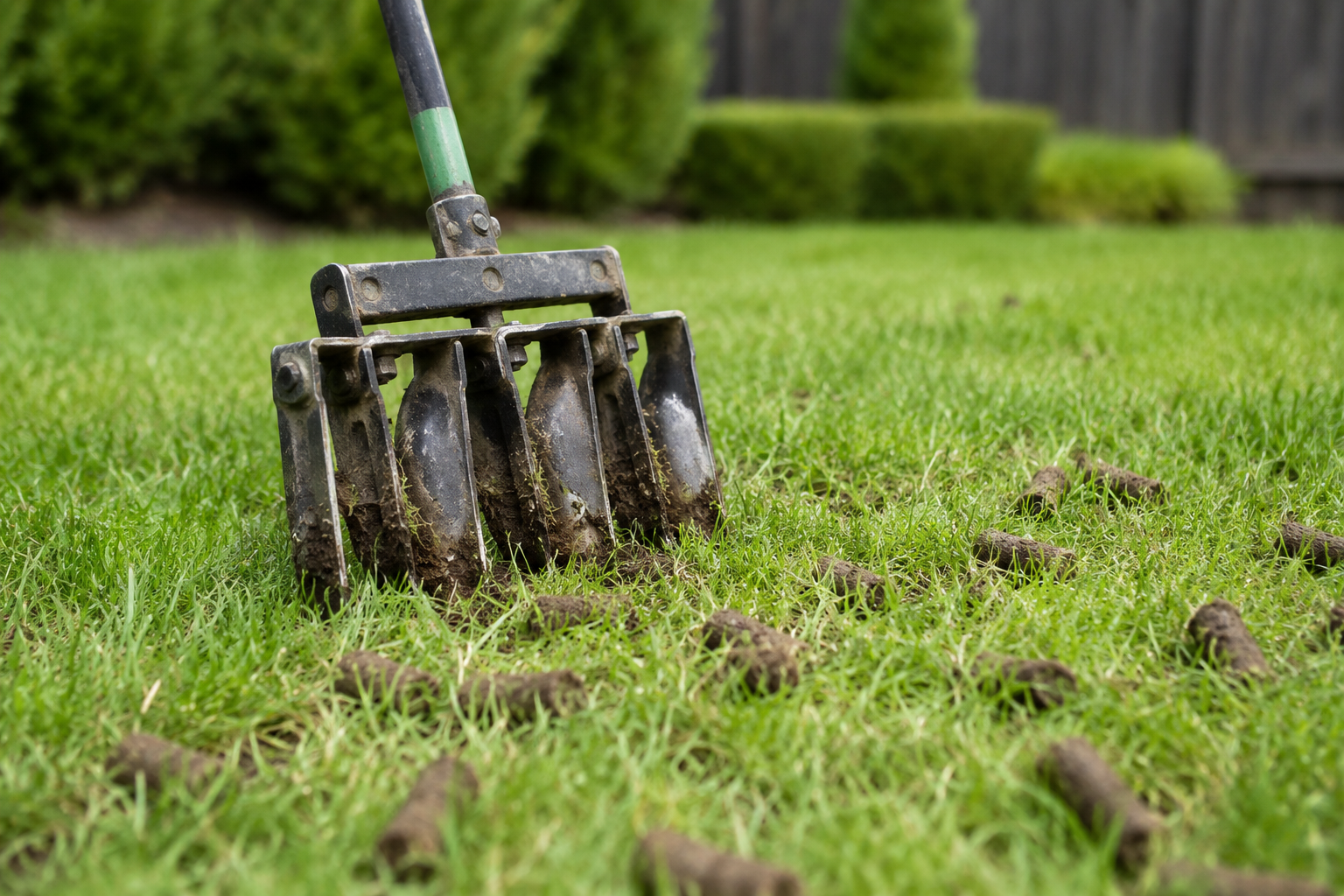
This is where aeration and nutrition play a supporting role. Mechanical aeration physically relieves compaction and removes additional organic buildup, while liquid aeration improves soil structure without surface disruption. Both enhance the benefits of dethatching by helping roots expand deeper into the soil.
Treatments like sea kelp and Super Juice further support recovery by strengthening roots and improving stress tolerance, especially important after the lawn has been opened up.
How Spring Lawn Dethatching Is Performed
Professional spring lawn dethatching focuses on controlled removal rather than aggressive stripping. The goal is to thin the thatch layer, not eliminate it entirely.
A proper dethatching process typically includes:
- Assessing thatch thickness and turf condition
- Removing excess thatch without damaging root systems
- Clearing debris so light and air can reach the soil
- Preparing the lawn for follow-up treatments
This measured approach protects grass crowns and allows recovery to begin immediately rather than setting the lawn back.
What to Do After Dethatching Lawn for Proper Recovery
Dethatching exposes soil and roots, which makes what happens next critical. The lawn is temporarily more vulnerable, but also more receptive. This is the ideal moment to reinforce recovery rather than leave turf to fend for itself.
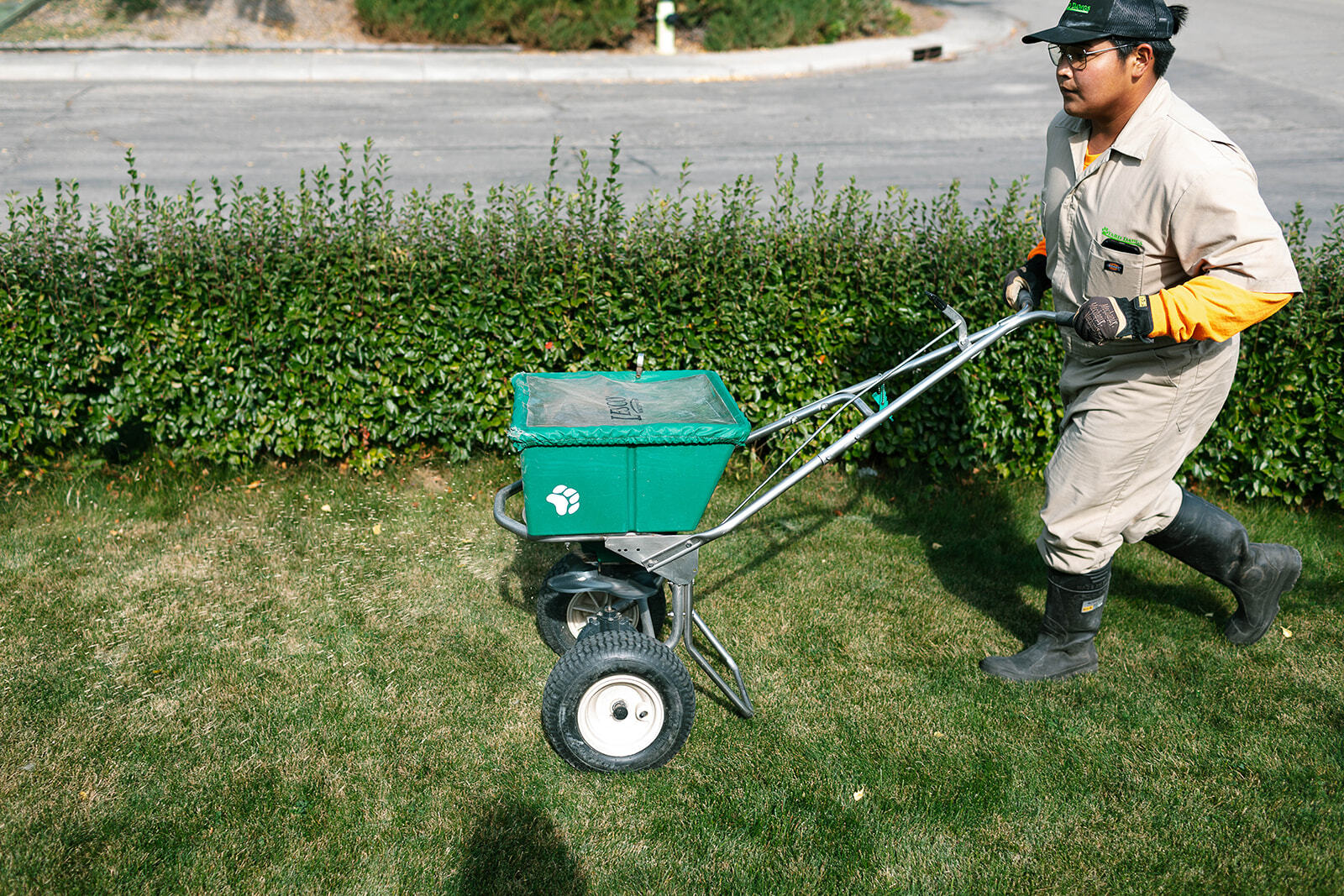
After dethatching lawn areas, the focus shifts to stabilization and regrowth. Fertilizer is applied to replenish nutrients and encourage steady recovery without forcing excessive top growth. Weed control becomes more important at this stage, as open soil creates an opportunity for weeds to establish if left unmanaged.
For lawns showing thinning or weak density, aeration plus can be introduced after dethatching to help rebuild thickness and uniformity. Because the soil surface is already open, seed-to-soil contact is significantly improved.
Supporting treatments such as liquid aeration, sea kelp, or Super Juice help roots rebound faster and reduce stress during regrowth. When these steps are coordinated, the lawn doesn’t just recover, it improves.
Common Mistakes with Lawn Dethatching
Many lawn issues blamed on dethatching actually come from poor timing or lack of follow-through. Spring lawn dethatching should never be rushed or done in isolation.
The most common mistakes include:
- Dethatching dormant or overly wet lawns
- Removing too much thatch at once
- Skipping fertilizer and soil support afterward
- Ignoring weed pressure during recovery
Avoiding these mistakes is what separates productive dethatching from unnecessary damage.
Lawn Dethatching Service for Long-Term Lawn Health
Choosing a professional lawn dethatching service removes guesswork from the process. Thatch thickness, soil condition, and turf health all vary from property to property. A professional approach ensures the lawn gets exactly what it needs, no more, no less.
With a dedicated team assigned to your property, dethatching decisions are based on your lawn’s history. Adjustments can be made if recovery needs extra support, and follow-up treatments are timed correctly as growth patterns change.
This level of consistency matters, especially in Alberta’s unpredictable spring climate. When conditions shift, having a knowledgeable team monitoring your lawn helps protect results and prevent setbacks.
How Dethatching Supports Long-Term Lawn Health
Dethatching lawn in spring isn’t just about immediate appearance. It’s about setting up the rest of the season. Lawns that breathe properly and absorb nutrients efficiently require fewer corrective treatments later.
A properly dethatched lawn:
- Responds better to fertilizer
- Develops deeper, stronger roots
- Competes more effectively against weeds
- Handles summer stress with less thinning
Over time, this reduces the need for intensive repairs and makes ongoing lawn care more efficient and predictable.
Dethatching, Aeration, and Soil Balance
It’s important to understand that dethatching and aeration serve different purposes but work best together. Dethatching removes surface buildup. Aeration addresses what’s happening below. When combined, they create an environment where roots can truly thrive.
Mechanical aeration helps break up compacted soil, while liquid aeration improves soil structure between core treatments. This layered approach supports long-term soil health rather than temporary improvement.
A Smarter Way to Approach Spring Lawn Dethatching
Spring lawn dethatching should never feel like a gamble. When guided by lawn condition, timed correctly, and supported with the right services, it becomes one of the most effective seasonal interventions available.
Rather than reacting to weak growth mid-season, proactive dethatching allows your lawn to start strong, and stay that way.
Spring Lawn Dethatching That Actually Makes a Difference
Excess thatch doesn’t fix itself. But removing it at the right time, in the right way, changes how your lawn performs for months to come. Spring lawn dethatching clears the path for water, nutrients, and oxygen, giving roots the environment they need to grow deeper and stronger.
When paired with proper fertilizer, weed control, aeration, and recovery support, dethatching becomes more than maintenance. It becomes a reset that sets your lawn up for a healthier, more resilient season from the ground up.