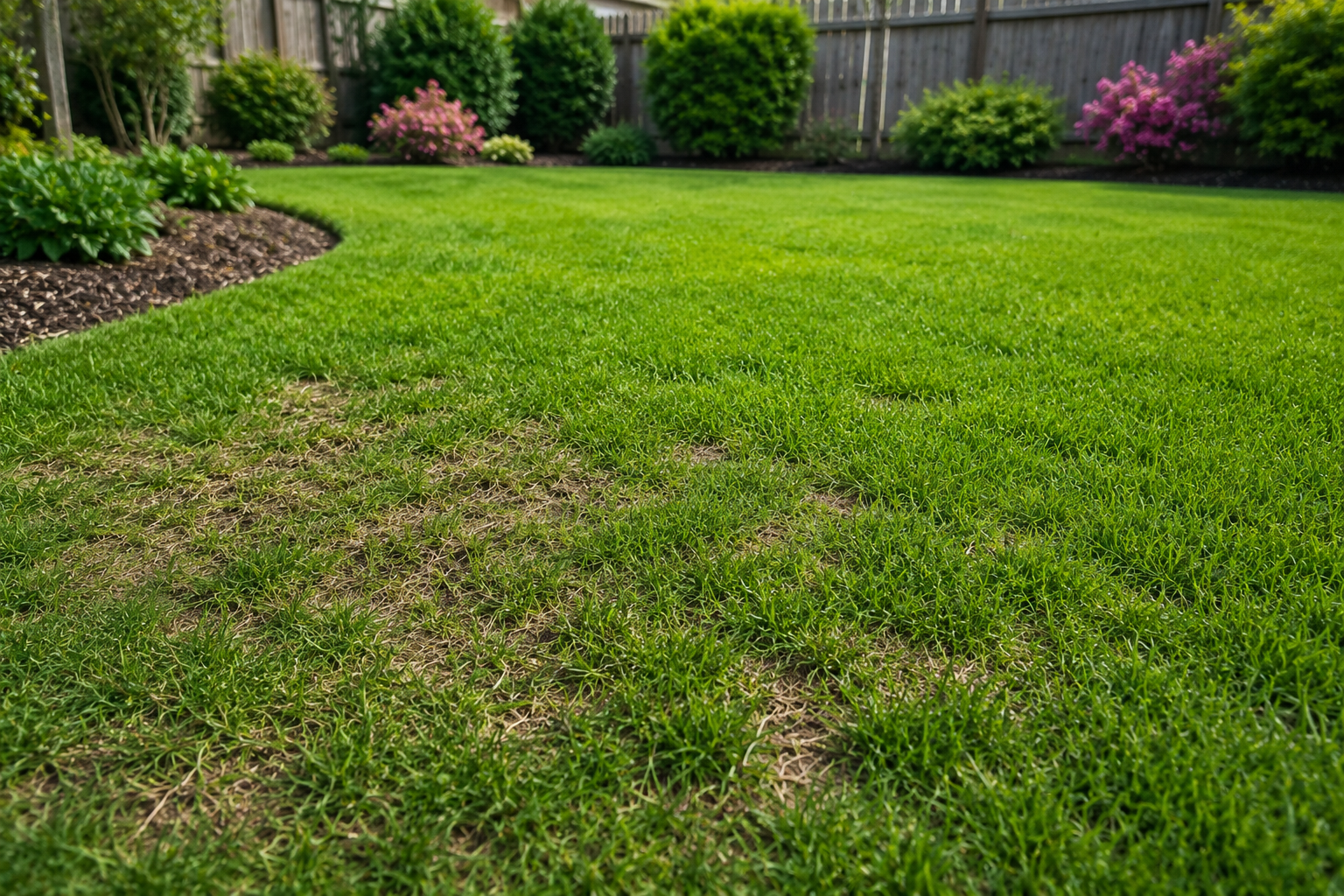







Yellow grass is especially common in late spring because lawns are still recovering from winter stress, fluctuating temperatures, compacted soil, and excess moisture from snowmelt or spring rainfall. Many homeowners assume grass will naturally bounce back by May, but persistent yellowing usually signals an underlying lawn health issue that needs attention before summer heat arrives.
It’s also important to distinguish dormant grass from unhealthy grass. Dormant lawns tend to turn uniformly tan or straw-colored during periods of drought or heat stress but recover once conditions improve. Unhealthy grass, however, often develops patchy discoloration, thinning areas, weak growth, or visible damage caused by pests, nutrient deficiencies, compaction, or fungal disease.

Limited spots available!
Transform your lawn today

Limited spots available!
Transform your lawn today
How to Tell Why Your Lawn Is Turning Yellow
Before applying fertilizer or increasing watering, it’s important to diagnose the actual problem. Different lawn issues create different yellowing patterns, and treating the wrong cause can make the damage worse.
Here are a few common lawn symptoms to look for:
- Dry, crispy grass with hard soil usually points to drought stress or underwatering
- Soft, soggy soil and limp grass blades often indicate overwatering or poor drainage
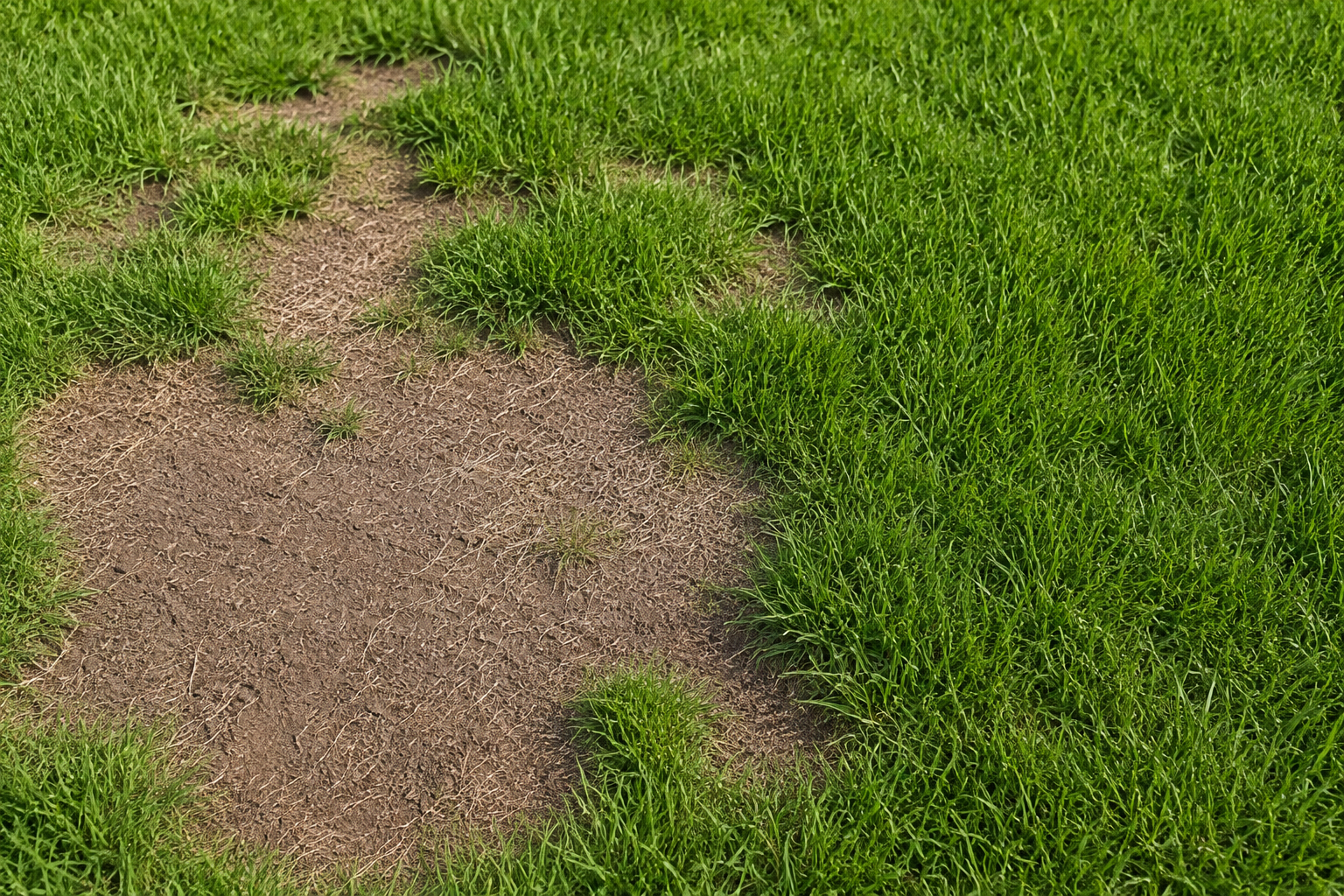
- Circular or irregular patches may suggest fungal disease or pest activity
- Small localized spots can sometimes be caused by pet urine or fertilizer burn
- Yellowing after mowing may signal dull mower blades or lawn scalping
- Grass that lifts easily like a carpet can indicate grub damage beneath the surface
A simple inspection of soil moisture, root health, and grass blade condition can help narrow down the issue before applying treatments.
Why Is My Grass Turning Yellow?
There are several possible reasons why grass starts losing its color, and often, more than one factor is at play. Here are some of the most common causes we see across Western Canada lawns:
1. Nutrient Deficiency
A lack of essential nutrients, especially nitrogen, is one of the leading causes of yellow grass. Nitrogen gives your lawn its rich green color and supports strong growth. Without it, blades become pale and weak.
Nitrogen deficiencies often appear as widespread, even yellowing across the lawn rather than isolated patches. Grass may also grow more slowly than usual and struggle to thicken during spring growth periods. Heavy rainfall can also wash nutrients out of the soil, especially in lawns that haven’t been fertilized recently.
In some cases, yellow grass may not be caused by a lack of nutrients, but by the lawn’s inability to absorb them properly. Soil pH that is too high or too low can create nutrient lockout, making important elements like iron and manganese unavailable to the grass roots. This often causes pale or yellow turf even after fertilization.
A soil test can help identify whether your lawn is lacking nutrients or struggling with pH imbalance. It can also reveal whether slow-release fertilizer would be a better option than quick-release products, which sometimes lead to uneven growth or fertilizer burn during hot weather.
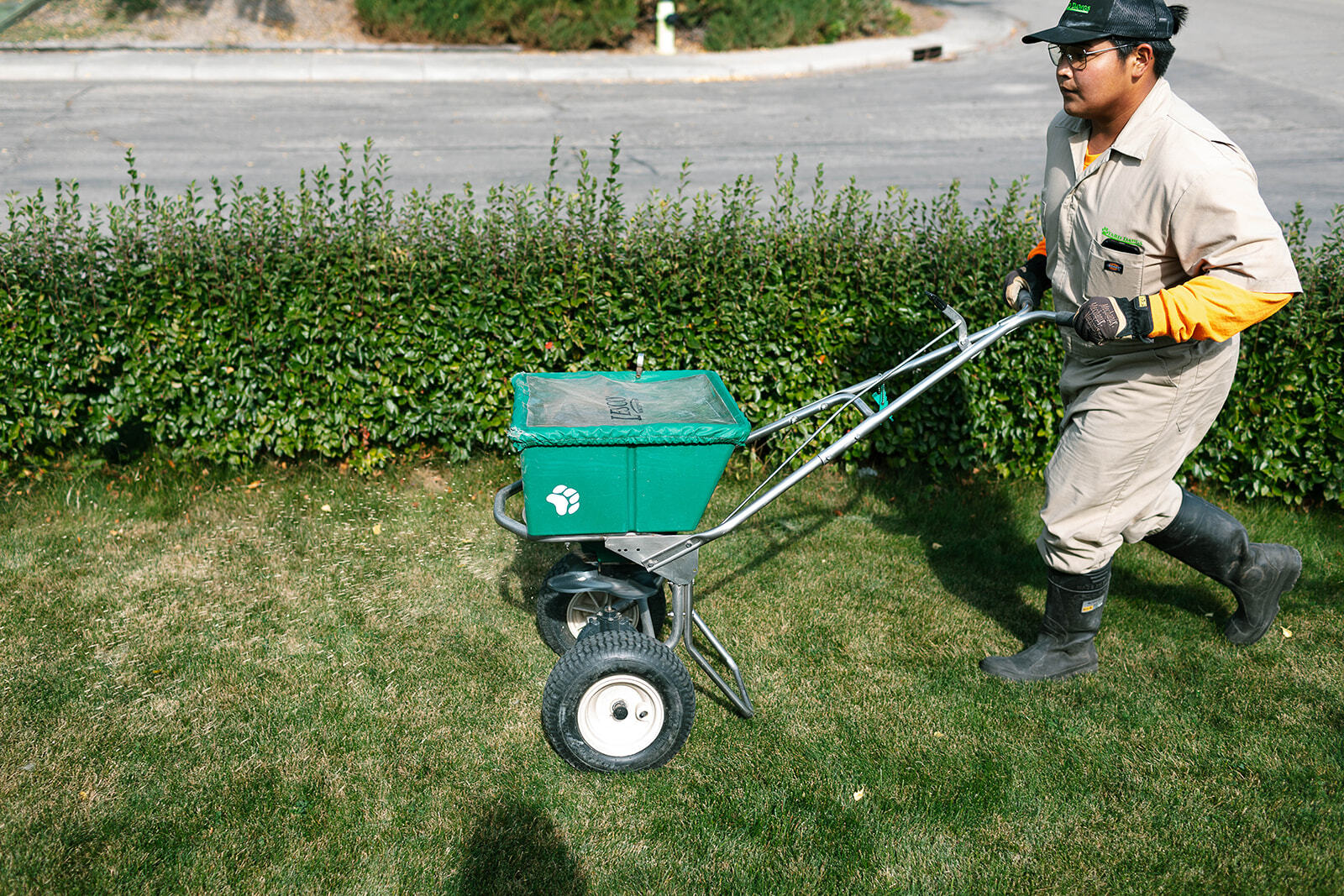
Applying a balanced fertilizer as part of a scheduled treatment plan helps replenish nutrients and restore color. At Yard Dawgs, our professional fertilizer applications deliver consistent results throughout the growing season, keeping your grass vibrant and resilient.
2. Soil Compaction
When soil becomes compacted from foot traffic, pets, or heavy equipment, oxygen and nutrients can’t reach the roots effectively. Compacted soil often leads to patchy, yellow areas where the grass struggles to breathe.
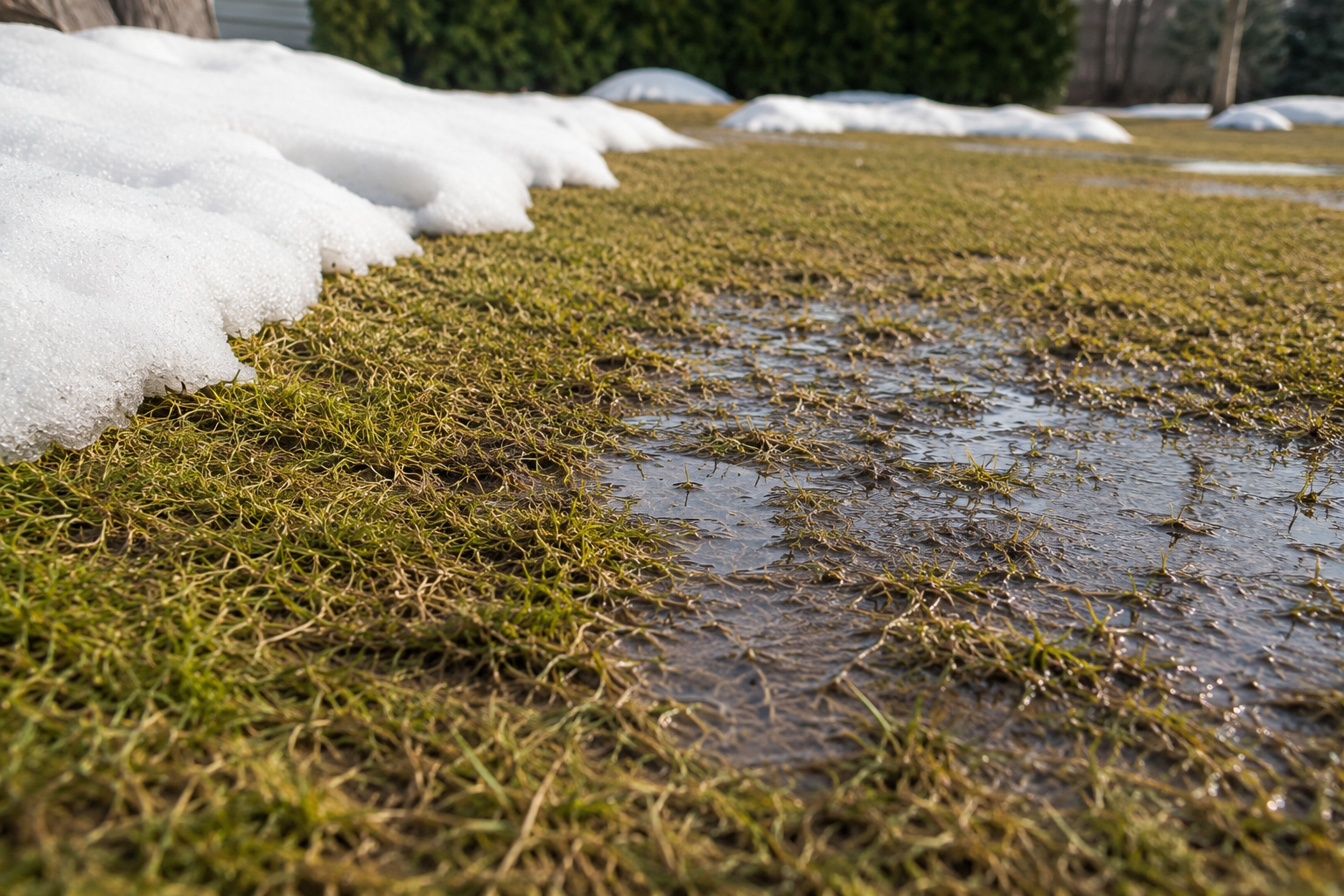
Compacted lawns are especially common after winter when repeated freeze-thaw cycles and heavy moisture compress the soil structure. Clay-heavy soils are even more vulnerable because they naturally drain more slowly and restrict airflow around the roots.
One major sign of compaction is water pooling on the surface instead of soaking into the ground. You may also notice thin grass in high-traffic areas near patios, walkways, or play spaces. In severe cases, compacted soil can become almost hydrophobic, meaning water runs off before roots can absorb it properly.
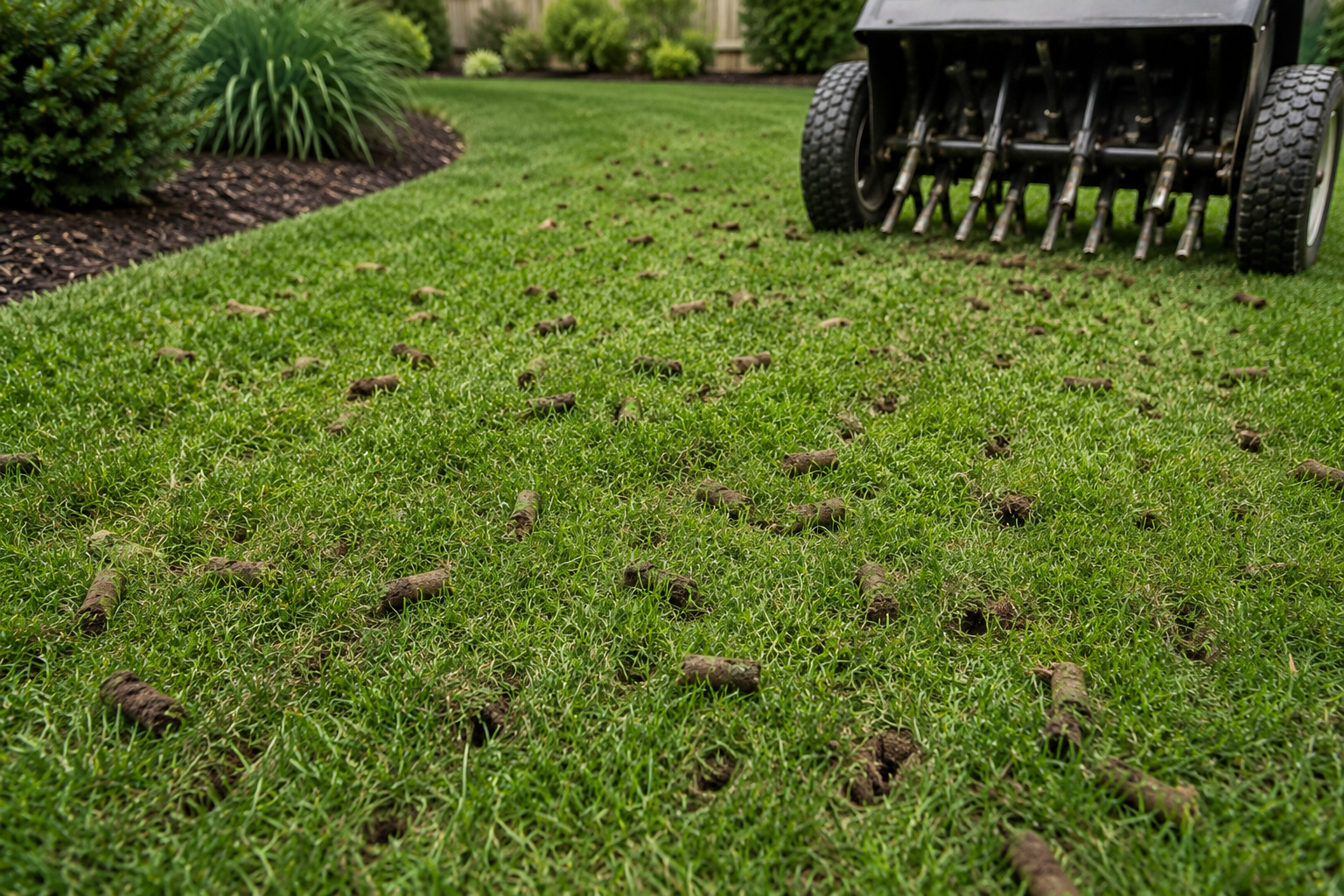
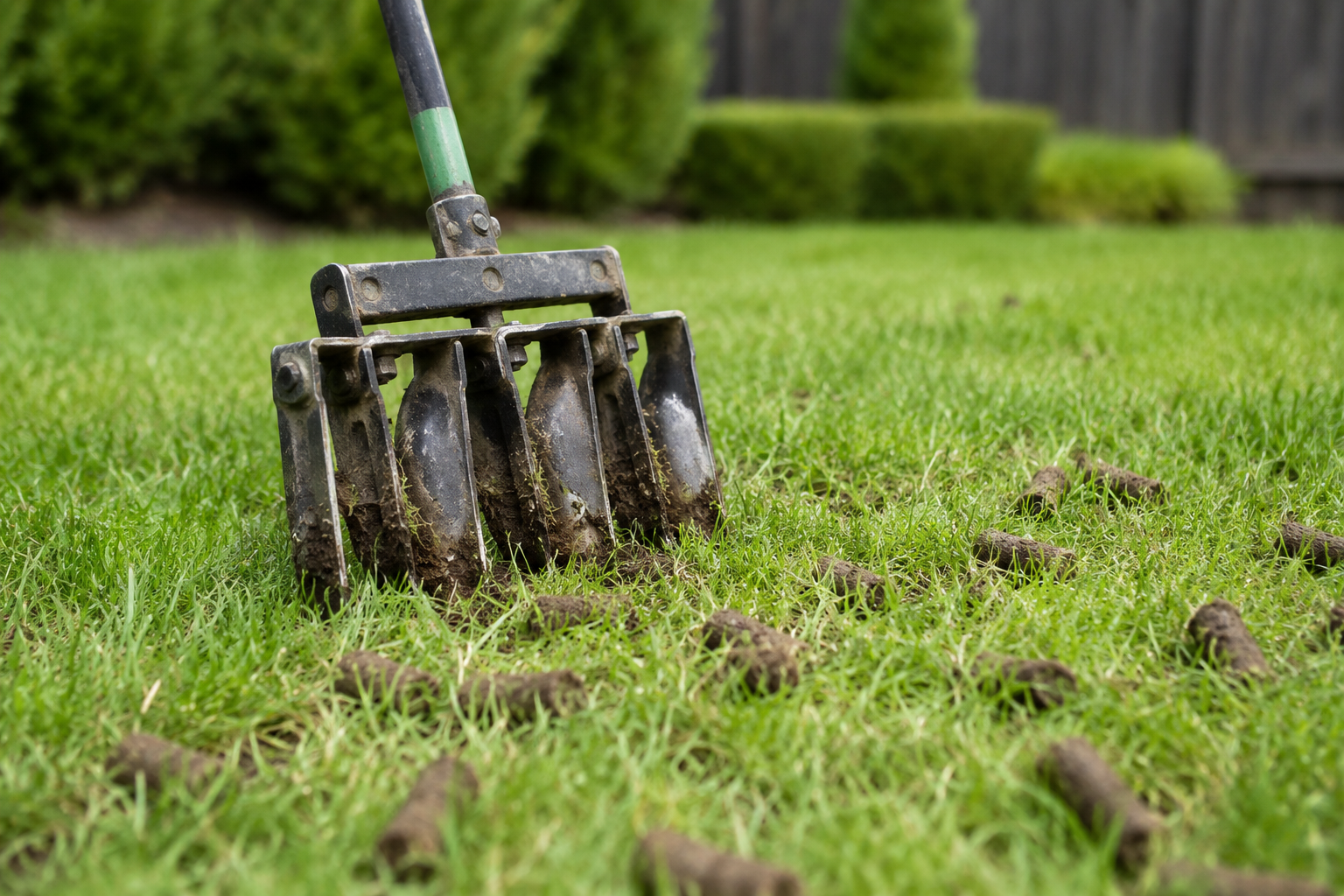
Regular mechanical aeration or liquid aeration is key. Our team uses professional-grade aeration equipment to open up the soil, improve water absorption, and help roots grow deeper. This not only corrects yellowing but strengthens your entire lawn’s foundation.
3. Pest Damage (Including Chinch Bugs)
Chinch bugs are tiny but destructive insects that feed on grass blades and stems, sucking out moisture and injecting toxins that cause the turf to yellow and die. They’re especially active during warm, dry periods and can spread quickly across your yard.
One simple way to check for grub activity is to gently pull on affected grass. If the turf lifts easily like loose carpet, root damage may already be severe. Birds, raccoons, or skunks digging in the lawn can also indicate grub infestations beneath the surface.
Yard Dawgs provides targeted chinch bug control treatments that eliminate pests while protecting the health of your lawn. Catching infestations early is key, if you notice expanding yellow patches that don’t respond to watering or fertilization, chinch bugs may be to blame.
4. Poor Lawn Nutrition or Stress
Sometimes yellow grass isn’t due to one clear issue but rather a combination of stress factors, nutrient imbalance, inconsistent watering, or heat. When your lawn lacks strength, it becomes more vulnerable to these challenges.
Late spring lawns are often dealing with multiple stressors at once. A lawn may already be weakened from winter compaction and nutrient loss, then become further stressed by sudden heat, inconsistent watering, or increased foot traffic. This combination can quickly turn grass yellow even if no single issue appears severe on its own.
Cool-season grass varieties commonly used across Canada are particularly sensitive to rising temperatures in late spring and early summer. During heat stress, grass may slow growth, lose color, and become more vulnerable to disease, weeds, and pests.
We recommend boosting your lawn’s resilience with our Super Juice and Sea Kelp treatments. Super Juice provides a quick nutrient boost, while Sea Kelp supports root growth and recovery during stressful periods like summer heat or drought. Together, they help your grass regain its lush green color faster.
5. Weeds Competing for Nutrients
Weeds not only affect your lawn’s appearance, they also steal the nutrients, sunlight, and water your grass needs to stay green. Over time, this competition can leave your turf thin and yellow.
Aggressive weeds can quickly outcompete weakened turf, especially during spring growth periods when lawns are already recovering from winter stress. Thin lawns with bare patches are particularly vulnerable because weeds can establish themselves more easily in open soil.
Our weed control service keeps your lawn completely weed-free. If weeds appear between scheduled visits, we’ll return for a free re-spray, no hassle, no extra cost. It’s all part of our weed-free guarantee.
6. Overwatering and Poor Drainage
While drought is a common cause of yellow grass, too much water can create equally serious problems. Overwatered lawns often develop yellow blades, soggy soil, and shallow root systems that struggle to absorb oxygen. In severe cases, grass roots begin to rot beneath the surface.
Poor drainage is especially common in compacted or clay-heavy soils where excess moisture becomes trapped around the roots. This creates ideal conditions for fungal disease and weak turf growth.
To improve drainage, homeowners should avoid watering after heavy rainfall and focus on deep, infrequent watering rather than daily shallow watering. Aeration, dethatching, and correcting low spots in the lawn can also help reduce standing water and improve soil structure. In persistently wet areas, installing a French drain may be necessary to redirect excess runoff.
7. Fungal Disease
Fungal lawn diseases are another common cause of yellow or patchy grass, particularly during humid spring and summer weather. Excess moisture, poor airflow, and overwatering create ideal conditions for fungi to spread.
Common lawn diseases include dollar spot, rust, and red thread. These problems often appear as irregular yellow or brown patches, discolored blades, or visible fungal webbing early in the morning.
Lawns cut too short or watered late in the evening are especially vulnerable because moisture remains trapped near the soil surface overnight. Raising mowing height, improving airflow, and watering early in the morning can significantly reduce fungal pressure. In severe cases, fungicide treatments may be required.
8. Lawn Care Mistakes That Cause Yellow Grass
Sometimes yellow grass is caused by everyday lawn care habits rather than environmental problems alone.
One of the most common mistakes is mowing too short, also known as scalping. Removing too much of the grass blade at once weakens the lawn, exposes the crown to heat stress, and reduces the plant’s ability to photosynthesize effectively.
Dull mower blades are another overlooked issue. Instead of creating clean cuts, dull blades tear the grass, leaving shredded tips that often turn yellow or brown after mowing. This damage also increases the lawn’s vulnerability to disease and moisture loss.
To reduce stress, follow the one-third rule: never remove more than one-third of the grass blade during a single mowing session. Sharpen mower blades several times throughout the growing season to maintain clean, healthy cuts.
Yellow Grass in Saskatchewan: What Makes It Different?
If you’re dealing with yellow grass in Saskatchewan, you’re not alone. The region’s changing temperatures, clay-heavy soils, and dry summers create unique challenges for homeowners. Compaction and nutrient loss are particularly common, as the dense soil limits airflow and drainage.
In Saskatoon, lawns often need more frequent aeration and balanced fertilization to stay green throughout the season. A combination of liquid aeration and custom fertilizer treatments can make a dramatic difference in both color and texture.
At Yard Dawgs, we tailor every treatment plan to local conditions, ensuring that even the most stubborn yellow patches get the care they need to recover.
How to Fix Yellow Grass
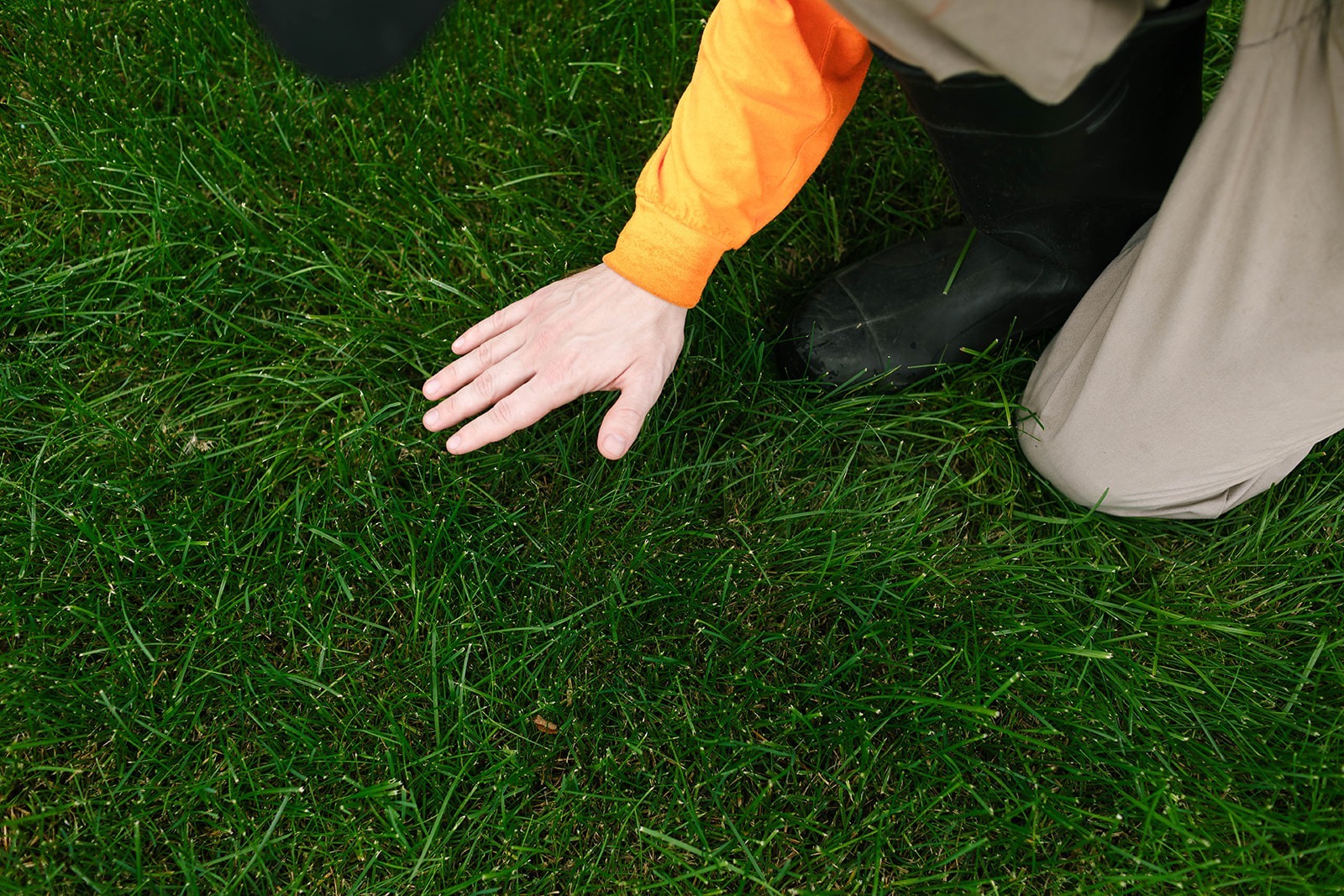
When homeowners ask us how to fix yellow grass, we always start by identifying the cause. Once we know what’s stressing your lawn, we build a personalized plan to bring it back to health. Here’s what that process typically includes:
- Professional Assessment – Our dedicated team evaluates your soil condition, pest activity, and nutrient levels.
- Targeted Fertilization – We apply the right type and amount of fertilizer to restore your lawn’s natural color.
- Aeration Treatment – If your soil is compacted, we perform mechanical or liquid aeration to improve airflow and nutrient uptake.
- Weed and Pest Control – We treat unwanted weeds and chinch bugs, ensuring your grass doesn’t have to compete for survival.
- Supplemental Boosts – Super Juice and Sea Kelp applications help your lawn recover faster from stress and maintain long-term health.
- Ongoing Monitoring – With our continuous service plans, your lawn receives care all season long, and you can cancel anytime if you’re not satisfied.
Each treatment works together to target the problem from multiple angles, giving your grass the nutrients and environment it needs to thrive again.
For severely damaged lawns, overseeding may also be necessary to fill in bare or thinning areas. Combining overseeding with aeration improves seed-to-soil contact and helps establish stronger grass before peak summer temperatures arrive.
Homeowners should also avoid rushing recovery with excessive fertilizer or watering. Overcorrecting can create additional stress and increase the risk of disease or root damage. Gradual, consistent lawn care practices deliver healthier long-term results.
How to Prevent Yellow Grass
Prevention is the best form of lawn care. Once your grass is healthy and green again, maintaining that color is much easier with a consistent routine. Here’s how we help homeowners prevent yellow grass from returning:
- Regular Fertilization – Keeps your grass nourished with the right balance of nutrients all season.
- Seasonal Aeration – Loosens soil and improves root growth, especially in high-traffic areas.
- Proper Watering Practices – Lawns typically need 1–1.5 inches of water per week. Deep, less frequent watering encourages deeper roots.
- Weed Control Maintenance – Prevents weeds from stealing essential nutrients.
- Proactive Pest Management – Early detection and treatment of chinch bugs or other pests prevent widespread damage.
- Tailored Lawn Care Plans – Every property is unique, and our personalized approach ensures your lawn gets exactly what it needs, no more, no less.
- Maintaining proper mowing height – Taller grass helps shade the soil, conserve moisture, and naturally suppress weed growth.
- Reduce repeated foot traffic in stressed or wet areas of the lawn – Constant pressure compacts the soil over time, limiting oxygen flow and weakening grass roots.
- Routine soil testing every few years – Identify nutrient deficiencies or pH imbalances before visible yellowing appears, making preventative lawn care far more effective.
The Yard Dawgs Promise
We stand 100% behind our lawn care services in Calgary and across Western Canada. With over 4,000 happy customers, our goal is simple, to make every lawn we care for healthy, green, and completely weed-free.
Yard Dawgs specialists have the expertise and dedication to transform your yard. From fertilizer and weed control to aeration, Super Juice, Sea Kelp, and chinch bug treatments, we’ve got every solution your lawn needs to thrive.
Join the thousands of homeowners who trust Yard Dawgs for reliable, personalized lawn care in Calgary, Edmonton, Red Deer, Saskatoon, and Medicine Hat. Because when it comes to your lawn, yellow is never an option.